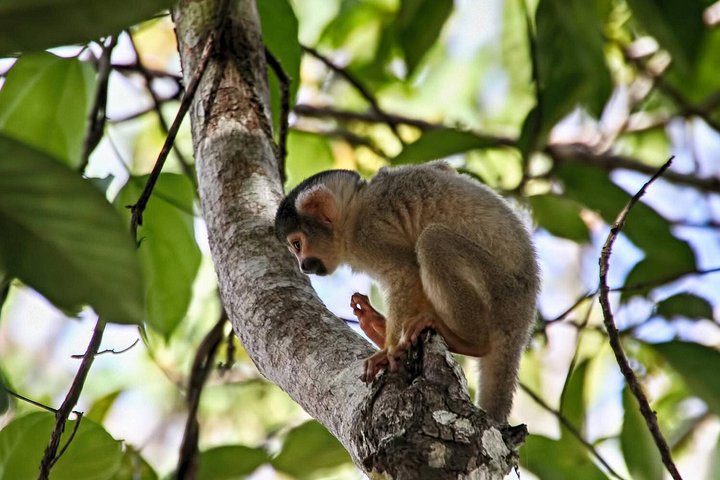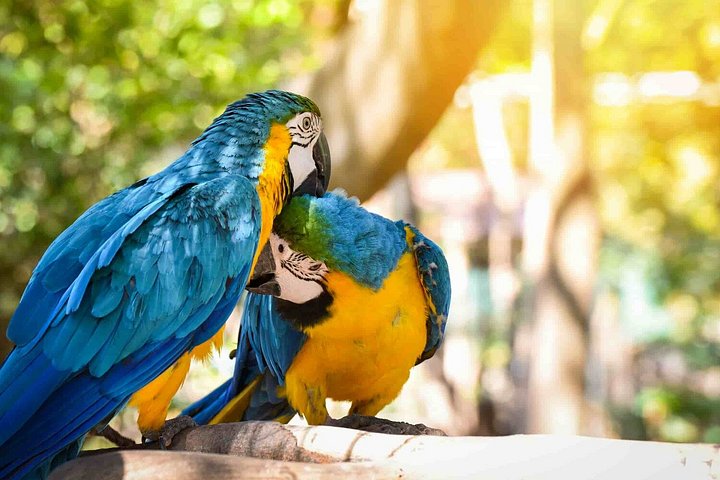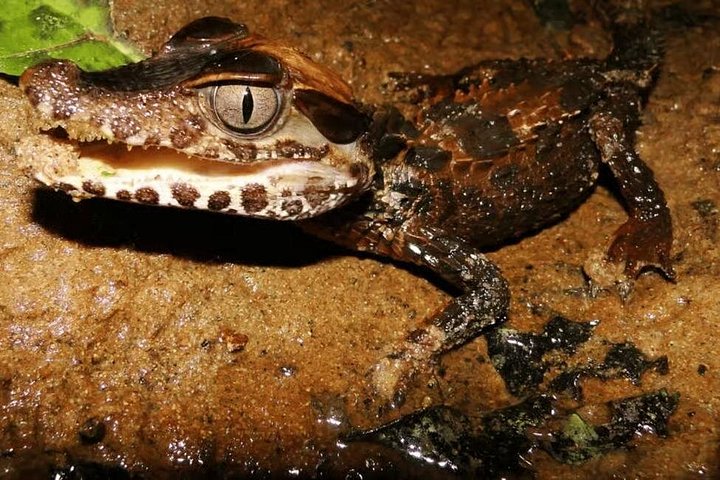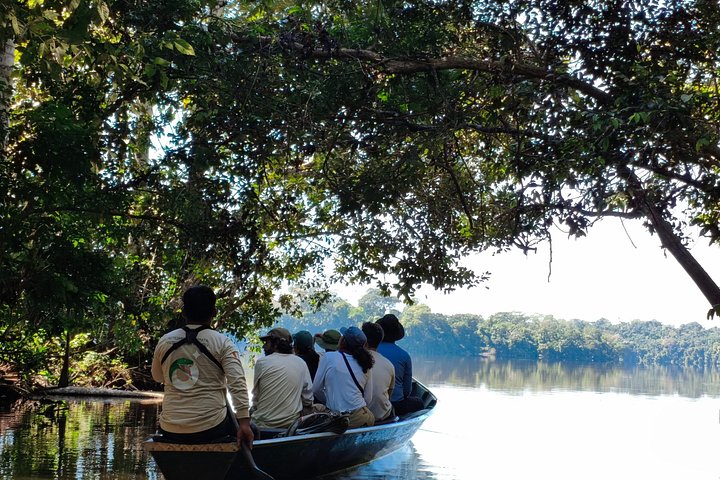
Puerto Maldonado is a river town in southeastern Peru, the capital of the Madre de Dios region and the main gateway to the Tambopata National Reserve. It sits where the Tambopata and Madre de Dios rivers meet, in lowland rainforest far below the Andes. The town itself is small, hot and busy with motorcycle taxis, and most visitors treat it as a launch point for the forest rather than a destination. That is the right way to think about it: you come here for wildlife, rivers, lakes and the sense of the Amazon, and the town provides the services you need to get there.
How to get here
Most travelers fly. There are regular flights from Cusco, which take roughly an hour and are the easiest way to combine the Andes with the Amazon, and from Lima. The airport is close to town, and a taxi or hotel pickup takes you to your hotel in a few minutes. Overland travel is possible along the long road that links the highlands and the jungle, but it takes many hours and is usually reserved for people with plenty of time. Whatever route you choose, build a spare day into your plans, because weather can delay flights in either direction.
Day trips or a lodge stay
The central choice is whether to stay in town and take day trips or sleep in a lodge in the forest. Day trips are cheaper and flexible, and they work well for a short visit. Lake Sandoval, a piranha fishing outing, a sloth search and a sunset caiman trip can all be done from a town hotel. A lodge stay costs more and takes more time, but it puts you in the forest at dawn and dusk, when animals are most active, and lets you do night walks without a late return. Many travelers do both, with a night or two in a lodge and a day or two in town.
How many days
Two days is the minimum to feel you have seen something, and three to four days is the sweet spot for most people. A trip of that length lets you visit a lake, walk in the forest, take a night excursion and perhaps add a macaw clay lick. With five days or more you can add a second lodge or a remote clay lick, and combine wildlife with a community visit or a farm tour. If you are coming from Cusco on a tight schedule, a two-day express trip is a workable compromise.
What to book ahead
In the dry season, from about May to October, the best lodges and the more popular operators fill up, so reserve them before you arrive. Day trips can usually be arranged on the spot, but booking ahead guarantees your preferred date, especially for clay lick trips that run on set days. Hotels in town are easy to find, but good rooms disappear during holiday weeks. Compare operators on the details: group size, guide quality, what is included, and how much time is spent traveling versus watching wildlife.
Choosing responsibly
Rainforest tourism can help protect forest when it supports local communities and keeps group sizes small, and it can do harm when animals are fed, touched or kept as props. Avoid tours that promise to let you hold wild animals, and ask guides how they handle encounters. Choose lodges that employ local people and hire trained naturalists. The Madre de Dios region has also been affected by mining and logging in some areas, so sticking with established operators and sanctioned routes is a sound practice.
Health and practical details
Speak to a travel clinic well before departure about vaccinations. Yellow fever vaccination is commonly recommended for the region, and malaria advice depends on your itinerary and your health. Insect protection is important, so pack repellent, long sleeves and trousers. Drink bottled or purified water and eat at busy places in town. The currency is the Peruvian sol, and cards are accepted in some hotels and shops but not in the forest, so carry cash in small notes for tips and extras. Mobile coverage is good in town and weak or absent at lodges.
What to expect from the weather
The climate is hot and humid year round. Rain can fall in any month, but the wettest period is roughly November to April. The drier months are more comfortable for walking and travel, with the occasional cold snap in winter when temperatures can drop for a few days. Pack a light rain jacket whenever you go, and expect clothes to dry slowly.
A simple plan
For a first visit, a good template is to arrive, rest in town, take a day trip to Lake Sandoval or a similar sight, spend one or two nights at a lodge and return for a final evening in town. Add a clay lick if birds are your priority. Leave a buffer day before an international flight, keep your itinerary flexible and let the guides adapt to the weather. The Amazon rewards patience, and your best moments may be unplanned.