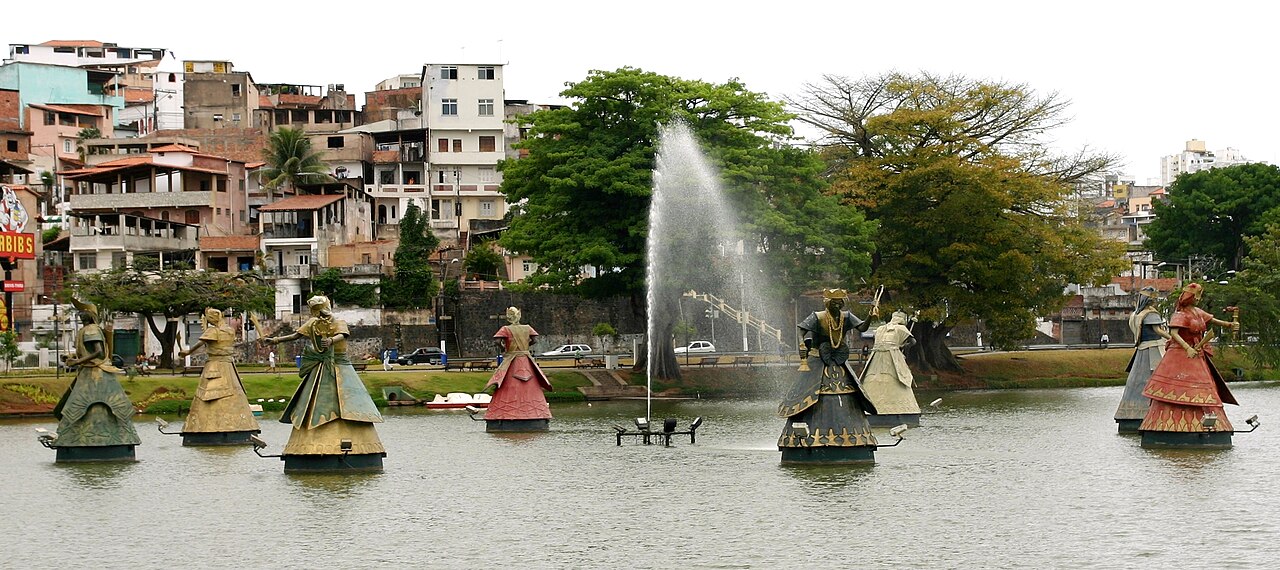
The Dique do Tororó is a lagoon in the Nazaré district, a short drive from the historic centre, and it is one of the best-known postcard views in Salvador. It sits directly in front of the Arena Fonte Nova stadium and is described by the city's tourism portal as the city's only natural water source registered by the national heritage institute. For residents it is an everyday meeting place for walking, running and weekend outings, and for visitors it is a calm green pause in a very busy city. The setting is easy to understand in a few minutes: a wide oval of water, wooded paths around the edge and the skyline of the city beyond. What makes it distinctive is the row of large sculptures standing in the water. They represent the orixás, the deities of candomblé, and are the work of the artist Tati Moreno. Each figure is linked to elements such as the sea, the forest, thunder or the sweet waters, and walking around the lagoon is a quiet way to meet them one by one, with the water and the trees as a backdrop. They make the lagoon a good introduction to the religion and symbols you will meet again in the museums, the markets and the dishes of Salvador, and they give photographers a strong subject at any time of day.
The lagoon has wooded walks and running tracks, fishing decks, rowing lanes and pedal boats, together with restaurants, an amphitheatre and a playground. That mix makes it one of the easiest places in the city to relax with children, and a good choice for a slow hour between sights. A circuit of the water on foot is gentle and flat, and you can stop at the viewpoints and the benches along the way.
The portal notes that it is especially pleasant in the late afternoon and evening, when the lagoon is lit, and many visitors time their visit for the hour before dusk.
The practical side is straightforward. Entry to the park is free, and the best way to arrive is by ride-hailing car or taxi from the historic centre or Barra, a journey that normally takes a short time outside peak traffic. Because it sits near the stadium, event days can bring crowds and traffic, so check the calendar if you plan an evening visit.
Go in daylight or while the lagoon is busy, carry only what you need, keep your phone out of sight on the paths and use a car to leave after dark, as you would in any large city. Bring water and sun protection, since the walk is open to the sun. Allow an hour for a relaxed loop and a photo stop at the sculptures, or longer if you want to eat at one of the lakeside restaurants or try a pedal boat.
It combines well with a visit to the nearby historic centre or with a match or concert at the stadium, and it is a good option on a day when the weather is changeable, as the visit is short and flexible. If you have only a few days in Salvador, it is a pleasant extra, but not a substitute for the main sights of Pelourinho, Bonfim and Barra.
What to expect
The experience
A free, self-guided stroll around a lagoon with wooded paths, sculptures of the orixás standing in the water, lakeside restaurants and pedal boats.
Best time
Late afternoon into the evening, when the heat eases and the lagoon is lit.
How long
An hour for a relaxed loop and photo stops, longer if you eat by the water or take a pedal boat.
Tips
Go while it is busy, bring water and sun protection, check for stadium events and use a ride-hailing car to leave after dark.
Quick picks
- Best for
- Anyone who wants a calm, free break between sights, and photographers interested in the orixá sculptures.
- Families
- A playground, flat paths and pedal boats make it easy with children, though supervise them near the water.
- Couples
- An easy early-evening walk by the lit lagoon, followed by a drink at a lakeside restaurant.
- Pair with
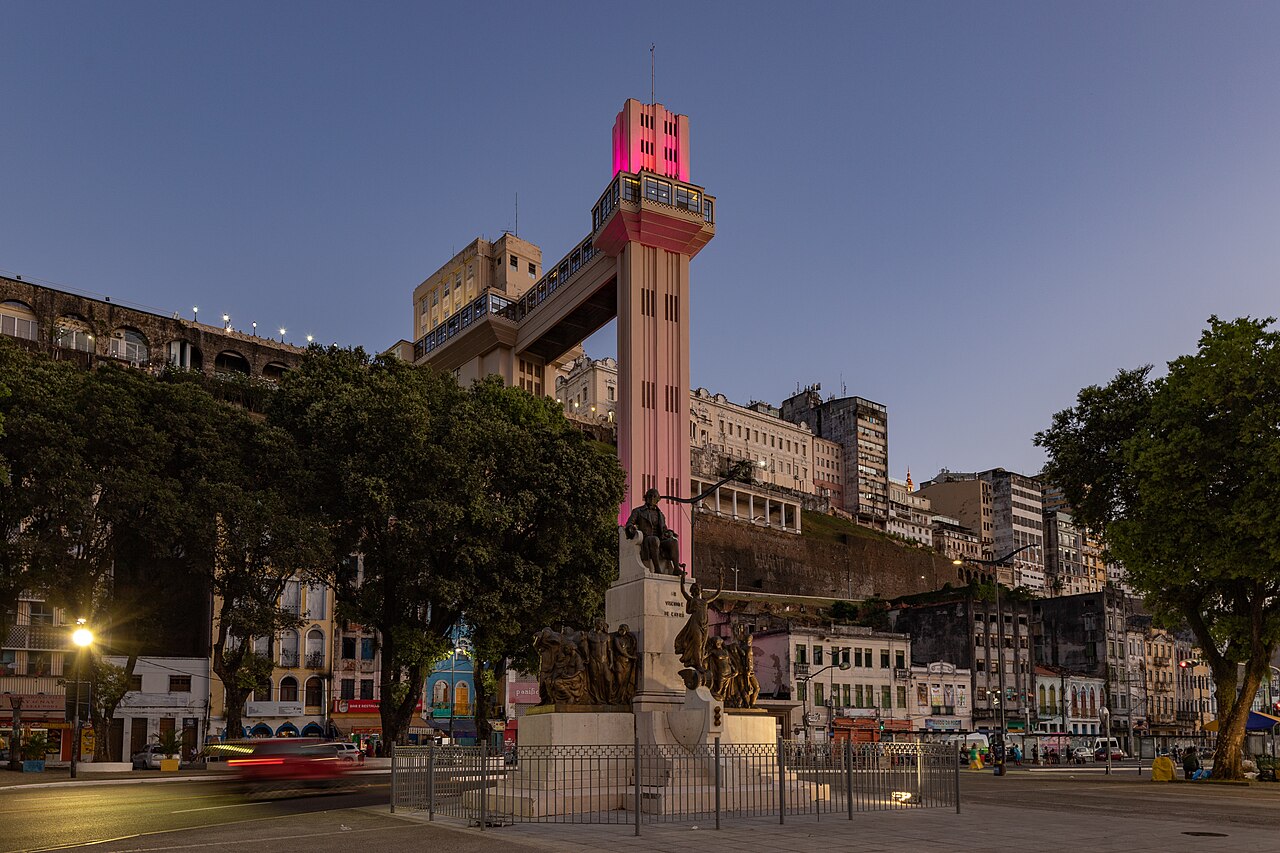
- A morning in the historic centre or a ride up the Lacerda Elevator.
- Time needed
- One to two hours.
Good questions
Is the Dique do Tororó free?+
Yes, the lagoon and its walking paths are open to everyone at no cost. Pedal boats and lakeside restaurants charge for their own services.
What are the sculptures?+
They are large figures of the orixás, the deities of candomblé, standing in the water. They are the work of the artist Tati Moreno.
When is the best time to go?+
Late afternoon and early evening are the most pleasant, as the heat eases and the lagoon is lit. Avoid event nights at the nearby stadium unless you want the crowds.
Is it safe?+
It is a popular public space, but as in any large city you should go while it is busy, carry little and use a car or taxi to leave after dark.
How do I get there?+
The lagoon is in the Nazaré district in front of the Arena Fonte Nova stadium. A ride-hailing car or taxi from the historic centre or Barra is the easiest route.