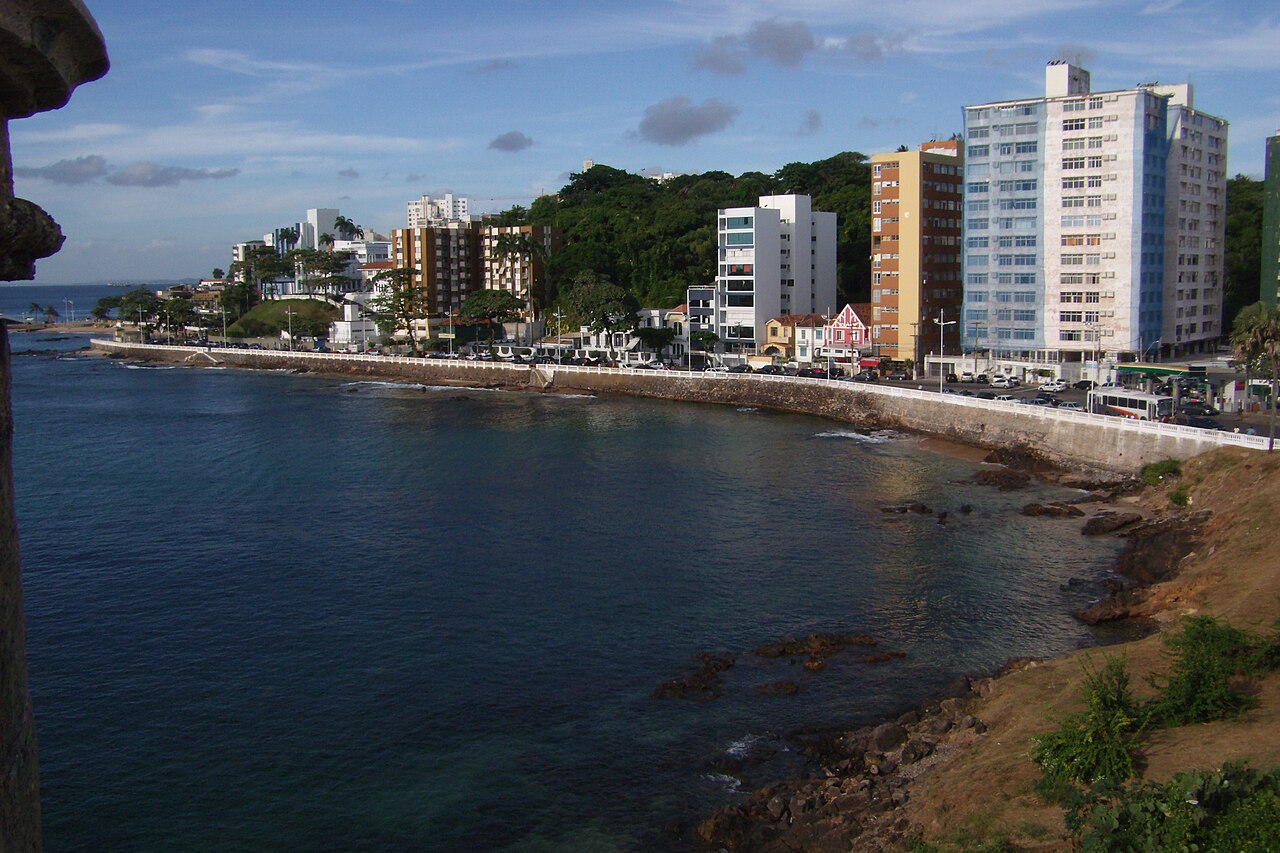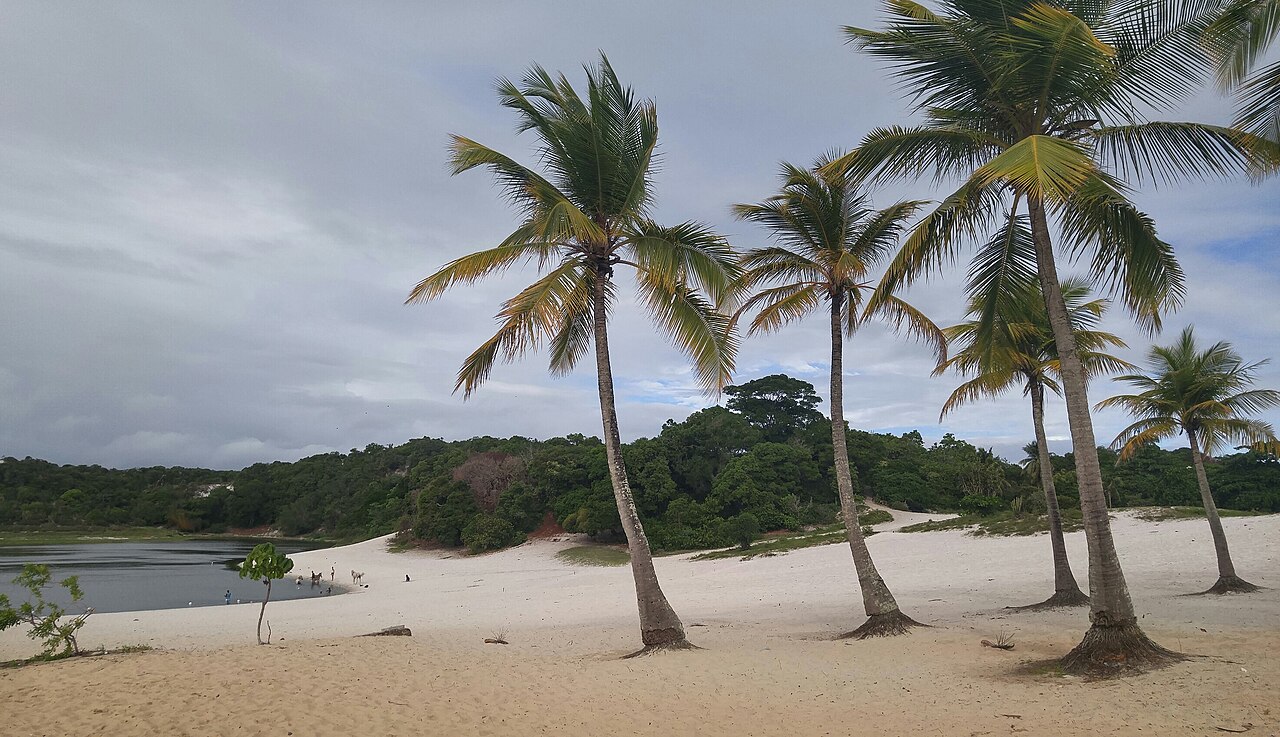
Itapuã sits on the northern edge of Salvador, far from the historic centre in distance and in mood, and it is the place to go if you want to see the city as its residents do. The neighbourhood has been celebrated in Brazilian song and poetry for generations, and it still feels like a seaside village that the city has grown around. The beach has calm to medium waves and emerald-coloured water, and at low tide natural rock pools form along the shore, so it is worth checking a tide table before you go. The area is also popular for windsurfing, stand-up paddle and other water sports. A short distance inland is the Lagoa do Abaeté, a freshwater lagoon inside the Parque Metropolitano Lagoas e Dunas do Abaeté, which opened in 1993. Its dark water and bright white dunes make one of the most striking landscapes in the city, and followers of candomblé revere the lagoon as a sacred place, so visitors are expected to behave quietly and respectfully. Together, the beach and the lagoon give a day out with a very different feel from Pelourinho: wide skies, sand and a slower pace, with a chance to see how Salvador's neighbourhoods live far from the tourist circuit.
Itapuã has a literary and musical history that is easy to follow on foot. The poet Vinicius de Moraes is remembered here, and the Casa di Vina memorial, his former home, is free to visit and displays objects, photographs and documents. Near the lighthouse a bronze statue shows him with an empty chair beside him, which has become a popular photo spot, and the square that bears his name opened in 2003.
The Itapuã Lighthouse itself was inaugurated in 1823, a 21-metre cast-iron tower on the Pedra Piraboca rock that warns ships of rocks and sandbanks.
It has been painted white and red since 1950 and is one of the best-known postcards of the city. Itapuã is also one of the symbolic neighbourhoods for acarajé, the fried bean fritter that is the signature street food of Bahia. The tourism portal highlights Bar do Mamão for its acarajé and for a collection of more than three thousand vinyl records, and eating here is as much a part of the visit as the beach.
Pair a stop at a stall or a beachside bar with a walk along the sand and you have the essence of a Bahian day out. Venues change over time, so treat any name as an example and ask locals for current favourites. Getting there takes a car ride of a good part of an hour from the historic centre, depending on traffic, so ride-hailing or a taxi is the sensible choice, and it works well as a half day or a full day.
Go in daylight, bring sunscreen, water and a hat, check the tide for the rock pools and carry only what you need on the beach. Weekends are busier, and weekday mornings are calmer. If you want a beach with more services and a quicker reach from the centre, Porto da Barra is easier, but Itapuã is the better choice if you want atmosphere, music history and a day away from the usual circuit.
What to expect
The experience
A free, self-guided day at a local beach and lagoon, with a lighthouse, a poet's memorial house and street-food stalls.
Best time
A weekday morning for quieter sand, with a low tide if you want the rock pools, and a late-afternoon stop at the lagoon.
How long
Half a day for the beach and lighthouse, a full day if you add the lagoon, the memorial and a long lunch.
Tips
Check the tide table, bring sun protection and water, go by ride-hailing car and treat the lagoon as a sacred place.
Quick picks
- Best for
- Travellers who want a local beach, a music and poetry connection and a day away from the historic centre.
- Families
- Calm to medium waves and rock pools at low tide suit children, but watch them closely in the water.
- Couples
- A relaxed day with a walk to the lighthouse and a late-afternoon drink by the sea.
- Pair with
- A Bahian cooking class or an evening in Rio Vermelho.
- Time needed
- Half to a full day, plus the transfer from the centre.
Good questions
Is Itapuã worth the trip from the centre?+
Yes if you want a local beach, a lagoon and a calmer pace. It is a good half-day or full-day outing, but it takes a car ride of a good part of an hour from the historic centre.
What is the Lagoa do Abaeté?+
A freshwater lagoon with dark water and white dunes, inside a metropolitan park that opened in 1993. Followers of candomblé revere it as sacred, so behave quietly.
Can I swim at Itapuã?+
The beach has calm to medium waves and emerald water, and rock pools form at low tide. Check the tide, follow local advice and watch children closely.
Where should I eat?+
Itapuã is known for acarajé, and Bar do Mamão is highlighted by the tourism portal. Venues change, so ask locals for current favourites.
Is there anything cultural to see?+
Yes. The Itapuã Lighthouse dates from 1823, and the Casa di Vina memorial to the poet Vinicius de Moraes is free to visit.