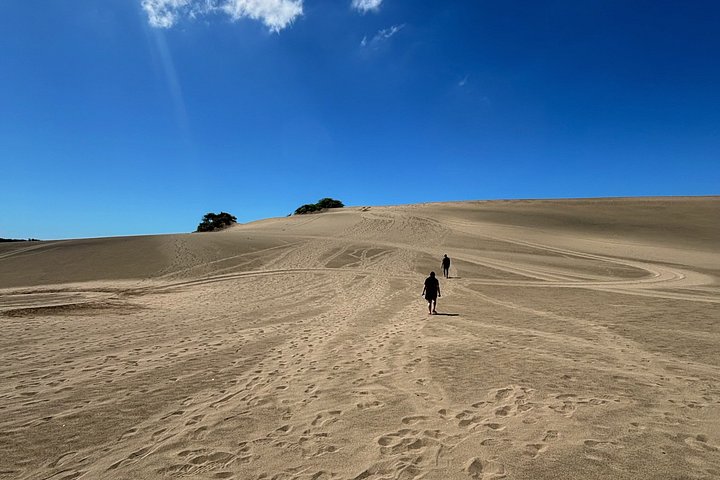
An hour or so west of Santo Domingo, the Caribbean landscape changes. The lush green of the capital gives way to dry scrub, salt flats and the Dunas de Baní, a protected area of rolling sand dunes that reach down toward the sea. They are among the largest dunes in the Caribbean, and walking up a golden slope with the turquoise water beyond is one of the most unexpected sights in the Dominican Republic. The tour we link is a day trip titled as an excursion to the dunes and the south, so you cover the dunes and a taste of the surrounding region in one outing. Baní itself is known for its mangoes, and the town and the surrounding region have a character of their own, with farming, fishing and a laid-back pace very different from the capital. Along the way the guide explains the geography, the ecology of the dry coastal forest and the history of the area. The dunes are best explored on foot, with time to walk, take photographs and feel the sand underfoot, and a stop at a beach or village adds to the day. The itinerary can vary, so check which stops are included.
How to visit
The dunes are a protected area, so follow your guide’s directions and stay on marked routes. Wear a hat, sunglasses, light clothing and shoes that you do not mind getting sandy, and bring plenty of water and sun protection. There is little shade on the dunes, so the early morning and late afternoon are the most comfortable times to walk.
What to expect
The day involves a couple of hours of driving each way, so settle in for the ride. The dunes can be hot, and the sand slows walking, so go at a comfortable pace. Wind can blow sand, so protect cameras and phones. Check the itinerary for lunch and beach time, and bring a swimsuit and a towel if you want a dip.
Making the most of it
Choose this trip if you have a spare day and want to see a different side of the country. It pairs naturally with a night in Santo Domingo beforehand, so you can start early, and it is a good alternative to the more crowded beach excursions. Bring a camera for sunset light on the sand if your departure allows it.
Context worth knowing
The dunes are part of a protected natural monument, and they formed from sand carried by the sea and wind over thousands of years. The surrounding landscape includes salt flats, scrub and mangrove, which provide habitat for birds and small animals, and you may notice cactus and thorny plants unlike the lush vegetation of the north.
The light is exceptional, with long shadows and a soft glow at the beginning and end of the day. Walking on sand is tiring, so go slowly and drink regularly. If your itinerary includes a beach or a seafood lunch, enjoy the pause, and consider buying mangoes or local sweets from roadside stalls in season.
Practical notes
Ask the operator how long you will spend on the dunes and whether lunch is included, and carry snacks for the drive. Take a bag for wet or sandy clothes, and wear sunglasses and a scarf if the wind picks up. The drive can be tiring, so bring a neck pillow or a book. If you suffer from motion sickness, take medication beforehand, and sit near the front of the vehicle. Pack a small towel for a stop at the beach, and keep electronics in sealed bags to keep out sand.
What to expect
The experience
A guided full-day trip from Santo Domingo to the Baní sand dunes and the surrounding south coast.
Best time
Dry season, with an early start to avoid the strongest heat.
How long
A full day including a couple of hours of driving each way.
Tips
Bring a hat, sunglasses, water and sun protection, and protect cameras from blowing sand.
Quick picks
- Best for
- Adventurous travelers who want a dramatic landscape and a break from the city.
- Families
- Good for older children who can walk on sand in the heat.
- Couples
- Striking light and scenery for photos.
- Pair with
- A relaxed evening in the Colonial Zone.
- Time needed
- A full day.
Good questions
Where are the Baní dunes?+
They lie west of Santo Domingo on the south coast, roughly an hour or so by road depending on traffic.
Can I swim there?+
Check the itinerary for beach time. The dunes themselves are a protected area for walking and photography.
What should I bring?+
A hat, sunglasses, water, sun protection and shoes that can get sandy.
Is it hot?+
Yes, with little shade. Early morning and late afternoon are the most comfortable times.
What is Baní known for?+
The town is known for its mangoes and its laid-back, rural character.