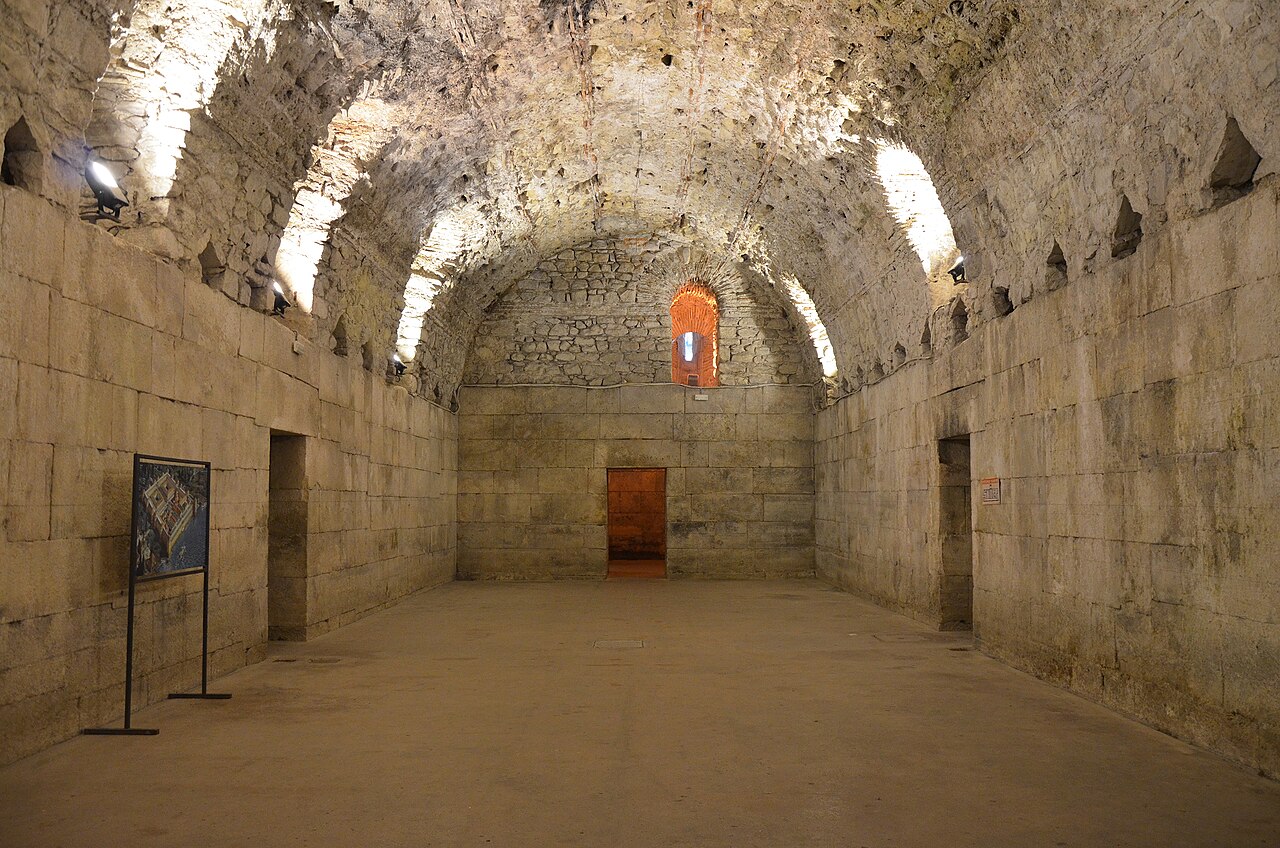
The Riva is where Split goes to see and be seen. This broad pedestrian promenade runs along the harbour in front of the south wall of Diocletian's Palace, and from morning coffee to late-night drinks it is the city's social heart. The Split tourist board describes it as pedestrian heaven, and its present form dates to about two centuries ago under the French marshal Marmont, though it has been widened and rebuilt several times since. Along it you pass the south front of the palace with the entrance to the cellars, the Franciscan monastery and church of St Francis, the Bajamonti Dešković Palace, and the Port Authority building at the east end. The terraces are lined with cafes and restaurants, ferries and catamarans leave from the nearby port for the islands, and on the western side a Sports Walk of Fame honours local athletes. It is also where most day trips and speedboat tours depart, and where the stairs to Marjan Hill begin.
The Riva is free and open at all hours, so there is nothing to book, but how you use it makes a difference. Come in the morning for a quiet coffee and the view of the palace wall in soft light. Come at sunset when the sky behind the harbour turns orange and the whole town seems to be out walking. Come late for drinks at a table facing the water, though expect Riva prices, which are higher than in back streets.
The promenade is the best orientation point in the city. The Brass Gate opens directly from the palace onto it, the cellars entrance is here, the tourist information office is nearby, and the ferry and bus stations are a short walk to the east. From the western end you can follow the waterfront past the Sports Walk of Fame to the foot of Marjan Hill, and the stairs near the Visitor Centre on Trumbićeva obala lead up the hill toward the viewpoints.
In winter the Riva stays alive, with locals taking the evening stroll known as the špica, although terraces thin out and some open only at weekends. Warm layers are enough, since the wind off the harbour can be sharp. Treat it as a place to start and end days: a quick coffee before a palace walk, an evening wander after the cathedral, or a gathering point before a boat tour.
What to expect
The experience
A free open-air promenade along the harbour with cafes, palm trees and views of the palace wall, open at all hours.
Best time
Early morning for calm, or sunset for the best atmosphere.
How long
Thirty minutes for a walk, an hour or more with a drink.
Tips
Prices on the front are higher than in side streets, so have your meal one lane back. The wind off the sea can be sharp in winter.
Quick picks
- Best for
- Everyone: it is the city's main stroll, orientation point and sunset spot.
- Families
- Flat, wide and car-free, with space for children to run and plenty of ice cream stops.
- Couples
- A sunset walk and a drink facing the harbour is the classic Split evening.
- Pair with
- The palace cellars, the Brass Gate and a climb up Marjan Hill.
- Time needed
- Thirty to ninety minutes.
Good questions
Is the Riva free?+
Yes. It is a public promenade that is open at all hours. You only pay if you sit at a cafe or restaurant terrace.
What is the best time to visit the Riva?+
Sunset is the favourite for atmosphere and photos, while early morning is best for quiet. Evenings are busiest as locals take their stroll.
What is along the Riva?+
You pass the south wall of Diocletian's Palace with the cellars entrance, the Franciscan monastery, the Bajamonti Dešković Palace, cafes and the port, with ferries to the islands nearby.
Are the restaurants on the Riva worth it?+
They have the best views but higher prices. For better value, walk a block inland into the palace lanes or the old town streets for your main meal.
Does the Riva close in winter?+
No. The promenade is always open and locals still use it in winter, but some terraces close or open only on weekends.