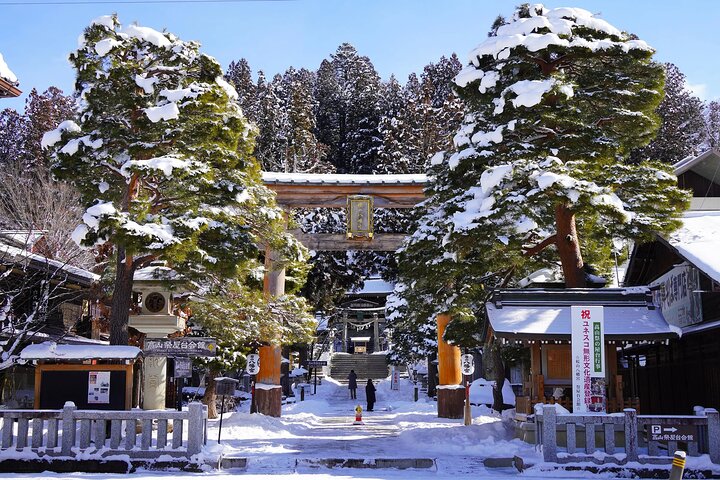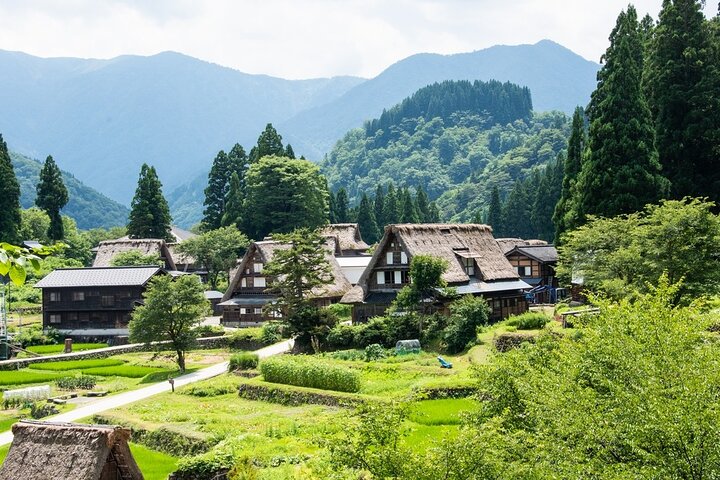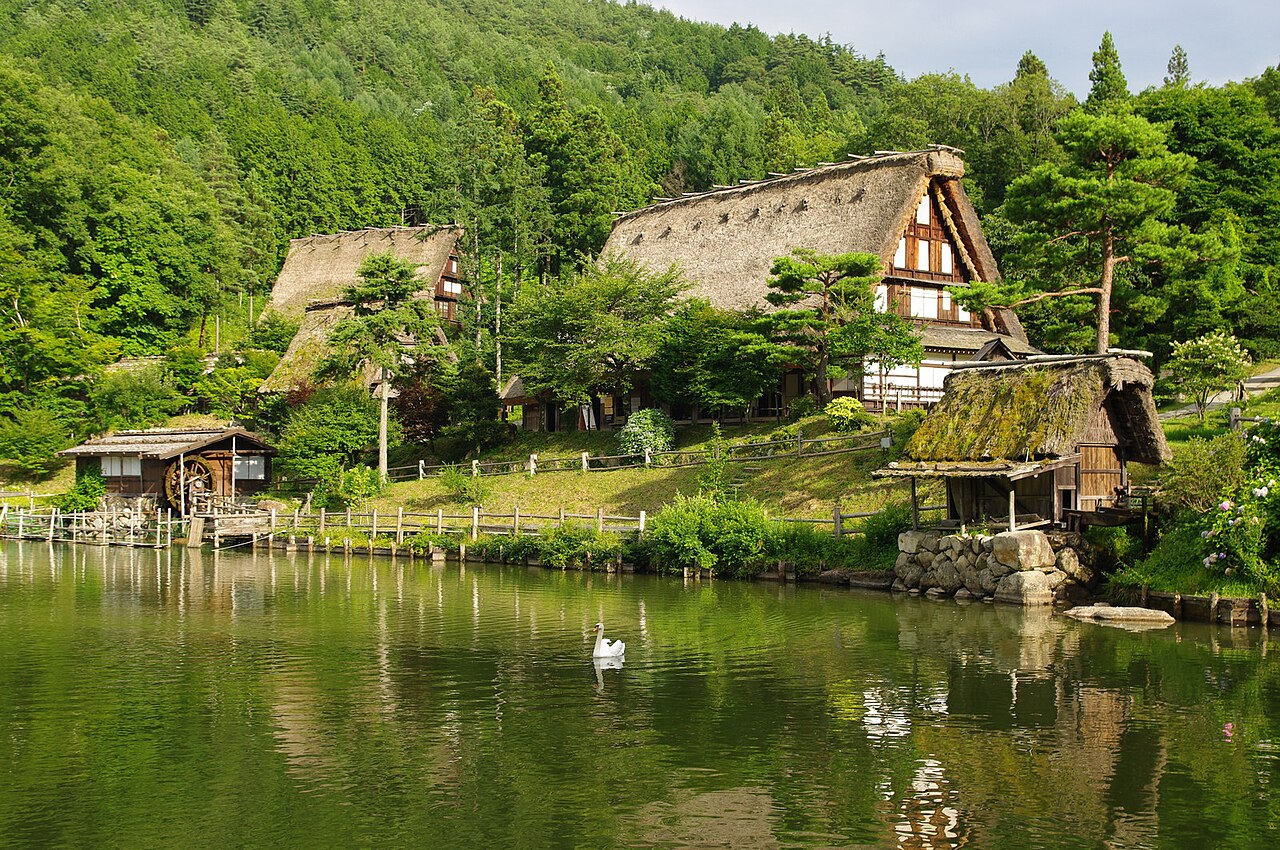
Hida no Sato is an open-air museum on a wooded hillside a few kilometres west of the station, where more than thirty traditional buildings from the Hida region have been rebuilt around a pond. The stars are the steep thatched gassho-zukuri farmhouses, their roofs shaped like hands pressed in prayer, and visitors can step inside to see the smoky living rooms, the irori hearths, the upstairs silkworm lofts and the tools of everyday life. Other buildings include storehouses, a mill, a woodworking shed and craft workshops, where artisans demonstrate weaving, carving and pottery. Paths wind through the trees and around the water, and the setting makes every angle photogenic, with maple colour in autumn and thick snow in winter. Wooden floors are warm underfoot and the staff are happy to explain the details. The ticket product linked here is a dedicated admission pass that also arranges hotel pickup, so read the arrangements and the non-refundable terms before you buy.
The village exists because modern life threatened to erase this way of building. Many of the houses were threatened by development or flooding in the surrounding valleys, and they were carefully dismantled, moved and reassembled here with their original timbers, a feat that matters because gassho construction uses no nails and relies on rope lashings and heavy joinery. The roofs are steep to shed the region's heavy snow, and the large attic spaces were used to raise silkworms, a key local income. Inside you see how families lived, cooked and worked through long winters.
Getting the most from a visit
Start at the entrance and follow the loop path, spending time in two or three houses rather than all of them. Enter a gassho house and sit by the hearth; some have volunteers who light the fire and explain the daily routine. Look up at the beams, then climb the ladders to the loft if it is open.
The craft studios offer short experiences that vary by season, and cafes sell simple snacks and hot drinks. In recent winters the village has held an evening illumination in January, which is lovely if your dates match, but confirm the schedule before you travel.
Practical information
The village is open daily from the morning to late afternoon, with no regular closing day, and a modest entry fee applies; parking is cheap if you drive. It is a short bus ride or a bicycle journey from the station, and the walk around takes about an hour and a half.
In winter, wear shoes with grip, because the paths can be snow-packed, and bring a warm layer since the houses are cold inside and the hearth fires only warm the area immediately around them. Combine it with the old town in the same day or with a longer excursion that includes the caves and the ropeway.
What to expect
The experience
A self-guided loop through relocated farmhouses, storehouses and craft workshops set around a pond, with hearth fires and hands-on demonstrations in some buildings.
Best time
Mid-morning on a weekday, or soon after opening; autumn colour and winter snow are the prettiest seasons.
How long
About an hour and a half to two hours for the full loop.
Tips
Wear shoes with grip and a warm layer, check the January illumination dates, and read the pickup and refund terms on the booking page.
Quick picks
- Best for
- Anyone who wants to see inside the mountain farmhouses without the Shirakawa-go crowds.
- Families
- Children like the thatched houses, the hearths and the open space; allow time for the craft demonstrations.
- Couples
- A peaceful wander among old houses and ponds, especially beautiful in snow or maple season.
- Pair with
- The old town, the Festival Floats Exhibition Hall or a Shirakawa-go day trip for comparison.
- Time needed
- Two hours including the walk between houses.
Good questions
What is Hida Folk Village?+
It is an open-air museum of more than thirty traditional buildings moved from across the Hida region. The highlights are the thatched gassho-zukuri farmhouses you can enter.
How is it different from Shirakawa-go?+
Shirakawa-go is a living village you visit as a day trip, while Hida no Sato is a museum within Takayama. It is smaller in scale but easier, quieter and good practice for what to look for.
Is it open in winter?+
Yes, it is open daily all year with no regular closing day, and snow makes it especially attractive. Paths can be icy, so wear shoes with grip.
How do I get there from the station?+
It is a short bus ride or a taxi from Takayama Station, or a longer bicycle ride. The ticket linked from this page arranges hotel pickup, so read the pickup details on the booking page.
Can I change or cancel my admission?+
The linked admission product is non-refundable and cannot be changed, so confirm your dates first. If your plans are loose, check the venue's own entry arrangements too.