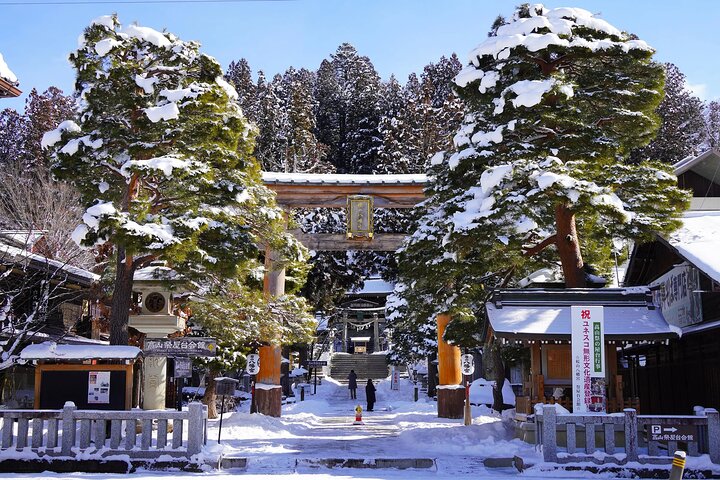
The Takayama Festival Floats Exhibition Hall, known locally as Yatai Kaikan, sits beside the Sakurayama Hachimangu Shrine at the northern edge of the old town and keeps four of the magnificent festival floats on show all year. These yatai are towering wooden carts, several storeys high, lacquered and gilded, with intricate carvings, silk hangings and mechanical puppets that perform tricks on strings during the festival. The floats on display rotate, so visitors see a different selection from time to time, and a shop and information panels explain how the carts are built and paraded. The same ticket opens the adjacent Nikkokan hall, which holds finely made models of the Toshogu Shrine in Nikko. Because the Takayama Festival takes place in spring and autumn, the hall is the way to see the floats in the remaining ten months, and it is a lovely way to understand the pride local craftsmen feel. A guided walk that covers the floats and the historic street is a good way to put them in context.
The festival is the heart of the town's identity. Held each spring and each autumn, it sends the elaborate yatai through the streets pulled by teams in traditional dress, with lanterns lit at night in autumn, and it is counted among Japan's great festival traditions and recognised on UNESCO's intangible heritage list. The floats are works of art: carpenters, lacquer artists, metalworkers and weavers from the Hida region collaborated on each one over generations, and the puppets, called karakuri, are operated by hidden strings.
What to see
The main hall holds four of the floats at a time, with signs in English that explain their names and their features. Take time to look at the carved dragons, the lacquer work on the wheels and the astonishing detail in the underside decoration.
Photography rules can apply to some areas, so check the notices at the entrance. Next door, the Nikkokan has scale models of the Toshogu Shrine built by local craftsmen, which show the same woodworking skill at miniature size, and the shrine grounds outside are pleasant to walk after your visit.
Practical planning
The hall opens in the morning and closes in the late afternoon, closing half an hour earlier from December to February, and a combined ticket covers both buildings. Allow about forty-five minutes. It is a short walk from the old town and close to the Jinya, so it pairs well with a morning at the markets.
Since it is inside, it makes a good rainy-day or snowy-day option. A guided walk that includes the floats and the historic street can add the festival stories and local anecdotes that signs cannot, and is worth considering if this is your first visit to Takayama.
What to expect
The experience
A walk through two halls of festival floats and shrine models, with English signs explaining the carving, lacquer work and puppets.
Best time
Any time of year; it is a good wet-weather or snowy-day option, and quietest in the late afternoon.
How long
About forty-five minutes for both halls.
Tips
Respect photography notices, allow time for the Nikkokan models, and check the earlier winter closing time from December to February.
Quick picks
- Best for
- Visitors who miss the spring and autumn festivals and want to see the floats up close.
- Families
- Children are drawn to the puppets and the glittering floats; the visit is short and indoor.
- Couples
- A calm, indoor cultural stop in the afternoon, followed by a stroll through the shrine grounds.
- Pair with
- The Takayama Jinya, Sanmachi Suji and the morning market.
- Time needed
- Under an hour, plus a short walk around the shrine.
Good questions
What is shown at the Festival Floats Exhibition Hall?+
The hall displays four of the town's festival floats at a time, rotating them occasionally. A combined ticket also covers the Nikkokan hall of shrine models.
When does the Takayama Festival take place?+
It is held twice a year, in spring in April and in autumn in October. The October festival has just finished, so this season you see the floats in the hall instead.
Is it open in winter?+
Yes, the hall opens daily, with slightly shorter hours from December to February. It has no regular closing days, though year-end closures are worth checking.
How long should I allow?+
About forty-five minutes covers both halls. Add time for the shrine grounds and the stroll back to the old town.
Is the hall suitable for children?+
Yes, the floats and puppets appeal to children and the visit is short. It is indoors, so it works well in rain or snow.