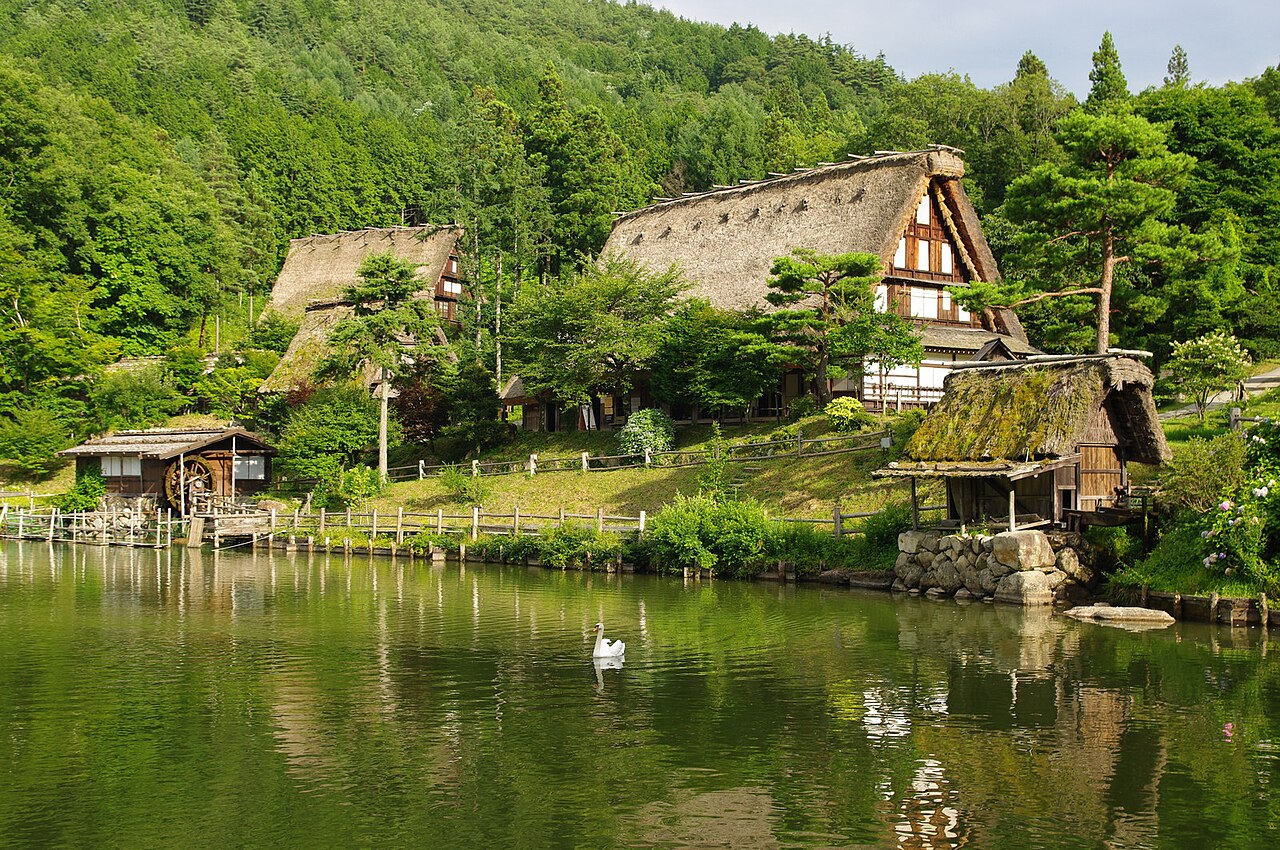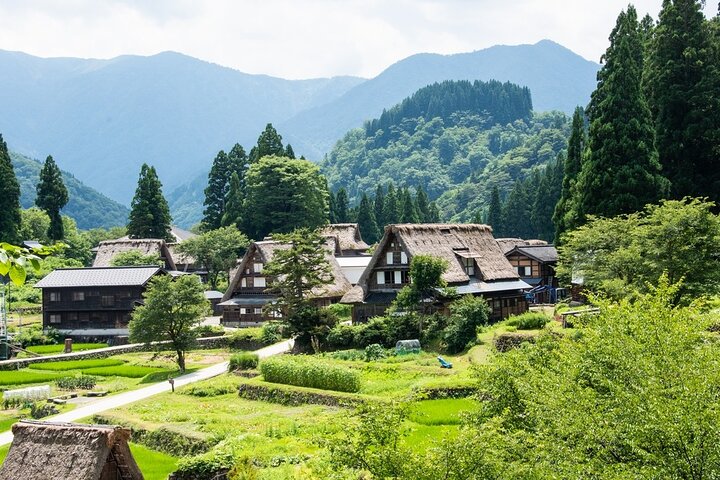
Shirakawa-go and Gokayama are mountain villages where steep thatched farmhouses, built in the gassho-zukuri style, have been preserved in their valleys and listed together as a UNESCO World Heritage Site. Shirakawa-go's Ogimachi village is the largest and most visited, with dozens of gassho houses set among rice fields and a river, and an observation point above the village gives the classic view. Gokayama's smaller hamlets, such as Ainokura, are quieter and just as striking. The roofs are steeply angled to shed heavy snow, and several houses are open as museums, inns or restaurants. A scheduled sightseeing bus from Takayama takes travellers to the villages for several hours on the ground, handling the driving and the hairpin mountain roads, which matters in winter. It is the simplest way to visit without a car, and this entry is the one big excursion that most Takayama itineraries include.
Why the villages matter
The farmhouses are large, multi-storey wooden buildings with thick thatch, built without nails and using rope lashings. They were designed for extended families who lived in the lower floors and raised silkworms in the lofts, and the architecture is a response to a harsh, snowy environment. The roofs need re-thatching by community effort, a tradition that continues, and the villages are still lived in, so the beauty comes with the obligation to behave like a guest.
What to do on the ground
In Ogimachi, walk the lanes, step into a museum house to see the interior and loft, and walk up to the observation point for the postcard view. A bus tour usually allows a few hours, so choose one thing to do properly, such as a house interior and the viewpoint, rather than trying to see everything.
Gokayama, if your trip includes it, rewards the extra time with quieter hamlets and fewer crowds. Try local specialities such as hoba miso, soba and sweet buns, and remember that the villages are residential, so ask before photographing people and keep to the paths.
Winter and booking notes
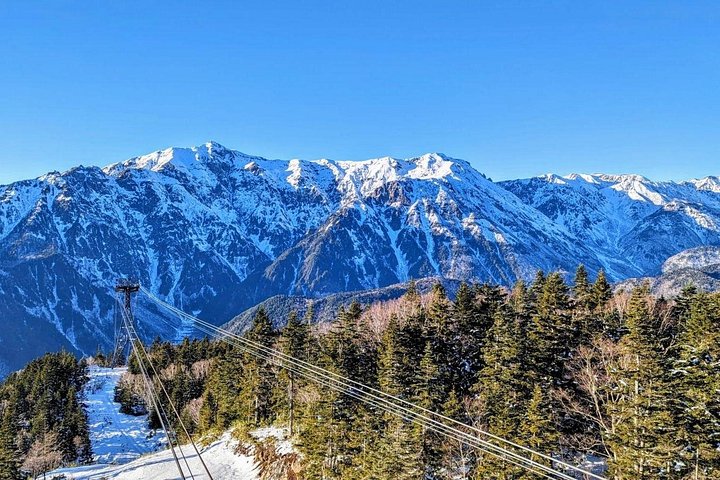
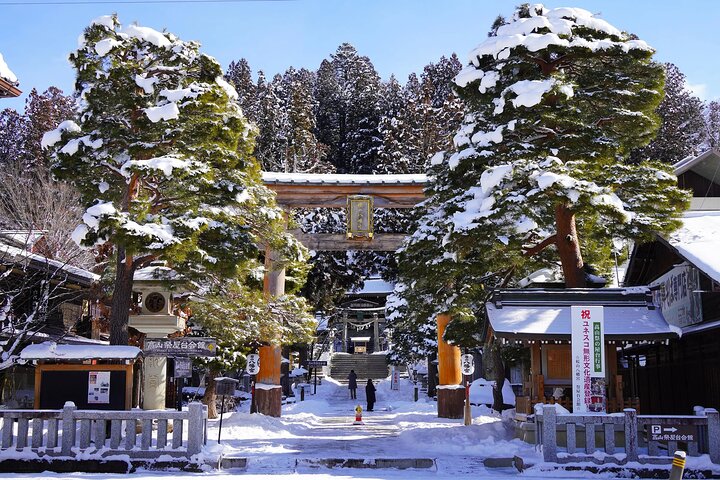
In autumn the villages show colour and the first cold snaps, and from December heavy snow typically blankets the valley. Roads can be affected by weather, so allow flexibility and wear warm layers and proper boots. Shirakawa-go also holds a winter light-up on a few evenings in the cold months, with advance reservations required and dates announced late in the year, so check before you plan for it.
Book a seat ahead for scheduled buses, particularly at weekends, and check the booking page for the meeting point, the time on the ground and the return schedule.
What to expect
The experience
A scheduled sightseeing bus from Takayama to the World Heritage villages, with free time on the ground to walk, visit a house and climb to the viewpoint.
Best time
Winter for snow-covered roofs, or autumn for colour; weekdays are quieter than weekends and holidays.
How long
A full day, with a few hours on the ground in the villages.
Tips
Reserve your seat ahead, wear warm layers and boots from November, and check the light-up reservation rules if you want an evening visit.
Quick picks
- Best for
- First-timers who want the iconic Japanese mountain-village scene without driving.
- Families
- A scenic day with lots of walking; children enjoy the huge roofs and the snow, though the bus ride is long.
- Couples
- A romantic snow-day outing, with hot soba or hoba miso for lunch.
- Pair with
- Hida Folk Village for a quiet comparison, and an evening in Takayama.
- Time needed
- A full day.
Good questions
How far is Shirakawa-go from Takayama?+
It is about an hour away by road, depending on the route and the weather. A scheduled sightseeing bus handles the mountain driving.
Is it worth visiting in winter?+
Yes, the snow-covered roofs are the best-known view, though roads can be affected by weather. Dress warmly and allow flexibility in your schedule.
What is the Shirakawa-go winter light-up?+
It is an evening event on selected dates in the cold months, with the houses lit against the snow. It needs advance reservations, with details released late in the year.
Do I need to book the bus?+
Yes, booking a seat ahead is wise, particularly at weekends and holidays. Check the booking page for departure points and return times.
Is Gokayama worth adding?+
Yes if you have time. Its hamlets, including Ainokura, are quieter and show another side of the same architecture.