Tangier eats from three directions at once. The Atlantic and the Mediterranean bring fresh fish, the Rif mountains and the surrounding countryside supply vegetables, olives and herbs, and centuries of Spanish, French and Andalusian contact have left their mark on the pastries, the bread and the spices. The result is a cuisine that is recognisably Moroccan but with a coastal accent, and a city where you can eat very well on a modest budget if you know how to look.
Start with mint tea
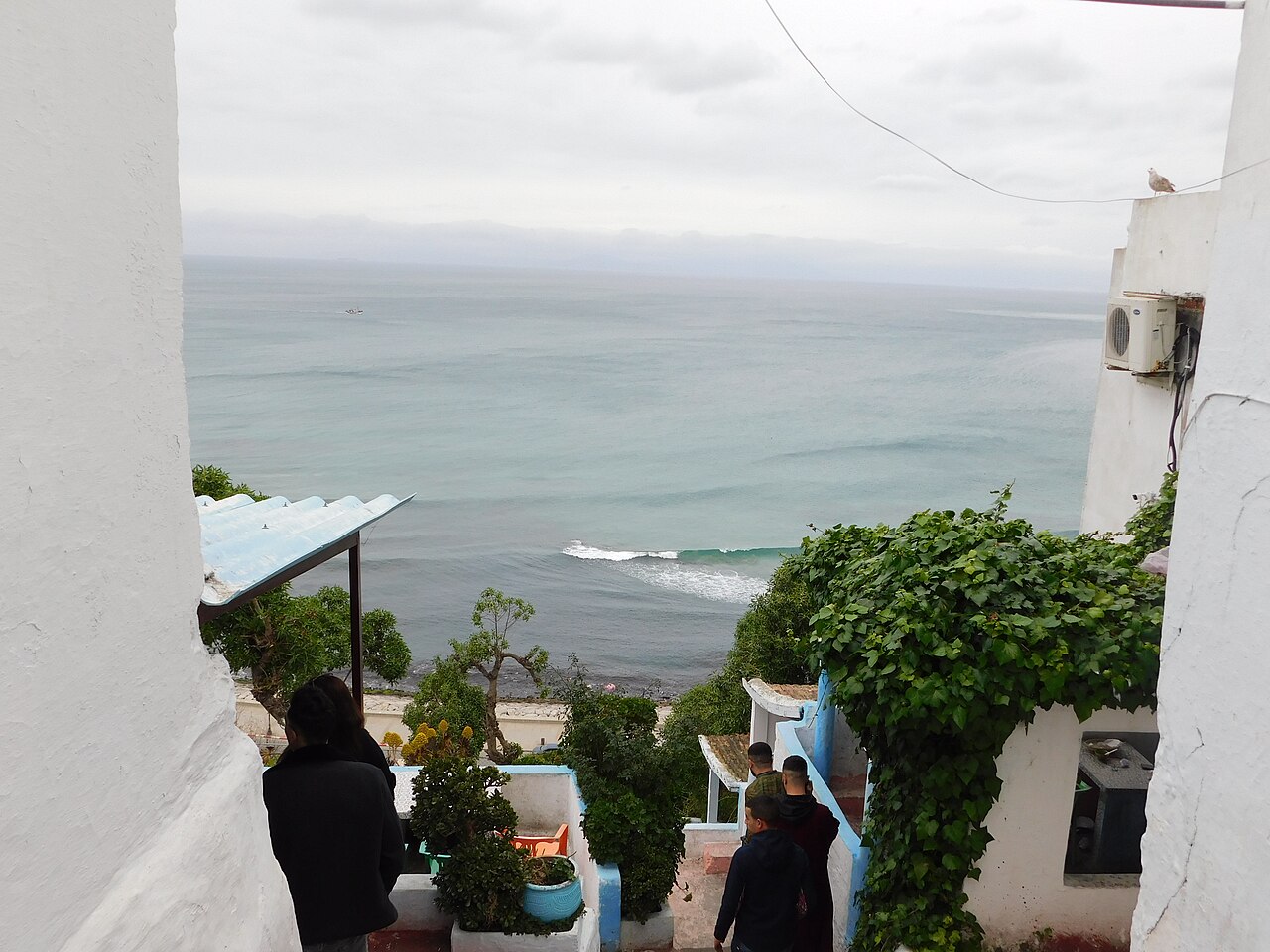
Mint tea is the social glue of Tangier. It is poured from height into small glasses, served very sweet unless you ask otherwise, and offered in shops, cafes and homes. Accepting a glass is polite, and you are not obliged to buy anything. The Petit Socco is the classic place to sit with one, and Cafe Hafa on the cliffs, open since 1921, is the classic place to drink it with a view of the Strait. Order a pastry alongside and linger.
What to look for on the table
Tagines, slow-cooked stews named for the conical clay pot they are made in, are the everyday dish, from chicken with preserved lemon and olives to lamb with prunes. Couscous is traditionally served on Fridays, steamed and topped with vegetables and meat. Pastilla, a pie of thin pastry with a sweet and savoury filling, is the celebration dish. In Tangier, look for fish too, grilled or fried or cooked in a spiced tomato sauce, and for fresh bread, olives, soups and salads that appear at almost every meal. Ask what is freshest on the day rather than insisting on a particular dish.
Markets and street food
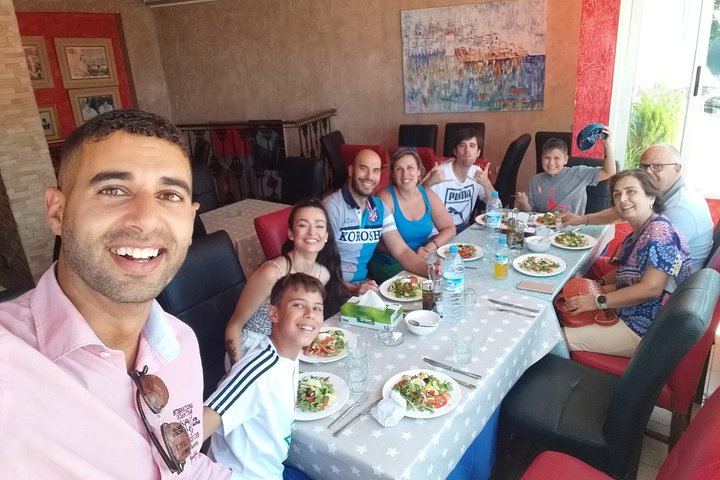
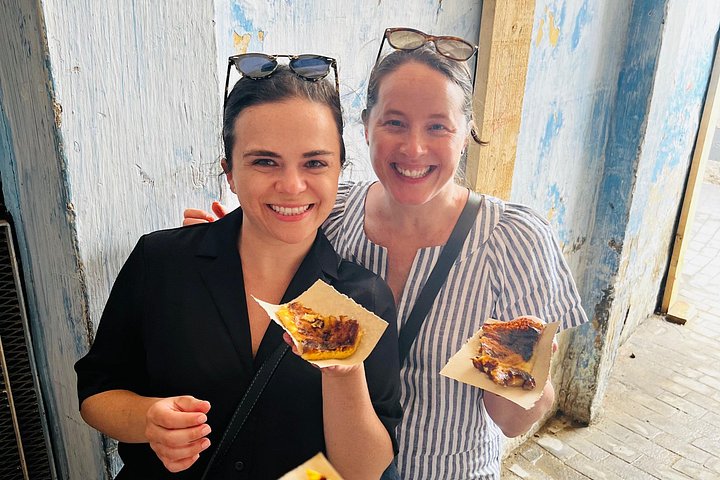
The covered market on rue Touahin, near the Grand Socco, is the best place to see produce, spices, bread and fish before you eat. A good approach for nervous street eaters is to go with a guide on your first day. A medina food tour takes you through markets and stalls with tastings, a spice shop and a traditional lunch with tea, and it explains how to order for yourself later. Our Tangier food and souk tour covers this, and it is the strongest first-day booking for anyone who likes to eat.
Cook it yourself
If you want to take something home, a cooking class is a more lasting experience than another meal. One option starts with a market visit, moves to a family home for a hands-on class and lunch, and ends with a private city tour. You learn how a tagine is built, how couscous is steamed and how spices are balanced. It is a long day, so give it a day of its own, and tell the operator about dietary needs in advance.
Etiquette and practical tips
Eat with your right hand when sharing from a communal dish, and use bread as a scoop. Tipping is customary in cafes and restaurants, a small amount in cash is fine. Prices in cafes and simple restaurants are low, and menus often list the price in dirhams, so check before you order if none is shown. During Ramadan, many places close during the day and open after sunset, and visitors are asked to be discreet about eating in public. Alcohol is available in some hotels and licensed restaurants but not in most cafes, so ask before you assume.
Dietary needs
Vegetarians can eat well on vegetable tagines, couscous, salads, soups and bread, but meat stock is common, so ask. Tell cooks and guides about allergies in clear words, and carry a short note in French or Arabic if possible. Gluten is hard to avoid, since bread and couscous are staples. If you keep halal or kosher rules, the cuisine is generally friendly to the first, and our Jewish heritage tour is a good place to ask a guide about the second.
A simple eating plan
Take a food tour on day one to learn the basics. Eat fish at least once, ideally near the port. Have mint tea at the Petit Socco in the morning and at Cafe Hafa at sunset. Finish with a cooking class if you have a spare day. Where you stay shapes how you eat, so choose a medina guesthouse with breakfast included if you like local mornings, or a city hotel if you prefer a buffet.