Tenerife is small enough that almost everything is a day trip from wherever you are staying, and the variety is the island’s greatest strength. Within two hours you can go from a beach to a volcano, from a banana terrace to a laurel forest, and from a modern resort to a colonial town. This guide groups the best day trips by type, with an honest note on how long each takes and how to choose between a tour and a hire car.
Tour or car?
Coach tours with hotel pickups are the easiest way to see the places where driving is hard, such as Masca, the Teide cable car in a busy week and La Gomera. You get a guide, someone else drives the mountain roads and you can look out of the window. A hire car gives freedom to stop where you like, to start early and to linger, and it is the better choice for the north, for hiking and for visiting two or three small places in a day. Many travellers do both: a tour for one big day and a car for the rest. If you hire a car, mountain roads are slow, parking at popular viewpoints is limited and an early start avoids the worst of it.
Mount Teide
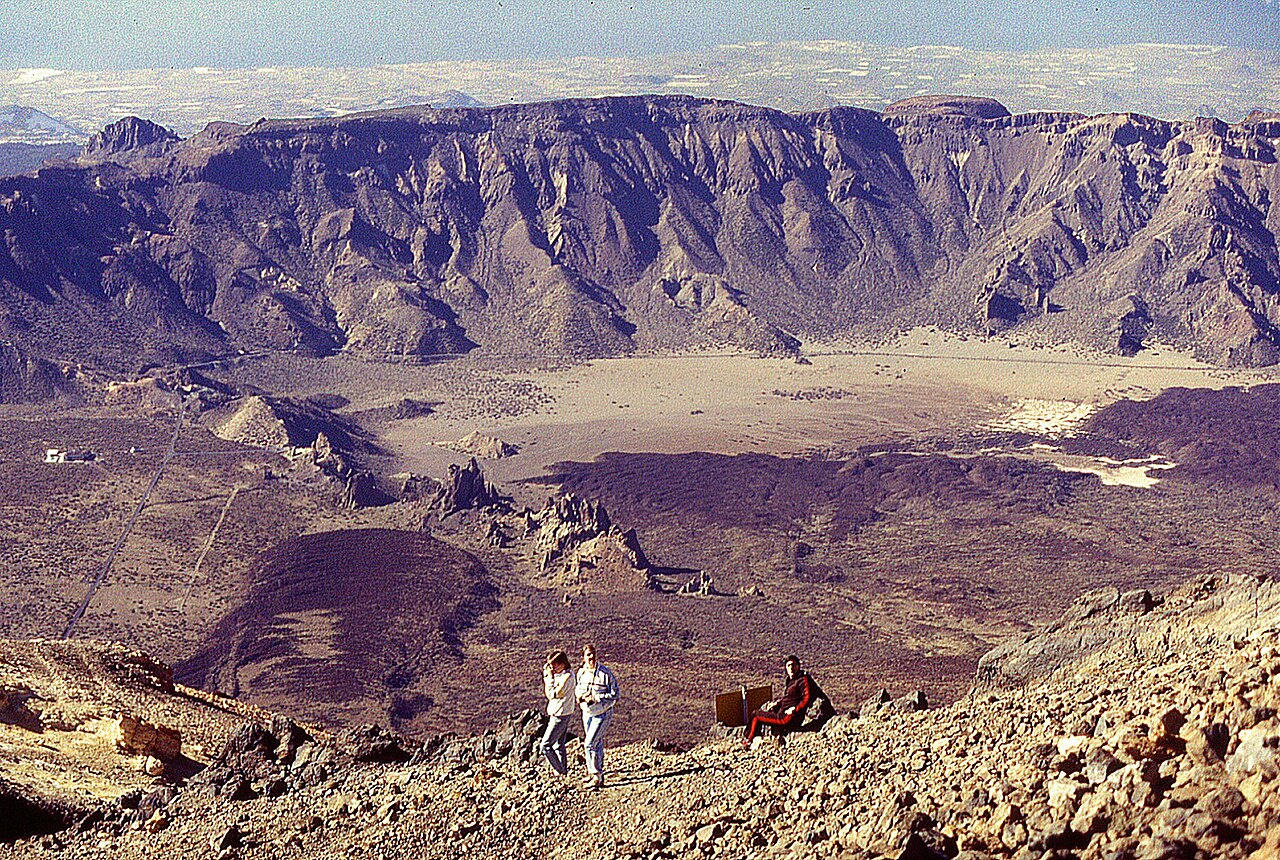
The most popular day trip is Teide National Park, which can be reached in about an hour from the south coast or from Puerto de la Cruz. The cable car climbs to a high station at 3,555 metres in minutes, and the Roques de García formations are a short drive away. Allow most of a day, bring warm layers and go in the morning. Guided tours include transport and the cable car ride, while the daytime Teide Observatory visit adds a look at the solar telescopes. For a very different experience, the evening sunset and stargazing tour returns after dark, and a quad ride covers the volcanic terrain by bike.
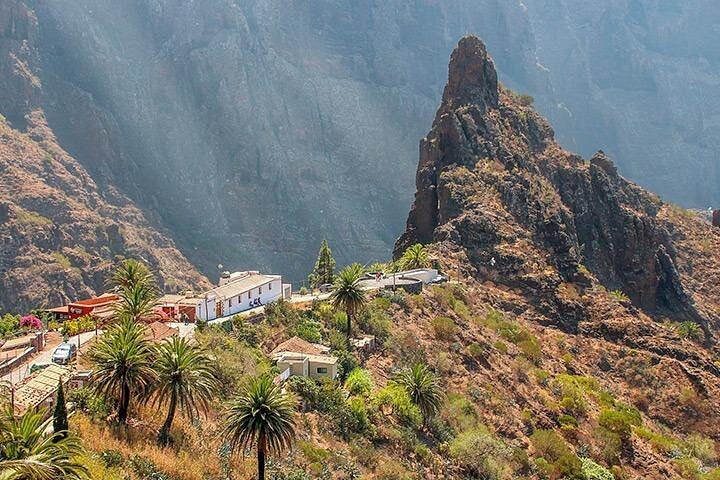
Masca and the Teno mountains
The hamlet of Masca, above a gorge that drops to the sea, is the most scenic stop on the west of the island. The road is narrow and winding, which is why most visitors come on a day tour that also visits Garachico and Icod. If you are driving, start early and take your time, and if you want to hike the gorge, check the current access rules first. The west coast is also where the whale-watching boats go beneath the cliffs of Los Gigantes.
The north: Icod, Garachico and La Laguna
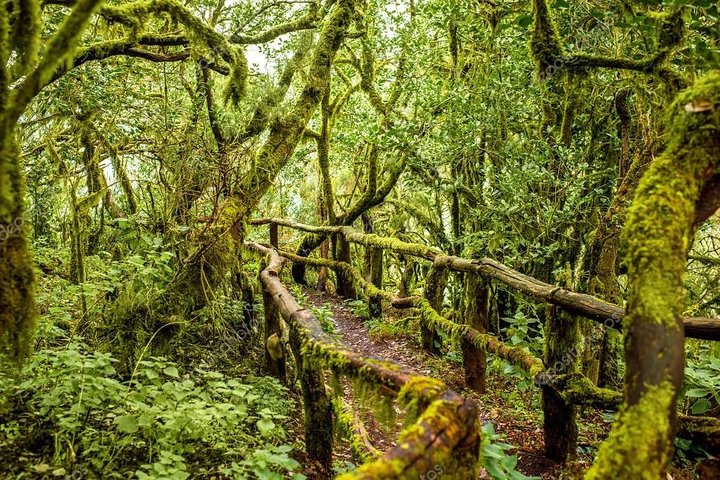
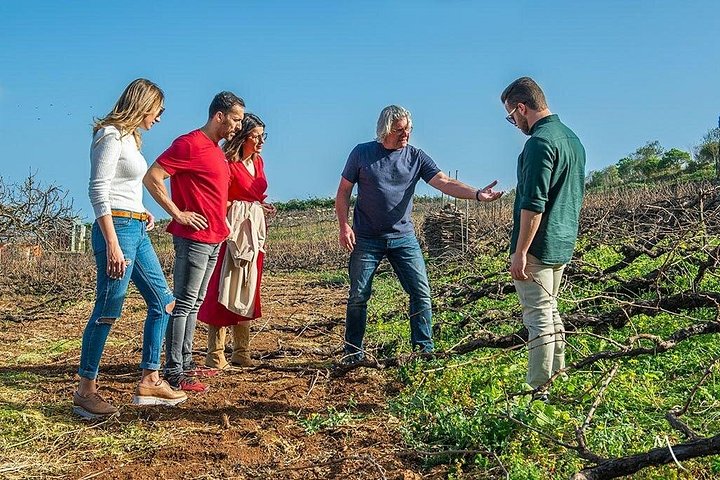
The dragon tree of Icod de los Vinos is a short stop, and the harbour town of Garachico, with its lava rock swimming pools, makes a good lunch break. La Laguna, a World Heritage city, is a relaxed half-day of walking in colonial streets, and it combines well with the Anaga mountains, where laurel forests, ridge paths and quiet villages are within half an hour of the city. A winery visit, such as Bodegas Monje near El Sauzal, fits well into a day in the north, with a tasting to finish the day. Check whether Anaga routes need advance authorisation.
The east: Güímar and Las Teresitas
The Pyramids of Güímar are an easy half-day stop on the road between the south and Santa Cruz, and Playa de Las Teresitas, the island’s golden-sand beach, is a good place to finish a day in the north-east.
La Gomera
The island across the strait is the biggest day out. The ferry leaves from Los Cristianos and takes roughly an hour, and a tour covers the crossing, the island circuit and a lunch. It is a long day of about ten hours, so go in expecting an overview of the forest and the ravines rather than long walks. If walking is your priority, a night or two on La Gomera is better. A shorter alternative for the same strait is a whale-watching boat from Puerto Colón.
Choosing between them
For a first visit, pick Teide and one of the north or Masca loops. For nature and walking, choose Anaga and La Gomera. For food and drink, choose the winery and the harbour towns. For families, mix one sightseeing day with Siam Park or Loro Parque so that the children have a treat. Keep one flexible day in your plans, since Teide and the boats depend on the weather.
Practical tips
Leave early to beat the coaches and the cloud, bring layers for the mountains and keep your passport or identity card with you for ferry days. Fuel up before mountain roads, check opening hours and cancellation rules when booking, and allow more time than the map suggests, because the island’s roads are winding even when the distances are short.