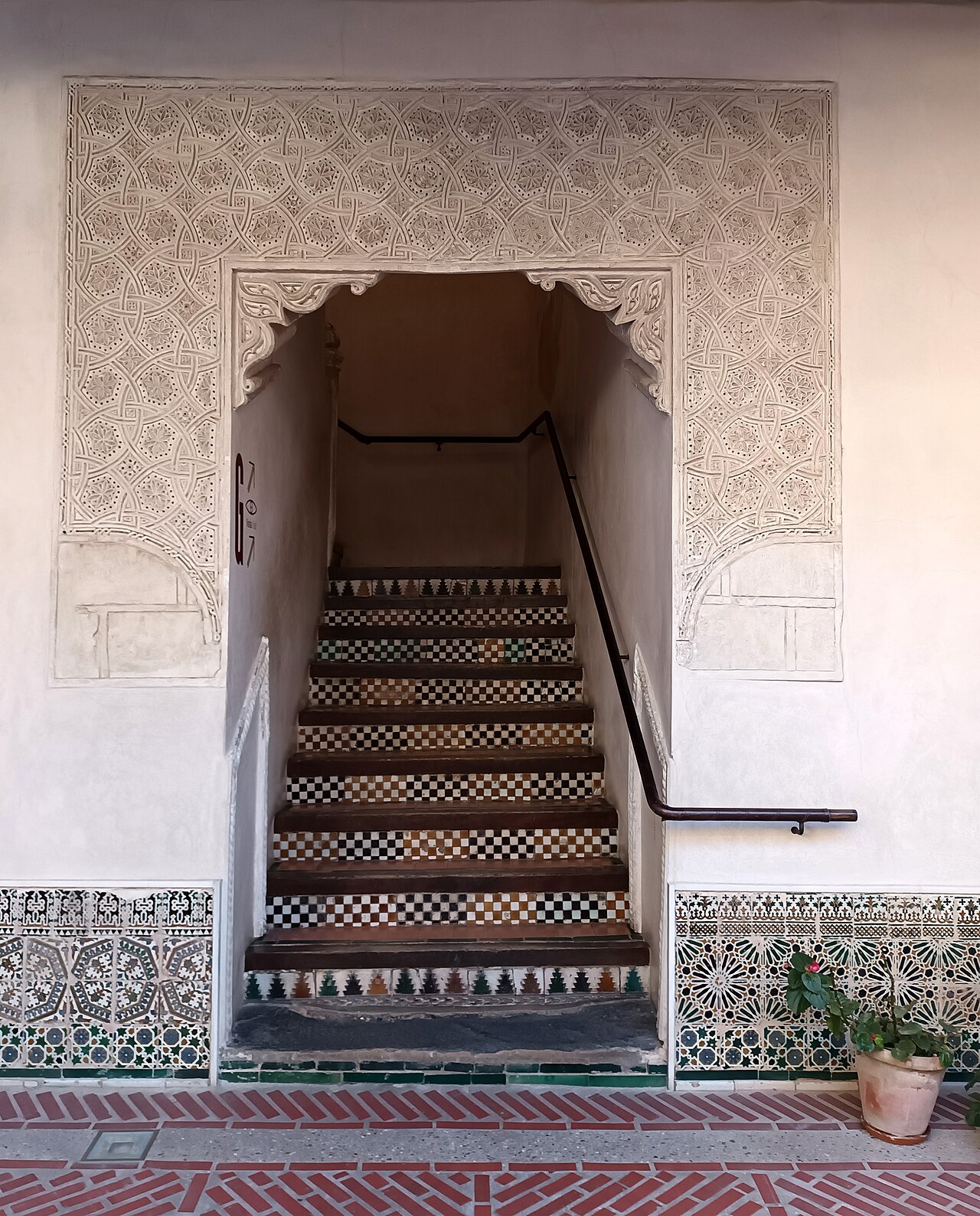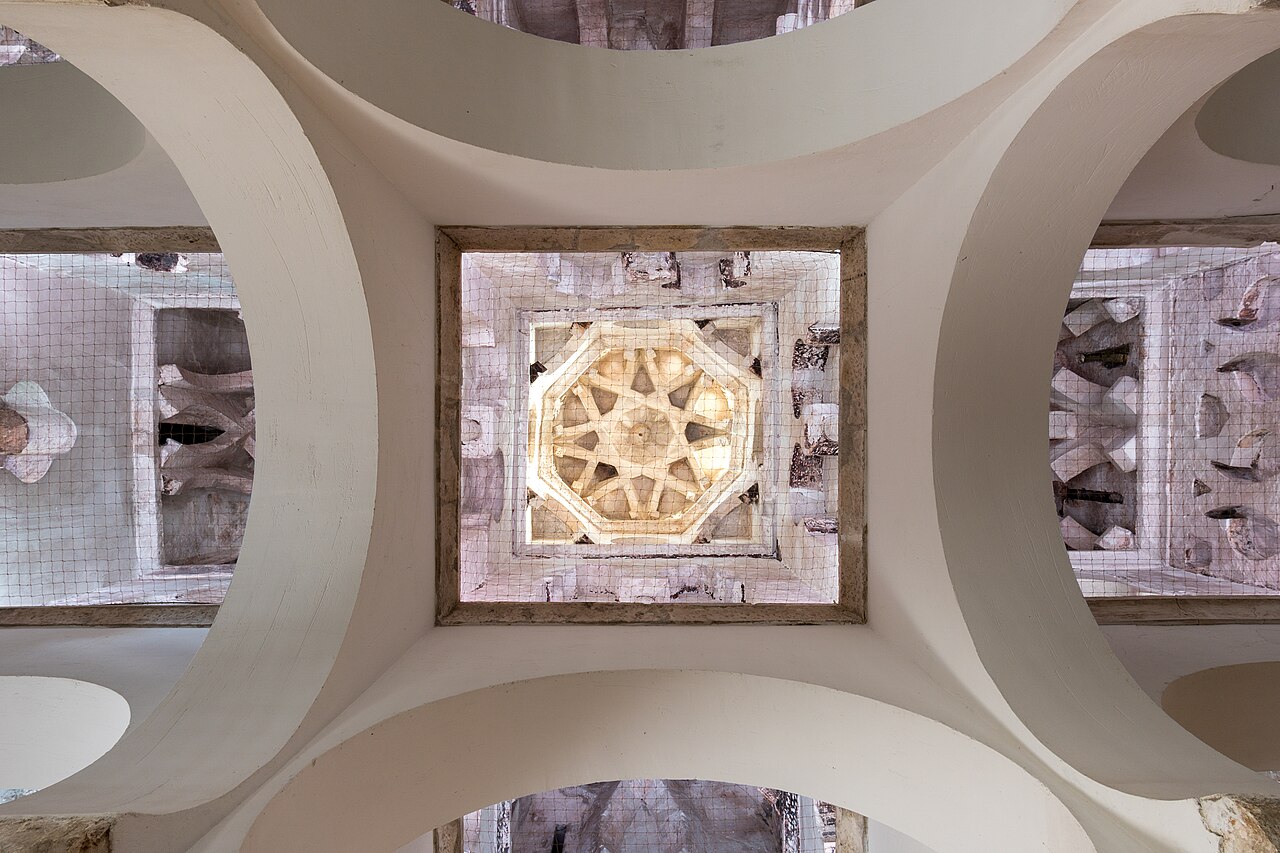
The synagogue of El Transito was built around 1357 by Samuel ha-Levi, treasurer to King Peter I of Castile, and it ranks among the finest surviving examples of Mudejar craft in Spain. Behind a plain exterior hides a rectangular prayer hall with a carved wooden roof, walls covered in delicate stucco, and long bands of Hebrew inscription that praise the king, the benefactor and God. The geometric and floral patterns resemble those of the Alhambra, a reminder that Muslim artisans worked on commissions for Christian and Jewish patrons alike. After the expulsion of the Jews in 1492 the building became a church and later a hermitage dedicated to the Transit of the Virgin, which is the origin of its name. Today it houses the Sephardic Museum, which uses the synagogue and adjoining rooms to present the history, religious life and everyday objects of the Jewish communities of medieval Spain. The collection includes tombstones, ritual objects, textiles and manuscripts, along with a quiet garden and a gallery displaying inscriptions that visitors can study closely.
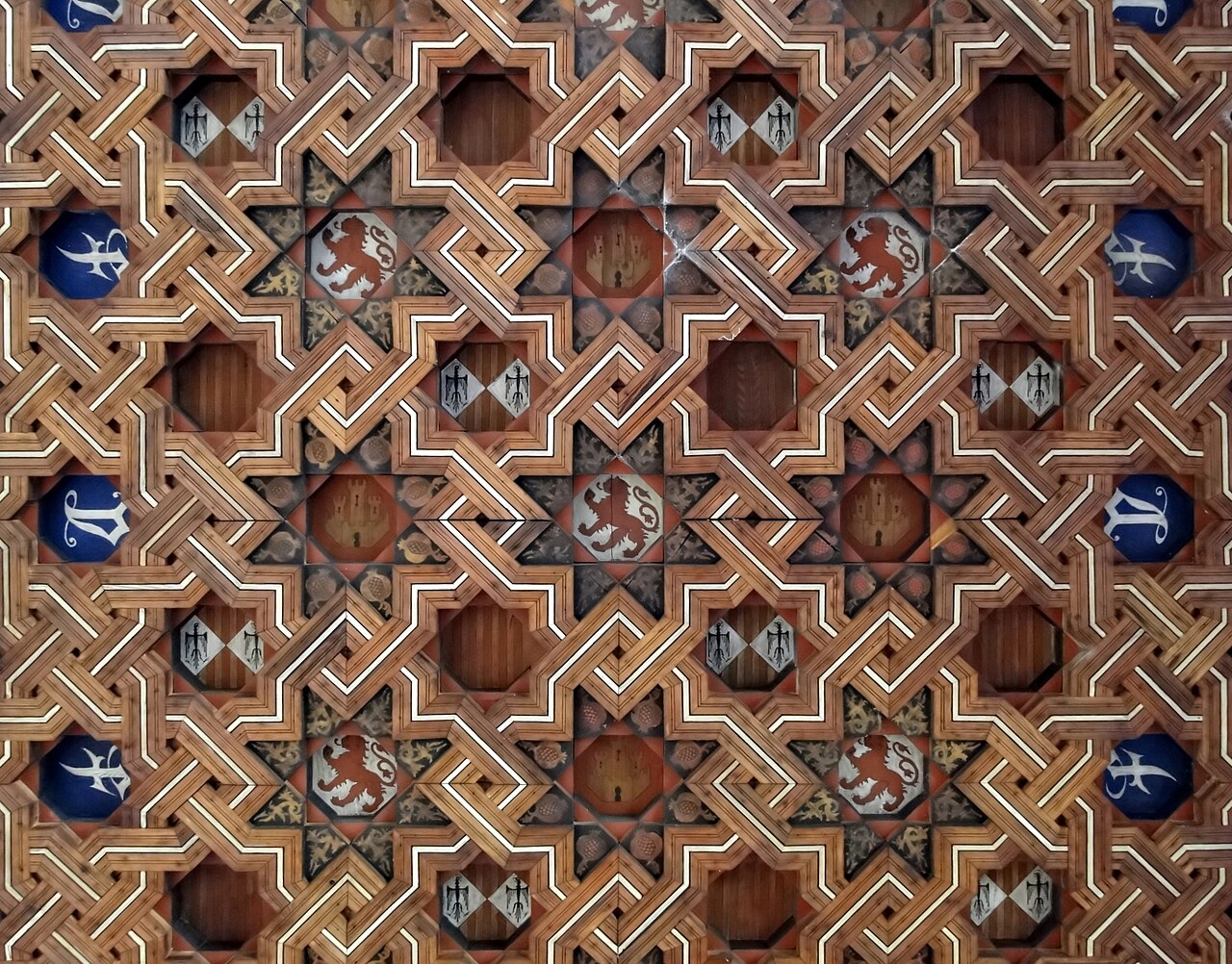
Spend your first few minutes simply looking up. The coffered ceiling, made of cedar and carved with interlace designs, is one of the building's treasures, and the stucco panels beneath it reward close inspection. Look at the eastern wall, where the ark would have been, and at the women's gallery above the hall. The Hebrew inscriptions include verses from the Psalms and dedications to Samuel ha-Levi, who fell from royal favor and was executed not long after the synagogue was finished. That human drama gives the beauty an edge.
The museum rooms add depth. Displays follow the life cycle of a Sephardic family, from birth through marriage to death, and sections cover the language of Ladino, the trades Jews practiced, and the journeys of those who left Spain after 1492 for the Ottoman world, North Africa and beyond. A funerary section includes tombstones from medieval cemeteries in and around Toledo. Labels are in Spanish with some English, so a pocket translator or audio guide helps if you want the detail.
As a state-run museum, entry is modest, and certain days or hours may be free or reduced; check the current schedule before you go. The museum closes one day a week and has shorter hours on Sundays and holidays. Plan around an hour for a relaxed visit, and combine it with the nearby El Greco Museum and Santa Maria la Blanca to make a compact Jewish Quarter circuit.
Arrive early if you hope to enjoy the main hall in near silence; as the day moves on, tour groups fill the space and the acoustic fills with guides' voices.
Think about the sequence of your day. Many visitors treat El Transito as an add-on, but it deserves a slower look than the schedule of a typical bus-tour stop allows. If you have already walked the Jewish Quarter lanes, the museum's displays will make more sense, because you will recognize the street names and the references to lost synagogues.
If you come here first, you will find that the objects give you vocabulary for what you see afterward. Bring a small notebook or use your phone to jot down inscriptions or motifs that catch your eye, and ask staff about any piece you cannot interpret; the team is usually glad to explain.
What to expect
The experience
A self-guided visit through a restored synagogue hall, a women's gallery, a garden and museum rooms on Sephardic life, with labels mainly in Spanish and some English.
Best time
First thing in the morning, before groups arrive. Closed one day a week.
How long
About an hour.
Tips
Look up at the carved ceiling, then read the Hebrew inscriptions along the walls. Check for reduced-price or free periods.
Quick picks
- Best for
- Anyone who loves intricate Islamic-influenced design or Jewish history.
- Families
- Fine for curious kids; the garden gives a break.
- Couples
- Quiet, beautiful, and short enough to fit before lunch.
- Pair with
- Santa Maria la Blanca, the El Greco Museum and Santo Tome.
- Time needed
- One hour.
Good questions
Who built El Transito?+
Samuel ha-Levi, treasurer to Peter I, around the mid 14th century.
Why does it look Islamic?+
It was decorated by Mudejar craftsmen working in a style shared across medieval Iberia.
Are the labels in English?+
Mostly Spanish, with some English; an audio guide or translator app helps.
Is it free?+
Entry is low cost, with free or reduced periods set by the museum. Check the schedule.
How long should I allow?+
An hour is plenty; add time if you like reading inscriptions.