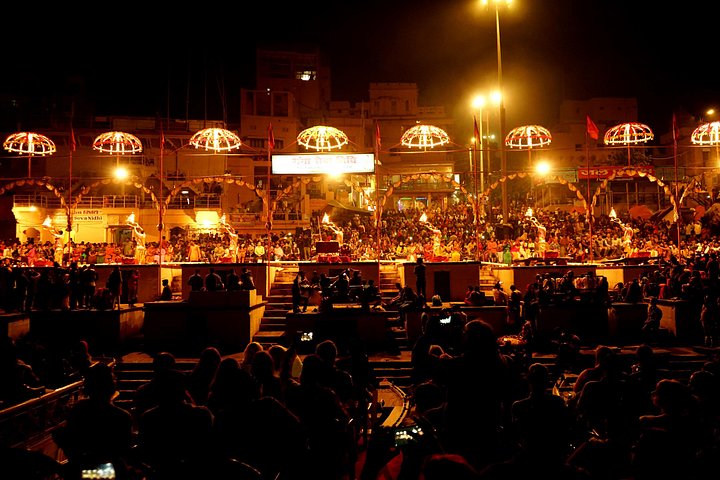
Varanasi has been a capital of Indian classical music for centuries. The Banaras gharana, a distinct school of tabla playing, vocal styles such as thumri and dadra, and a tradition of sitar, sarod and shehnai, grew up here in the courts, temples and homes of the old city, and many of the country's most revered musicians were born or trained in its lanes. A live concert gives visitors a chance to hear that heritage in a small room, usually with a handful of musicians seated on cushions or a low stage and an audience of a few dozen. Evenings of this kind typically feature a lead instrument or voice supported by tabla and a drone, and the performance follows the classical structure of a raga: a slow, meditative alap that introduces the mood, a gradually quickening development, and a lively conclusion in which melody and rhythm interlock. Performers often explain the raga, the instruments and the cycles of rhythm before they begin, which makes the music far easier to follow for anyone new to it. Because the audience is small, you can watch the technique, the quiet exchange between musicians and the improvisation that makes every performance different. It is an evening of calm and concentration, a counterpoint to the noise and spectacle of the aarti, and a way of meeting the city through its sound.
Why go? Because music is as central to Varanasi's identity as the river and the temples. Listening to a trained musician play a raga in the city of its origins connects the places you have seen with the culture that grew around them. Even if you know nothing about classical music, the sound of a sitar and the rhythm of the tabla are quickly absorbing, and an explanation from the performers helps you hear the structure.
How to do it
Concerts are usually held in the evening, in a small hall, a courtyard or a cultural centre, and last about one to two hours. Arrive a little before the start to find a seat, switch your phone to silent and avoid walking in and out during the performance. Dress comfortably in modest clothes, as you may sit on the floor or on low seating, and bring a light layer in cooler months.
Photography and recording are often welcome before and after but may be discouraged during the performance, so ask. If the programme includes a Q and A or a chance to try an instrument, take part with an open mind, because the musicians are usually generous with their knowledge.
Who it suits
Music lovers, couples looking for a quiet evening and travellers who want a cultural experience that is not about crowds or ritual. Children who enjoy listening may like it, but long, slow pieces can test restless ones. The programme and the performers vary, so confirm with the operator when you book which instruments or vocal style you will hear, how long the concert runs and where it takes place, and plan your transport in advance because evening traffic can be heavy.
Pair it with a sunrise boat ride with live music for another side of the same tradition, or with a lesson on an instrument if you would like to try playing yourself.
What to expect
The experience
A small-audience live concert of Indian classical music, with explanations of the raga, instruments and rhythm from the performers.
Best time
Evening, after the day's sightseeing and heat.
How long
Allow one and a half to two hours including arrival and any introduction.
Tips
Arrive early, silence your phone, dress modestly and ask before taking photographs during the performance.
Quick picks
- Best for
- Music lovers and anyone who wants a calm, cultural evening.
- Families
- Suitable for older children who can sit quietly.
- Couples
- Intimate and atmospheric, one of the most romantic ways to spend an evening here.
- Pair with
- A romantic sunrise boat with live music, or an instrument lesson.
- Time needed
- Two hours.
Good questions
What kind of music will I hear?+
Indian classical music, typically a lead instrument such as sitar, sarod or flute, or a vocalist, with tabla and a drone. The exact programme varies.
Do I need to know about classical music?+
No. Performers often explain the raga and the rhythm before they begin.
How long does a concert last?+
Usually one to two hours.
Can I take photographs?+
Ask first. Many performers allow photographs before and after but not during the music.
What should I wear?+
Comfortable, modest clothing. You may be seated on the floor or on low cushions.