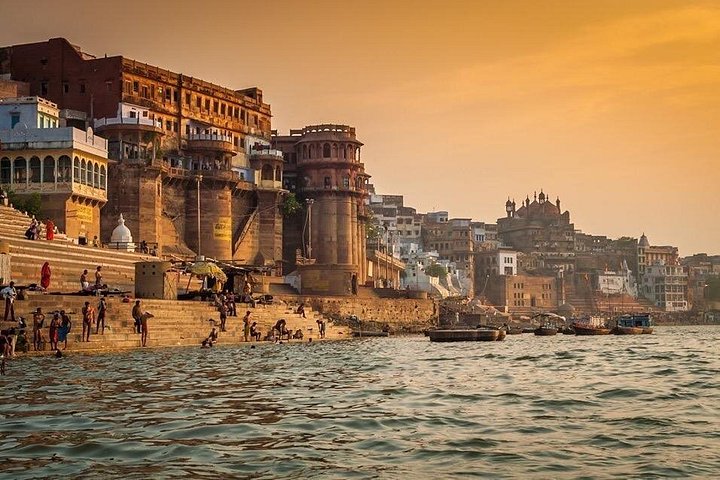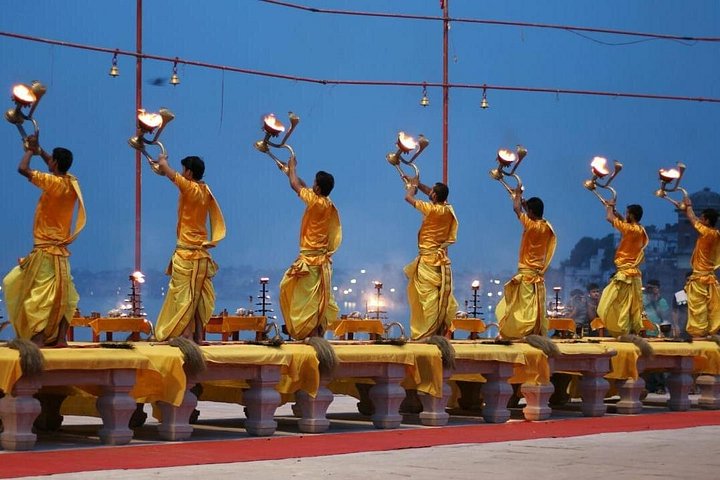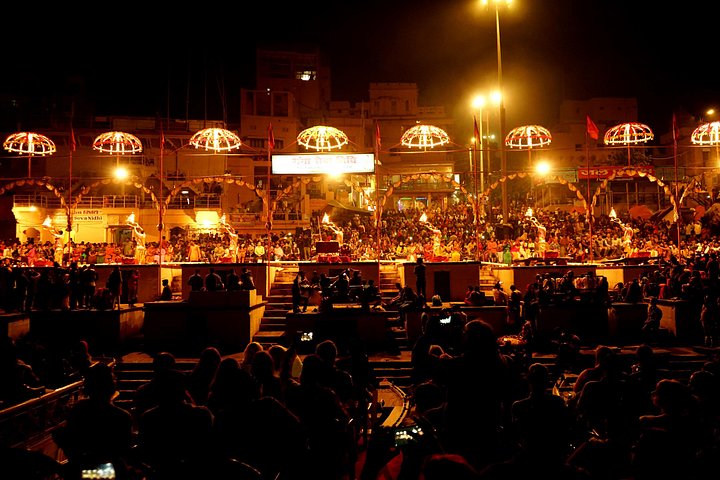
Dashashwamedh is the busiest and best known of Varanasi's ghats, and every evening around sunset it hosts the Ganga Aarti, a ritual of thanks to the river goddess. A line of priests in matching robes stands on small platforms facing the water. To the sound of conch shells, bells, drums and amplified chanting they swing heavy brass lamps blazing with flame in slow, synchronised circles, wave incense and peacock-feather fans, and finish with smaller lamps. The whole ceremony runs for roughly three quarters of an hour and is repeated daily, rain or shine, which is part of its power: it is a living act of worship that happens to be spectacular, not a show staged for visitors. Crowds fill the broad steps, the rooftops above them and a raft of rowing boats anchored just offshore, so the ghat is shoulder to shoulder well before the start. You can watch for nothing from the steps, or join a guided evening tour that gets you a better vantage point and an explanation of the rituals. The atmosphere is joyful rather than solemn: families, pilgrims, schoolchildren, backpackers and priests all share the same patch of riverbank, and the evening ends with people floating small leaf lamps on the current.
The ceremony grew out of older river worship at one of the most sacred stretches of the Ganges, and the name Dashashwamedh refers to a legendary ten-horse sacrifice performed here. Today the aarti is organised by local trusts and performed by trained young priests, and the scale of it has grown with Varanasi's popularity. Understanding that it is genuine devotion in front of a huge audience helps you behave well: keep your voice low, do not step in front of people who have been waiting longer, and treat the lamps and flowers floating on the river with respect.
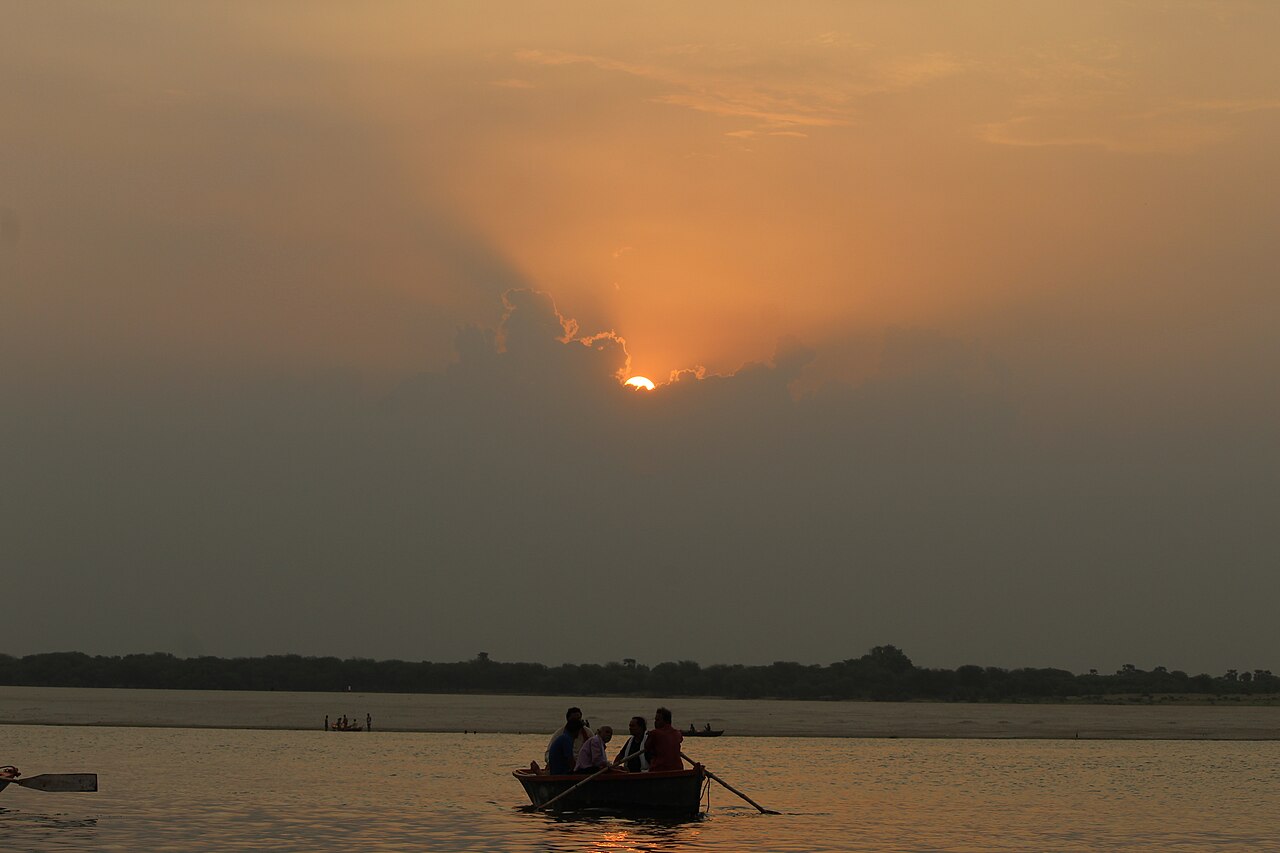
There are three ways to watch. The steps are free and atmospheric but you must arrive early, ideally an hour before sunset, to claim a spot, and from the ground you will see the priests mostly from behind a sea of heads. A rowing boat anchored in front of the ghat gives an unobstructed side-on view and a cooler breeze, and is the choice for photographers.
The third option is a guided evening tour, such as the three-hour Varanasi Evening Aarti Tour linked here, which combines the ceremony with guidance on getting there through the crowded lanes and finding a good position. Whichever you pick, agree the price and the meeting point before you set off, and keep valuables zipped away in the crush.
Practical points matter here. The old city lanes around the ghat are narrow and the final approach is on foot, so arrive early and allow time for security and crowds. The start time shifts with the season as sunset moves, so check the current time with your hotel on the day.
Winter evenings can be chilly on the water, so bring a layer, and carry a small torch for the steps afterwards. Smaller aarti ceremonies are held on other ghats, including Assi, which are calmer if the main ghat feels overwhelming, but for sheer spectacle Dashashwamedh remains the one to see at least once.
What to expect
The experience
A nightly fire ceremony performed by priests on platforms at Dashashwamedh Ghat, watched from the steps, from rooftops or from boats on the river.
Best time
Arrive about an hour before sunset to secure a spot on the steps, or board a boat in good time for a front-on view of the platforms.
How long
The ceremony itself lasts about forty-five minutes, but plan a full evening for crowds, a boat ride and the walk back through the lanes.
Tips
Keep bags zipped, stay behind the people already seated, dress modestly and carry a layer for the river breeze. Agree boat prices and the return point before leaving the bank.
Quick picks
- Best for
- Every first-time visitor, because it shows Varanasi at its most devotional and most photogenic in a single evening.
- Families
- Children usually love the lamps and bells, but the crowd is dense, so keep small ones close and consider a boat for space.
- Couples
- Take a boat just before sunset, watch from the water, then float a small leaf lamp together as the ceremony ends.
- Pair with
- Pair it with a sunrise boat ride the next morning and an old city walk for the quieter side of the ghats.
- Time needed
- Three to four hours door to door including crowds and travel.
Good questions
Is the Ganga Aarti free?+
Watching from the ghat steps costs nothing. Boat seats and guided tours are paid extras that give a clearer view and some explanation of the rituals.
What time does the aarti start?+
It begins around sunset, so the start time moves with the seasons. Ask your hotel for the time on the day and arrive well ahead of it.
Is it better from a boat or from the steps?+
A boat gives an unobstructed side-on view and more room, while the steps put you in the middle of the atmosphere. Boats are better for photos, the steps are better for feeling part of the crowd.
Is the crowd safe?+
It is very dense, so keep bags in front and valuables out of sight. The mood is friendly, and arriving early makes the experience far more comfortable.
Is the ceremony held every day?+
Yes, it is performed nightly through the year. Heavy rain or very high river levels can change the setup, but the ritual continues.