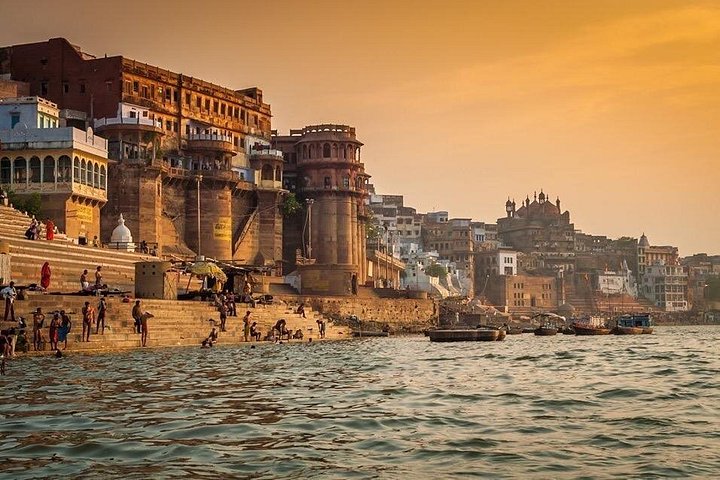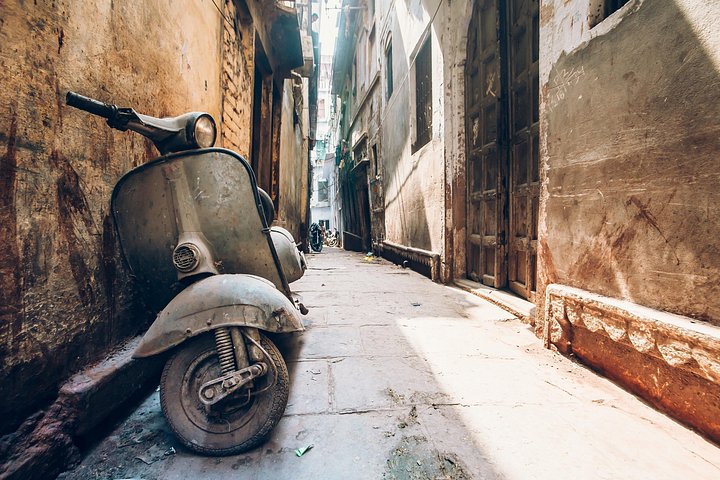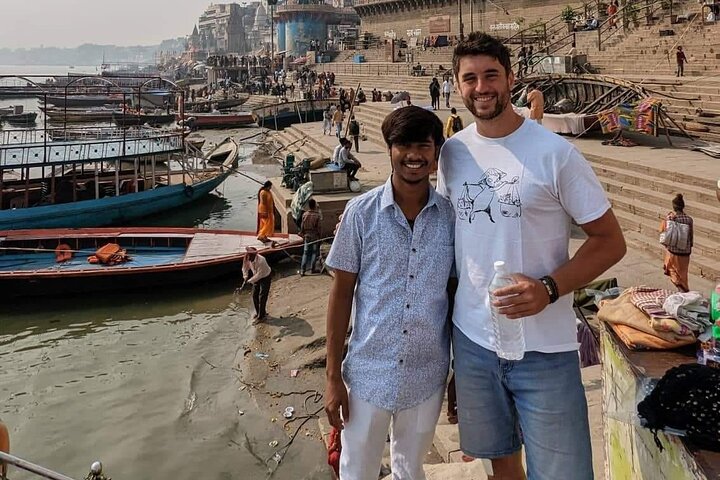
Varanasi's riverfront is a cluster of more than eighty ghats, though no two visitors seem to agree on the exact count, and the city is hard to read without help. A guided heritage walk stitches it together. Walkers follow a stretch of the bank on foot, stopping at ghats that matter, to hear who raised the palaces and temples above them, why pilgrims bathe at particular steps, how the wrestlers' akharas, music houses and sadhus' shelters fit in, and what the daily rituals mean. The best walks also climb into the lanes behind the river to reach small shrines, courtyard temples and tea stalls that you would never find alone. A good guide keeps you out of the way of worshippers and bathers, interprets the rituals without turning them into a spectacle, and explains the etiquette around the cremation ghats. The walk linked here, Hidden Secrets of Varanasi: Vibrant Tradition, is a highly reviewed guided tour with hundreds of traveller reviews, a good sign for a first-time visitor who wants a reliable introduction before wandering alone.
Most of the ghats took their present form in the eighteenth and nineteenth centuries, when Maratha, Rajput and other rulers and merchants paid for stone steps, palaces and temples along the river. That is why so many ghats carry the names of royal houses and why the skyline looks so much like a single painted frieze. A walk from the southern end near Assi toward Dashashwamedh covers the most photogenic part and passes Tulsi, Hanuman and Kedar ghats among others, each with its own temple and its own cluster of daily activity.
Etiquette is part of the lesson. Manikarnika, the main cremation ghat, is an active place of mourning and one of the oldest in India. A respectful guide will explain what is happening from a distance, ask you not to photograph cremations or pyres, and keep the group quiet and well back.
Dress modestly with covered shoulders and knees, remove shoes at temples, and ask before photographing anyone, particularly people bathing. You will see people who look like holy men posing for money, and a guide can tell you who is genuine and how to say no politely.
Logistics are simple. Morning walks catch the best light and the most ritual activity, and the late afternoon is the other good window. Wear shoes with grip because the steps are often wet and uneven, carry water, and keep cash in small notes for tips and tea. The walk works well after a sunrise boat ride or before the evening aarti, and it gives you a mental map that makes every later wander more rewarding. Do not expect a museum tour; Varanasi is a living city and the route changes with the day's events.
What to expect
The experience
A guided walk along a stretch of the ghats and into the lanes behind them, with stops at temples, steps and viewpoints and explanations of the rituals.
Best time
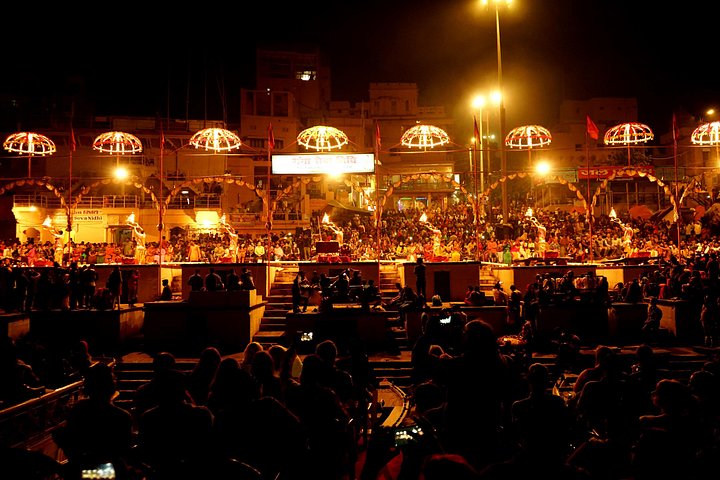
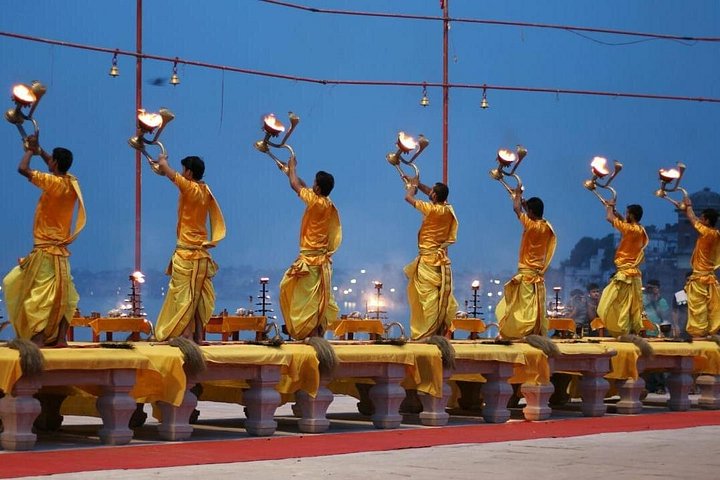
Early morning for light and ritual activity, or late afternoon before the evening aarti when the river glows.
How long
Allow about three hours at an easy pace, with tea stops built in.
Tips
Dress modestly, wear grip shoes for wet steps, ask before photographing people and never photograph the cremation ghats. Carry small notes and water.
Quick picks
- Best for
- Anyone who wants the ghats explained rather than just admired, and first-timers who value a reliable orientation.
- Families
- Fine for school-age children who enjoy stories, but the pace and the crowds make it hard with prams.
- Couples
- A shared, slow morning that ends naturally with chai on the steps and a boat ride after.
- Pair with
- Combine it with the sunrise boat ride and the evening Ganga Aarti for the three essential Varanasi experiences.
- Time needed
- Three hours, plus transfers to the starting ghat.
Good questions
How many ghats are there in Varanasi?+
The commonly quoted figure is around eighty-four, though counts differ. Only a handful are major, and a walk covers the best known stretch.
Do I need a guide for the ghats?+
You can walk them alone, but a guide explains the history and rituals and keeps you clear of sensitive moments. It makes the experience much richer.
Can I take photos on the ghats?+
Yes in most places, but ask before photographing people and never photograph the cremation ghats or pyres. Be especially discreet near bathers.
What should I wear?+
Modest clothing with covered shoulders and knees, and shoes that are easy to remove. Steps are often wet, so choose grip over style.
Is the walk suitable for older travellers?+
It involves many steps and uneven surfaces, so it suits those with reasonable mobility. A private guide can shorten the route.