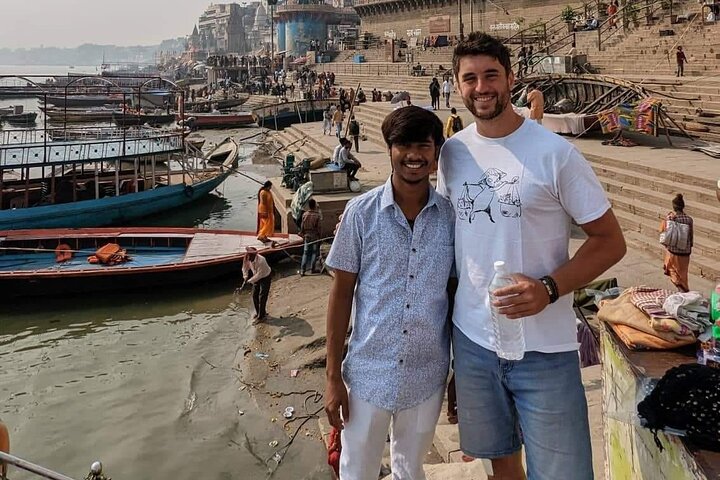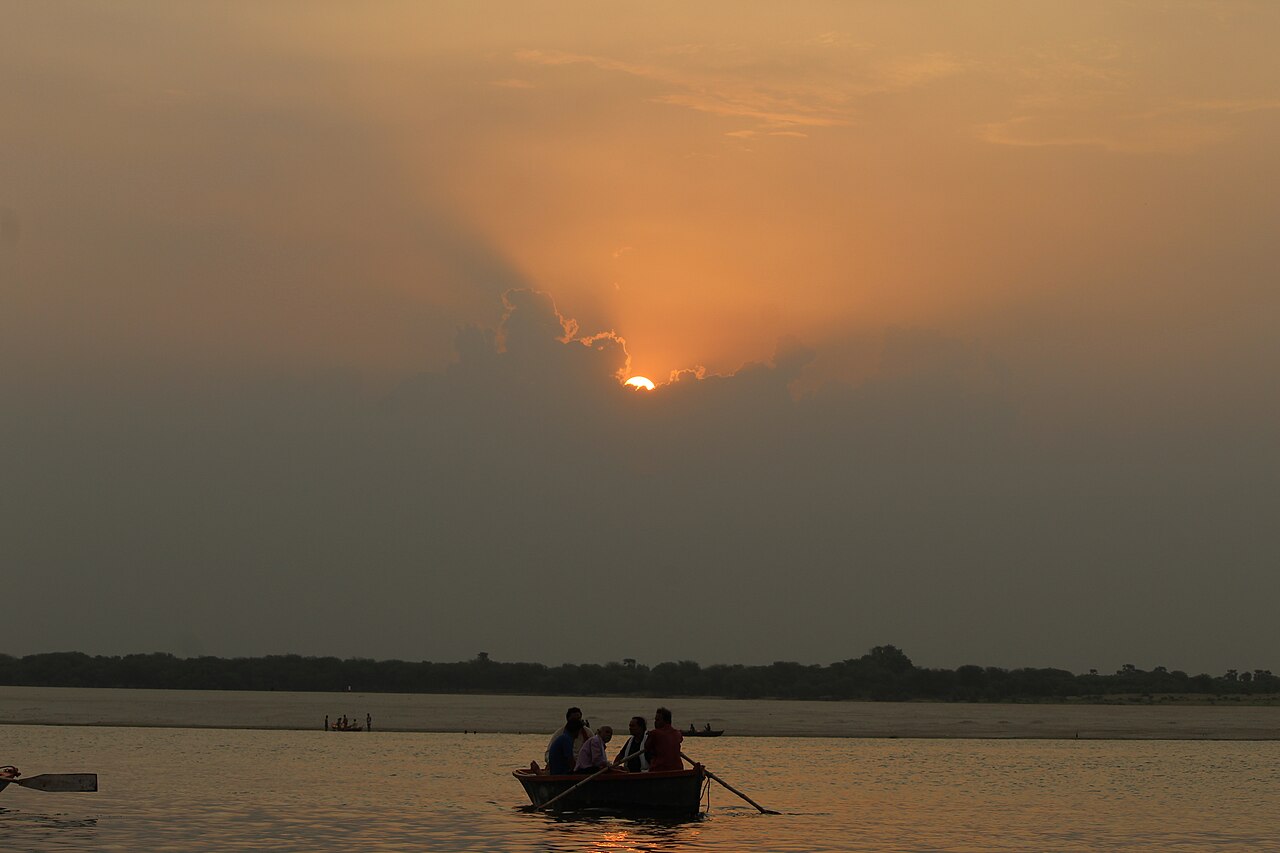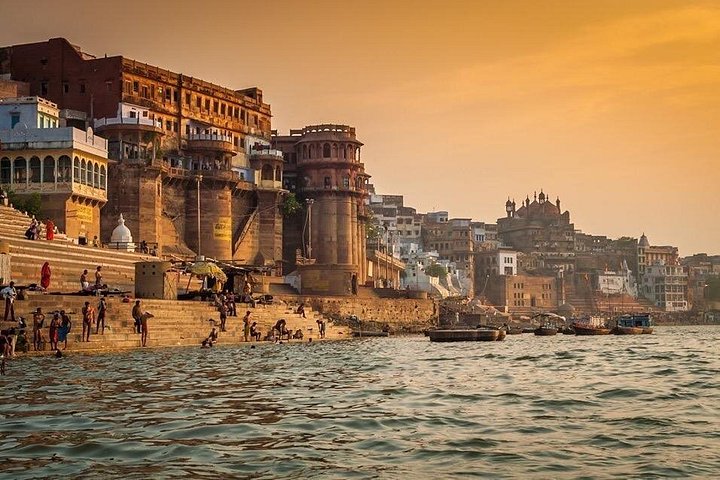
The best view of Varanasi is from the river. The city sits along the western bank of the Ganges in a long curve, and its stone ghats, the broad staircases that descend to the water, are lined with palaces, temples, shrines and old guesthouses that read like a continuous painted wall from a boat. At sunrise the light turns them gold and rose, the water is calm, and the banks fill with people bathing, doing yoga, washing clothes, offering flowers and lighting lamps. A rowing boat takes you slowly from the southern end near Assi Ghat up past Tulsi, Harishchandra, Kedar and Dashashwamedh ghats, with the boatman pointing out landmarks. The pace is unhurried and the mood is quiet, with temple bells and chants drifting across the water, and you can sit and simply look. Most tours leave while it is still dark and return after the sun is well up, which also means cool air, fewer crowds and the best photographs of the day. It is easy to book as a standalone three hour boat tour, such as the Varanasi Morning Boat Tour by rowboat linked here, or as part of a longer walking itinerary.
What you see depends partly on the boat route. The standard morning run covers the long southern and central stretch, taking in the ghats built largely in the eighteenth century under Maratha and other royal patronage, each with its own character. Boatmen will name the major ones, and you will pass the stretch where cremations take place on the riverbank.
Here the etiquette is simple and important: do not photograph the cremation ghats or the funeral pyres, keep your voice low, and look at the scene with the quiet respect you would offer at any funeral. Good guides say this before the boat reaches that stretch.
Choosing a boat is straightforward. A rowing boat is quieter, kinder to the water and more atmospheric than a motorised one, and the oarsmen know the river's rhythm. Private boats take a handful of people; a booked tour fixes the price, the departure point and the length in advance, which saves bargaining at the ghat at five in the morning. Confirm the meeting place the night before, because the ghats are reached down dark, narrow lanes, and your hotel can usually arrange a pickup or a guide to walk you down.
Plan the day around it. Dress in layers because the river is cold before sunrise, especially in winter, when mist can also blur the first light. Wear shoes that grip wet steps, and keep your phone on a strap. Do not feed the gulls from your hand if you value your sleeve, and avoid dipping hands in the water.
When the river is in monsoon flood, boating can be restricted, so confirm in advance if you travel in the rainy months. Combine the boat with a walk back along the ghats and breakfast in the old city, and you have the perfect first morning.
What to expect
The experience
A guided rowing-boat trip along the western bank at dawn, passing the main ghats while the city wakes, with commentary from the boatman or guide.
Best time
Start about an hour before sunrise so you are on the water as the light changes, and aim to be back before the midday heat and crowds.
How long
Around three hours including the walk down to the boat, which is usually reached on foot through the lanes.
Tips
Wear layers and shoes with grip, keep valuables in a bag, and do not photograph the cremation ghats or pyres. Agree the departure point and price the day before.
Quick picks
- Best for
- First-timers and photographers, because nothing shows the scale and rhythm of the ghats better than the view from the water.
- Families
- Calm and slow, so suitable for most children, but the early start and low light mean life jackets and a warm layer are worth asking for.
- Couples
- Share a blanket-warm dawn with tea afterwards on a ghat, one of the most romantic hours in the city.
- Pair with
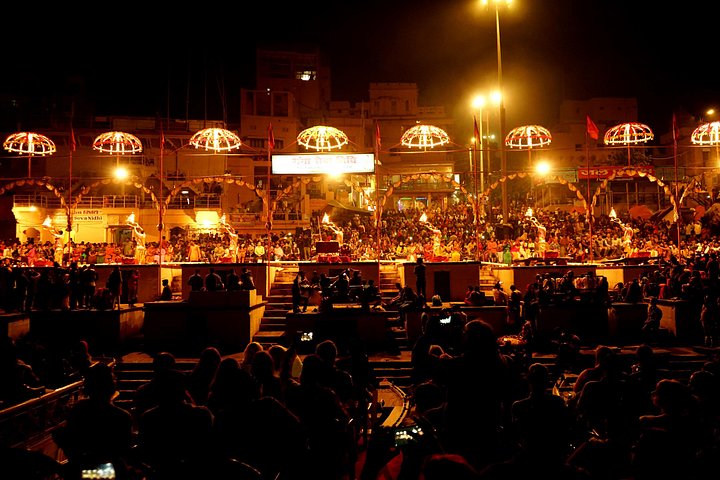
- Follow it with breakfast and an old city walk, then the evening Ganga Aarti for a full day of Varanasi.
- Time needed
- Three hours, plus travel to the ghat before dawn.
Good questions
What is the best time of year for a sunrise boat ride?+
The cooler months from about October to March are the most comfortable. In the monsoon the river can be high and boating may be restricted.
Are boat rides safe?+
Rowing boats on this stretch are stable and widely used, and booked tours are the most reliable option. Ask about life jackets and avoid overloaded boats.
Can I photograph the cremation ghats from the boat?+
No. Photographing cremations or pyres is considered deeply disrespectful, so keep cameras down when the boat passes that stretch.
How long does the boat trip last?+
A typical morning trip lasts about three hours. Shorter private rides along a single stretch are also possible.
Is it better to book ahead or at the ghat?+
Booking ahead fixes the price and the meeting point and avoids bargaining before dawn. Your hotel can usually arrange it the evening before.