Winter is when Whitehorse does what it does best. The days are short, the snow is deep and the nights are long and dark enough for the aurora, and a small group of guided outings fills the daylight hours. The choice can feel overwhelming, because each outing is cold in a different way and demands a different level of energy. This guide compares them so you can build a trip that suits your group rather than ticking everything off.
Start with the aurora, then build around it
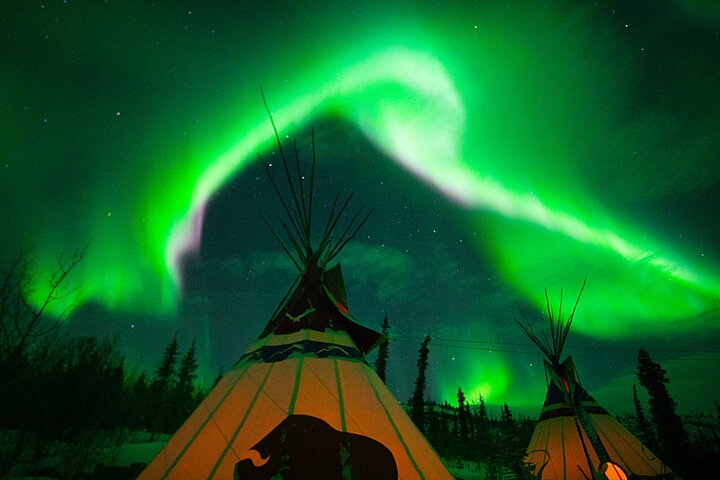
The northern lights tour is the anchor of most winter trips, and it is a late-night activity that finishes in the small hours. Because cloud and solar activity decide the show, the sensible plan is to book more than one night and keep your days gentle enough to stay awake. Everything else in this guide is a daytime filler around that. If you want a more comfortable viewing experience, look at the dome and lounge-style options, which give you shelter between sightings, but remember that the sky does not care how comfortable you are.
For the low-effort days: ice towers and hot springs
If you want winter scenery without exertion, the ice tower tour is short, photogenic and easy, and it works for almost anyone who can walk on an icy path in good boots. The Eclipse Nordic Hot Springs is the other low-effort favourite: soak in hot outdoor pools while the air around you is far below freezing, ideally in the afternoon or evening before a quiet night. A wildlife preserve visit, where a bus tour takes you past muskox, caribou and other northern animals, also fits this category and suits families with younger children.
For the active days: snowshoeing and the frozen waterfall
Snowshoeing to a frozen waterfall is the best all-round winter outing for people who want to feel they have earned their evening. It is a day-long commitment, with a drive, a couple of hours on snowshoes and a campfire at the end, and the effort is moderate rather than hard. It is more engaging than a short walk and quieter than a snowmobile, which makes it a good match for couples and friends who like being outdoors. Go on a day when you are not booked for a late aurora night.
For the fast days: snowmobiles and dog sledding
A guided snowmobile tour is the adrenaline option, covering a long stretch of backcountry in about half a day with a guide, and it is physically tiring in a way people underestimate because of wind chill. Dog sledding is the traditional counterpart: calmer, more personal and often more moving, because you spend time with the dogs as well as riding. If you can only choose one, pick the snowmobile for speed and scenery, and dog sledding if you care more about animals and the Yukon tradition. Some visitors combine dog sledding with an aurora evening, which makes a long but memorable day.
For the slow days: ice fishing
Ice fishing is the opposite of the snowmobile. You sit on a frozen lake with a guide, a rod and a fire and wait for a bite, and the pleasure is in the quiet and the conversation. It suits families with patient children, couples and anyone who wants a gentler outing on a rest day. The catch is never guaranteed, so go for the lake rather than the fish.
How cold is cold?
Winter temperatures in Whitehorse vary widely. Some days are crisp and manageable, and others fall well below minus twenty, and the cold changes how everything feels. Plan for a base layer, an insulating mid layer, a windproof outer shell, insulated waterproof boots, warm socks, liner gloves under thick gloves, a hat and a neck warmer. Bring a spare phone battery and keep it inside your clothing. Many operators provide some gear, but check what is included, and do not assume that you can borrow everything you need.
A sample five-day winter plan
On day one, arrive, settle in and take a short walk along the river, then rest. Day two is a gentle day with the wildlife preserve in the afternoon and the first aurora tour that night. Day three is a late start, then a soak at the hot springs before a second aurora attempt if the first night was cloudy. Day four is your active day, with snowshoeing to the frozen waterfall or a snowmobile tour, followed by an early night. Day five is a slow morning, a museum visit and, if you still have energy, the ice tower tour on your way out.
Booking and flexibility
Winter tours run on weather and demand, so book the aurora and the active outings early, and keep a few days free for those that need a minimum group size. Read cancellation terms carefully, since an outing may be adjusted for safety in extreme cold. Be flexible, dress warmly, and let the winter set the rhythm of your trip.