The Great Barrier Reef is the largest coral reef system on Earth, and from Airlie Beach you can reach it in a day. The Whitsundays are unusual because they offer two reef experiences in one region: the fringing reefs around the islands, which are accessible on sailing and snorkelling trips, and the outer reef, which is a longer journey but holds clearer water and more varied marine life. Understanding the difference helps you pick the trip that matches your expectations.
Fringing reef versus outer reef
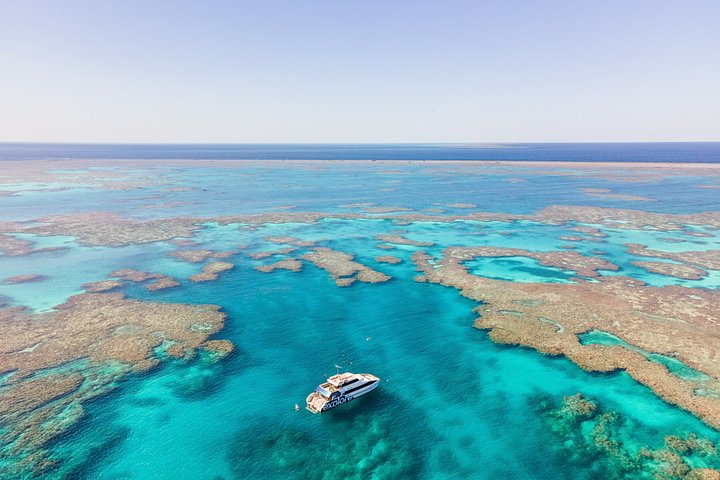
Fringing reefs grow around the islands and along the coast. They are easy to reach, but visibility depends on wind, tide and rain, and the coral can look muted after weather. The outer reef lies about two hours offshore, and the water is usually clearer, with a greater variety of coral and fish. Most visitors who want a classic reef day choose the outer reef, while sailing and island trips include fringing reef snorkelling as a bonus.
Pontoon day or snorkel cruise
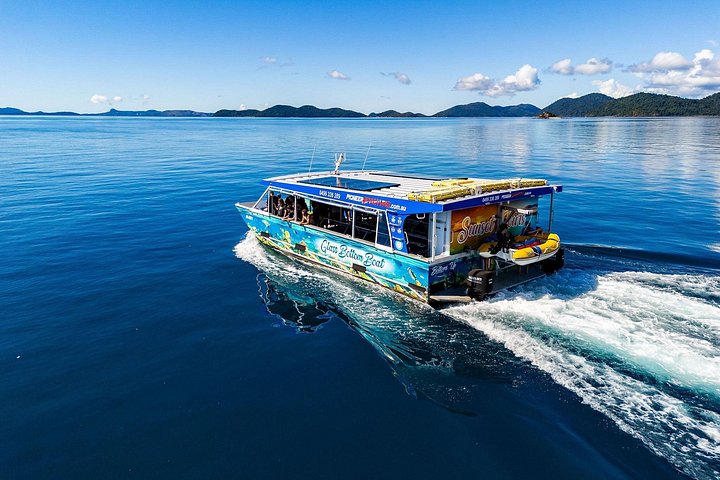
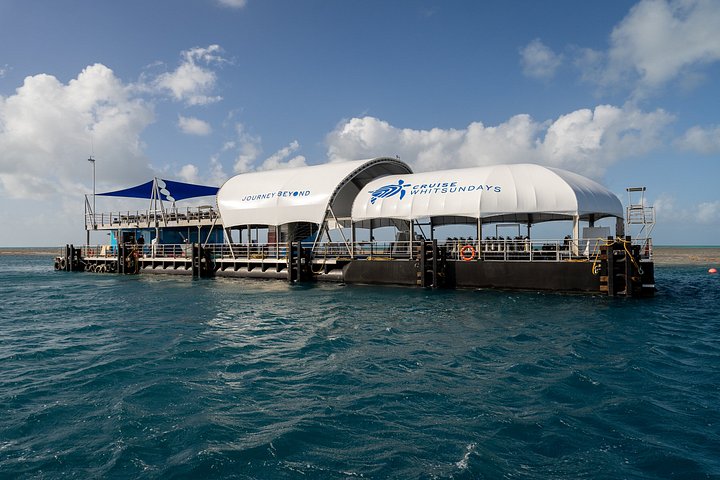
A pontoon trip, such as a full day at Hardy Reef, offers a fixed platform with shade, toilets, lunch and a range of activities. It is easy for beginners and families, and it has facilities for non-swimmers, including a viewing deck and a semi-submersible. A smaller snorkel cruise, such as one from Shute Harbour, moves between sites and spends more time in the water, with fewer people and fewer facilities. Choose the platform if you want comfort and variety, and the boat if you want a more natural, snorkel-focused day.
What you will see
Expect hard and soft corals in many shapes, from branching staghorn to plate and brain corals, plus schools of colourful fish, giant clams, sea cucumbers and sometimes turtles, reef sharks and large wrasse. Visibility and colour vary with the sun, so midday often looks best. Do not expect the same brilliance in every spot, because reef health changes over time and between sites, and operators choose the best locations for each day.
Heart Reef from the air
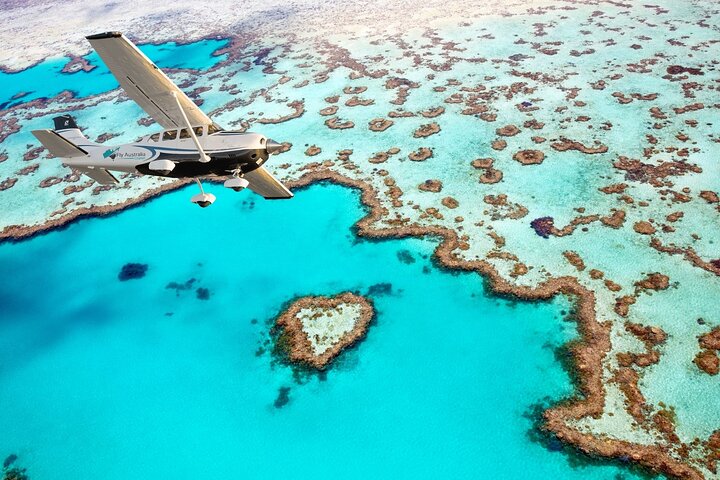
The famous heart-shaped formation on Hardy Reef is protected and can only be seen from above, so a scenic flight is the way to see it. The flight also covers the island chain and Whitehaven Beach, giving a sense of scale that a boat cannot. Book early in your stay in case of weather, ask about window seats and consider pairing the flight with a pontoon day so that you see the same reef from the sky and the water.
Snorkelling skills
If you are new to snorkelling, practise in shallow water first. Breathe slowly through your mouth, relax your legs and use gentle fin strokes. A flotation vest or noodle helps with confidence, and a rash vest or stinger suit keeps you warm and protected. If your mask leaks, ask the crew to help adjust it. Keep your head down and look around slowly, because moving too quickly scares fish and uses energy.
Diving options
Introductory dives allow people with no certification to dive with an instructor for a short guided session, while certified divers can join longer dives at selected sites. Medical questionnaires apply, and some health conditions may prevent diving. If you are curious but not sure, a semi-submersible or glass bottom boat offers a dry way to view the reef, and a short boat tour near town can give a taster.
Reef-safe habits
Do not touch, stand on or kick coral, because it is fragile and slow-growing. Keep a respectful distance from turtles and other wildlife, never feed fish, and take all rubbish with you. Choose reef-safe sunscreen, or better still cover up with a rash vest and hat. Follow the crew's briefing about anchoring areas and swimming zones, and consider supporting conservation groups working to protect the reef.
Seasickness and comfort
The outer reef crossing takes around two hours each way and can be bumpy in strong winds. Take seasickness medication before boarding, eat lightly and sit near the back or in the middle of the boat. Bring a light jacket for the air-conditioned cabin and a towel for the deck. A day on the reef is long, so pack water, snacks if allowed and a book.
Conservation context
Reefs face pressures from warming seas, storms and runoff, and visitors can help by choosing responsible operators and respecting the rules. Learning about the reef from marine biologists on board enriches the experience, and a visit to a turtle conservation centre on land adds another perspective. Seeing the reef firsthand tends to make people care more about its future.