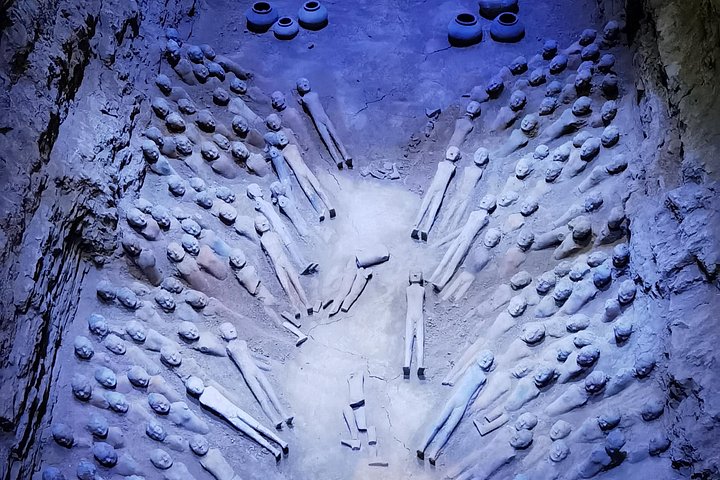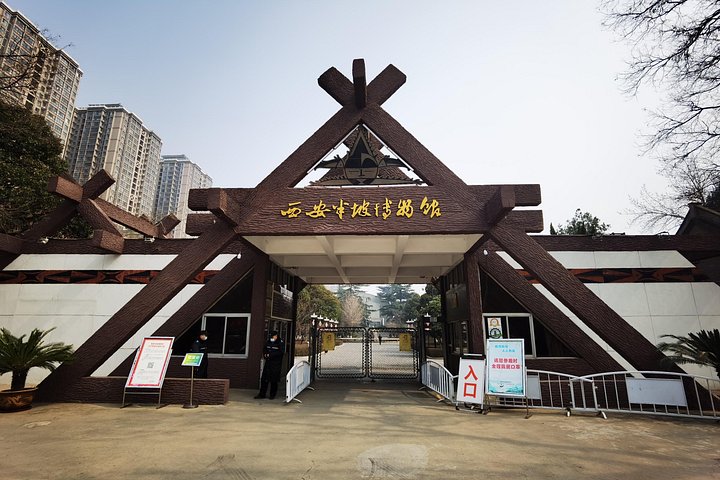
Banpo is one of the best-known Neolithic sites in China and one of the oldest places you can visit near Xi’an. It sits on the eastern edge of the city, beside the Chan River, and belongs to the Yangshao culture of the Yellow River valley, which flourished roughly six to seven thousand years ago. The village was discovered in the 1950s, and the site museum was built directly over part of the excavation, so you can look at the original ground plan: pit-houses and round huts, storage cellars, a defensive ditch around the settlement and a separate area for pottery kilns and a cemetery. The finds help explain how a farming community worked. Millet was the main crop, dogs and pigs were kept, and people fished, hunted and gathered nuts. The red pottery is the highlight, with painted designs of fish, deer and human faces, and some bowls bear simple marks that scholars have studied as possible early symbols. The museum is a place to slow down and think about the long stretch of time before the Qin army or the Tang court, and it makes a thoughtful partner to those later sights. It is also one of the easier stops to fit into a day, since it is close to the old town.
How to visit
The museum is a short taxi or ride-hailing trip east of the Bell Tower, usually twenty to thirty minutes depending on traffic, and it is often included on guided days that also take in the Terracotta Army, since the two lie in the same direction. A guide service is useful because the displays are easier to read with explanation, and because an English-speaking guide can link the artefacts to the wider story of the Yangshao culture.
What to expect
There are three main areas. The large hall over the excavation pit shows the house foundations and the ground layout, an exhibition hall holds the tools and painted pottery found at the site, and a smaller area outside has reconstructed huts and the kiln zone.
Plan on an hour and a half to two hours. Most of the site is indoors, which makes it a good wet-weather choice, but the walk between halls is outdoors, so bring layers in winter and shade in summer. Check the closing time before you go, and bring ID.
Making the most of it
Begin in the exhibition hall for context, then walk the excavation hall with the plan in your head. Children who enjoy hands-on history tend to like the reconstructed huts and the idea of a prehistoric village under the roof. It is less dramatic than the Terracotta Army, so set your expectations accordingly and treat it as a quiet, informative visit. Pair it with the City Wall in the afternoon, or with the Shaanxi History Museum for the longer story of the region.
If you have time, look closely at the fish and face patterns on the pottery, which are the most photographed objects in the museum. Visiting early in the day avoids school groups, which are common in term time, and a quiet moment among the house foundations is the best way to appreciate how small and close-knit these villages were.
What to expect
The experience
A museum hall built over the excavated village, an exhibition hall of tools and painted pottery, and reconstructed huts outdoors.
Best time
Any weekday, and a good choice for wet or cold weather as most of it is indoors.
How long
About two hours, with a short trip from the city.
Tips
Start with the exhibition hall, bring ID, take a guide for context, and pair it with the City Wall or the Terracotta Army.
Quick picks
- Best for
- History lovers who want to see something older than the empires.
- Families
- Children enjoy the reconstructed huts and the sense of a village under a roof.
- Couples
- A calm, thoughtful stop for couples who like museums.
- Pair with
- The Terracotta Army on the same day, or the Shaanxi History Museum.
- Time needed
- About two hours.
Good questions
How old is Banpo?+
The village dates from the Yangshao culture and is roughly six to seven thousand years old, making it one of the oldest sites you can visit near Xi’an.
What can I see at the museum?+
You can see the foundations of round houses and pit-houses, storage cellars, a ditch around the settlement, pottery kilns and painted red pottery with fish and face designs.
Is it worth the time compared with other sights?+
It is a quiet, informative stop rather than a spectacular one. Visitors who like archaeology find it rewarding, and it fits easily into a day with the Terracotta Army.
How do I get there?+
It is east of the old town, about twenty to thirty minutes by taxi or ride-hailing car, and it is often combined with the Terracotta Army on guided days.
Is it suitable for children?+
Yes, most children enjoy the reconstructed huts and the idea of a prehistoric village. The displays are not interactive, so keep the visit to about two hours.