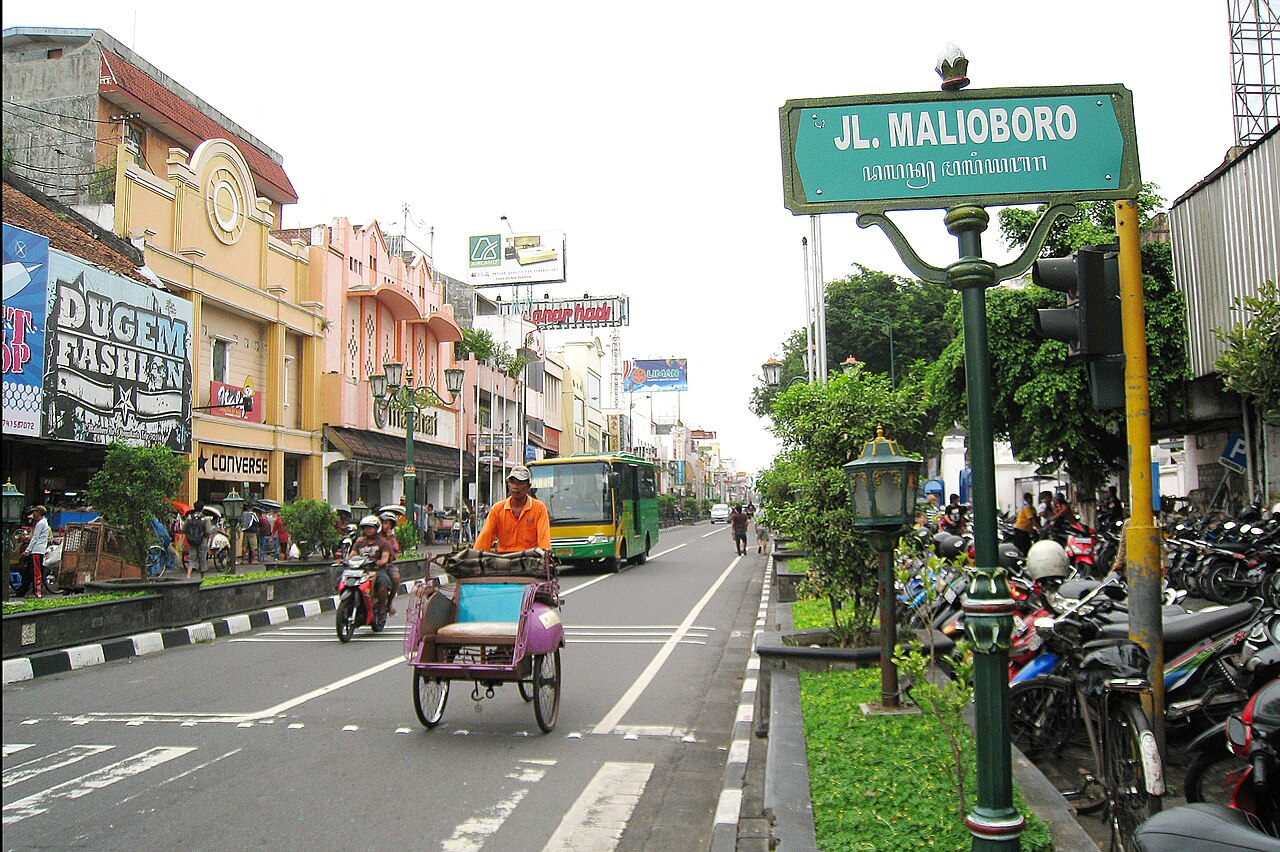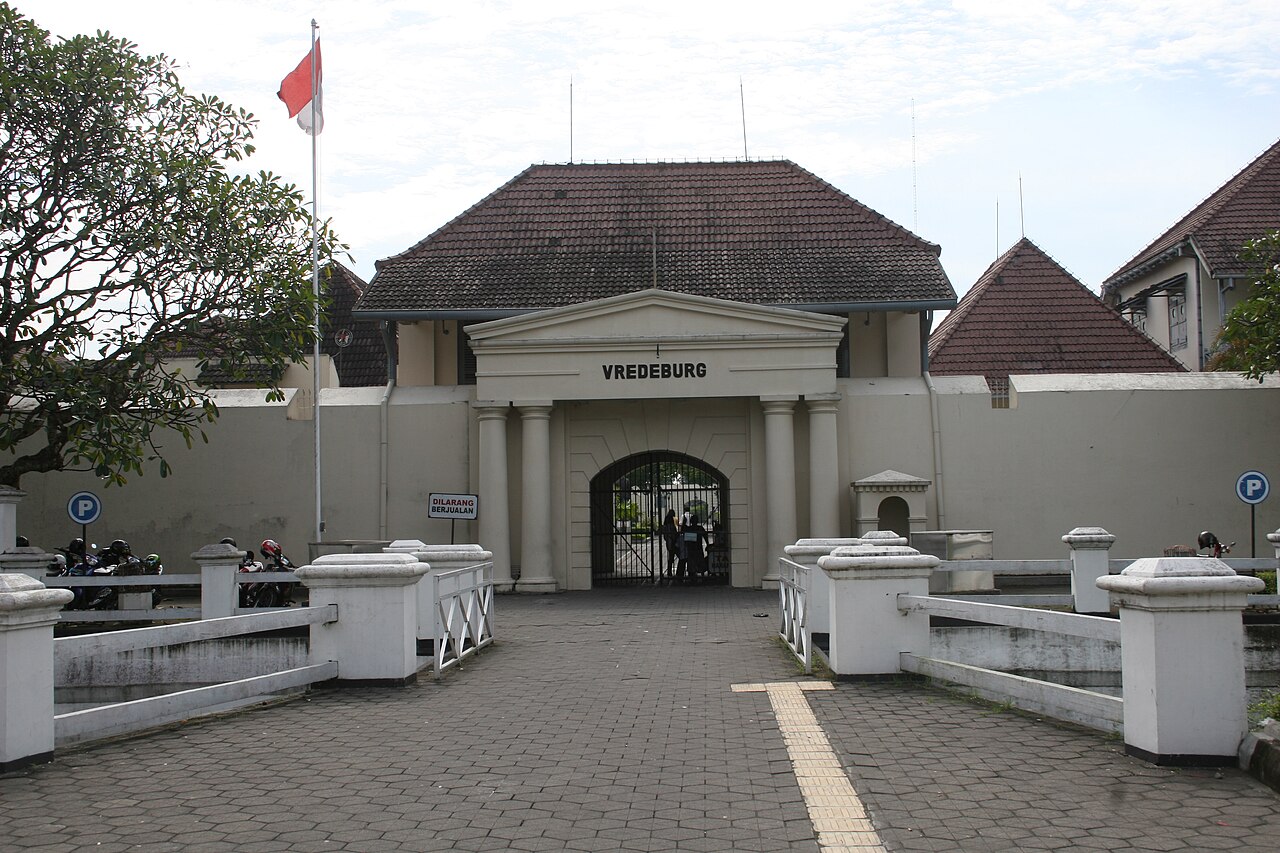
Museum Benteng Vredeburg occupies the oldest colonial building in Yogyakarta, a fort that the Dutch built in the 18th century next to the Sultan's palace and that later served as a barracks. Today it is a museum of national history at the point locals call the zero kilometre of the city, directly across from the north end of the Kraton road and beside Malioboro. Its displays follow Indonesian history from the time of Prince Diponegoro through the colonial period to independence and the early years of the republic, with more than seven thousand items in the collection, including household objects, weapons and relics of fighters. The building itself, with its thick walls, bastions and courtyards, is part of the experience, and there are green open spaces inside the walls that make it a calm break from the traffic outside. The museum also hosts public programmes, exhibitions and community events, so what is on view can change. It is a good fit for visitors who want context for what they see elsewhere, especially the role of Yogyakarta in the independence struggle and the status of its sultan, and it works well as a short, shaded indoor stop between the palace and a stroll along Malioboro. Entry is modest and a visit does not need long, so it is an easy addition to a city day. Check the tourism board page for general information, and confirm opening days and fees on arrival or at the museum's own entrance.
What you will see
The museum is arranged around the fort's courtyards, with dioramas and displays presenting the stages of the national story. English labelling can be limited, so a guide or a translation app helps if you want to follow the detail. The strongest exhibits are the ones tied to Yogyakarta itself, including the period when the city served as the capital of the young republic and the role of the Sultan in supporting it, so ask a guide or read ahead to get the most from the rooms.
Visiting well
Allow an hour to ninety minutes, more if exhibitions are on. The thick walls keep rooms cooler than the street, which makes the museum a good choice at midday or in rain. Dress comfortably and respectfully, keep voices low in the displays, and ask staff if you want to photograph particular items. The grounds are used for events and photography, so the atmosphere can be lively on weekends. Closing days and hours can vary, so check before you go.
Combining it
The museum sits within walking distance of Malioboro Street, Beringharjo market and the Kraton, so it fits neatly into a morning of old-town sights. A sensible sequence is the museum, then the market, then lunch on Malioboro, with the palace later. It is also close to the Sonobudoyo area and other cultural venues in the old town, so you can add another museum if you have time.
If you travel with children, the open space inside the walls is a useful place for a short rest. Students of Indonesian history will find it a helpful primer, and anyone short on time can focus on the first rooms, which set out the colonial background that explains why Yogyakarta mattered so much in the independence years.
What to expect
The experience
A self-guided museum visit through a restored colonial fort, with displays on Indonesian history and the independence struggle.
Best time
Midday or a rainy day, when its thick walls and shaded courtyards offer relief from the heat.
How long
About an hour to ninety minutes.
Tips
Check opening days and fees on arrival, bring a translation app for the labels, and pair it with Malioboro and the market.
Quick picks
- Best for
- History lovers and travellers who want context for Yogyakarta's place in Indonesian independence.
- Families
- A calm, shaded stop with space to move; older children will get more from the history.
- Couples
- A short cultural stop before a Malioboro stroll.
- Pair with
- Malioboro Street, Beringharjo market and the Kraton.
- Time needed
- One to one and a half hours.
Good questions
What is Fort Vredeburg?+
A restored colonial fort in central Yogyakarta, now a museum of Indonesian history, with a focus on the struggle for independence.
How long does a visit take?+
Plan an hour to ninety minutes, longer if there is a temporary exhibition.
Where is it?+
In the heart of the old town, next to Malioboro Street and near the Kraton, at the city's zero kilometre point.
Is English labelling available?+
Labelling in English can be limited, so a guide or translation app is useful.
Is it a good rainy-day option?+
Yes. It is largely under cover and the thick walls keep it cool, which also suits a hot midday.