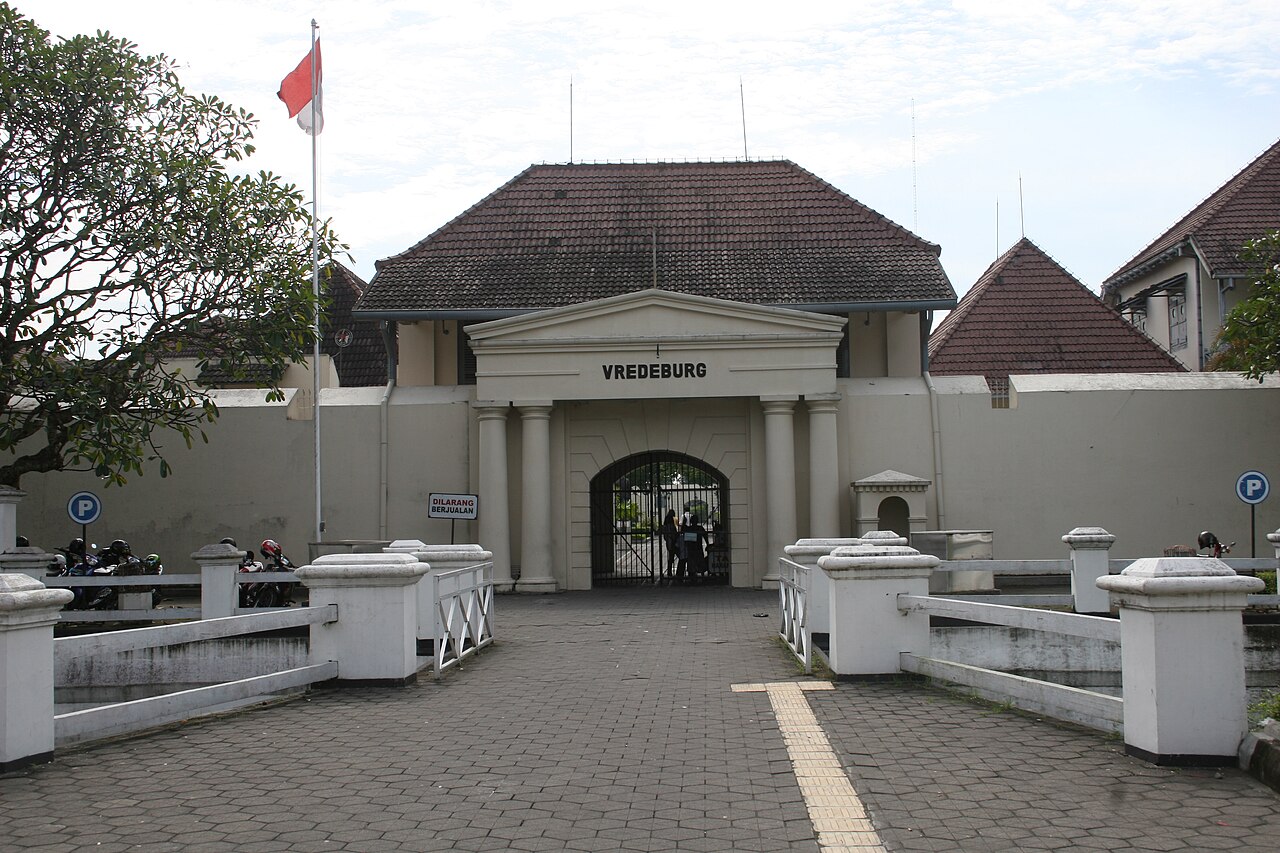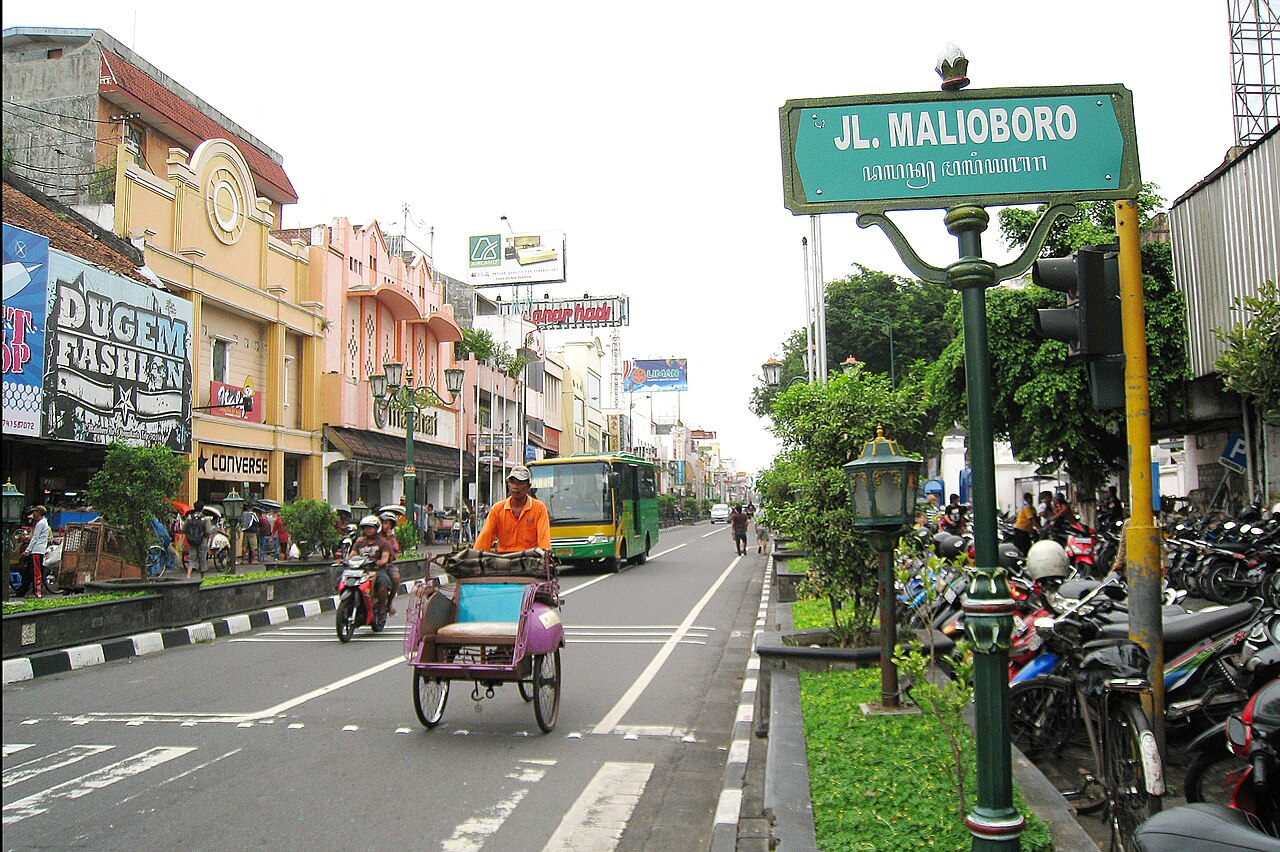
Malioboro is the street every visitor to Yogyakarta ends up on. It runs south from the Tugu monument and the railway station toward the Kraton, and once served as the ceremonial route the Sultan used to travel to and from his palace. Today it is a pedestrian-friendly shopping and eating artery, lined with batik stores, souvenir stalls and old colonial buildings, with street vendors, buskers and cycle rickshaws, known as becak, adding to the colour. The pavement is wide and busy, and the experience is best enjoyed slowly, by walking the length of it and stepping into the lanes on either side. Beringharjo, the city's main traditional market, stands on the same side of the street and is the place to see batik cloth, spices and everyday goods, while across the road lies the old Dutch fort that is now the Vredeburg museum. In the evening the stalls and mat-covered lesehan eateries fill the pavements, and diners sit cross-legged over plates of local dishes. Prices are low and negotiable in the markets, so bargaining politely is part of the fun, but it is wise to compare prices before buying cloth sold as hand-drawn batik. Malioboro is free to enter and open at all hours, and it is the easiest place in the city to feel the daily rhythm of Yogyakarta, which is why most first-time itineraries include it.
Walking it well
Start at the northern end near Tugu or the station and walk south, so the Kraton and the old centre are in front of you. Daylight is best for shops and for Beringharjo market, where the upper floors sell batik and the lower floors sell food and household goods. Late afternoon and evening bring the crowds and the best atmosphere, with stalls lit up and food vendors setting up. The pavement can be uneven and crowded, so keep your belongings close, and watch for motorbikes at junctions.
Shopping and bargaining
Batik is the standout purchase, sold as clothing, bags, tablecloths and fabric lengths. Hand-drawn batik, known as tulis, is more expensive and takes longer to make than stamped or printed cloth, so the lowest prices usually mean a different technique, not a bargain. Bargain with a smile, start well below the first price, and walk away politely if you are not satisfied.
Silver from Kotagede, leather puppets and woven bags are other popular items. Be cautious with anyone who offers an unusually cheap becak tour or leads you toward a particular shop, and agree the price and route before you sit down.
Eating and practicalities
Lesehan dining on mats is a Malioboro tradition, and the dishes are the local favourites, from gudeg to grilled snacks. Prices should be posted or agreed in advance, and it is sensible to ask before ordering if you are unsure. Wear light clothing and comfortable shoes, carry small notes, and drink bottled water.
The street is within easy reach of many hotels, and the railway station is nearby. If you prefer a guided introduction, the night food tour covers part of the area, and a morning at the Kraton and Taman Sari pairs naturally with an afternoon here.
What to expect
The experience
A self-guided stroll along a busy pedestrian-friendly street with shops, market stalls, street vendors and evening food stalls.
Best time
Late afternoon into the evening for atmosphere and food; morning for Beringharjo market and calmer shopping.
How long
Two to three hours for the street and a meal; longer if you shop at the market.
Tips
Bargain politely, check batik quality, agree becak prices in advance and keep valuables secure in the crowds.
Quick picks
- Best for
- First-timers, shoppers, food lovers and anyone who wants to feel the city.
- Families
- Easy and lively; watch children in the crowds and near motorbikes at junctions.
- Couples
- A relaxed evening stroll, a lesehan dinner and a becak ride.
- Pair with
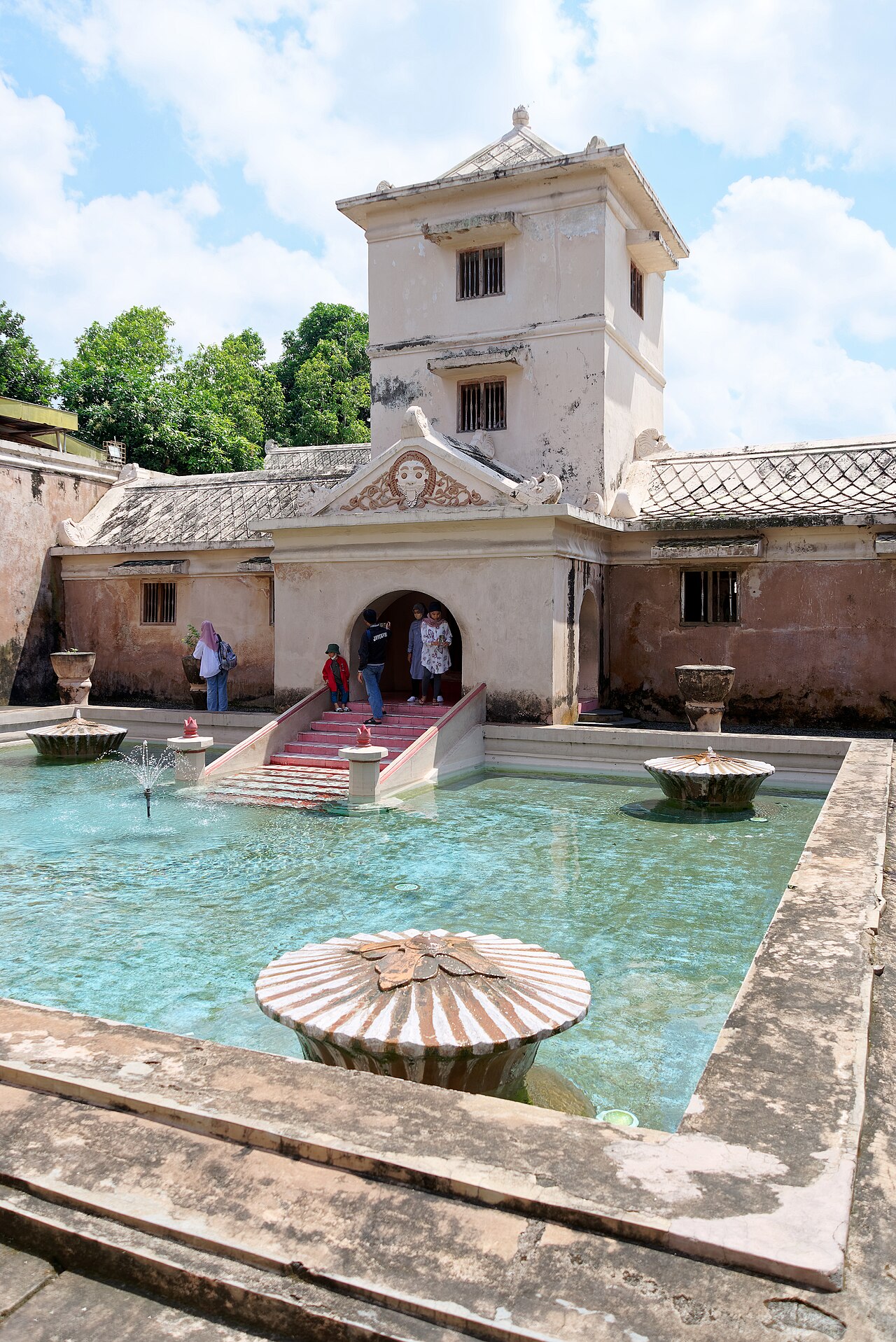
- The Kraton and Taman Sari in the morning, or the night food tour in the evening.
- Time needed
- A couple of hours, ideally in the evening.
Good questions
Is Malioboro Street free to visit?+
Yes. It is a public street, open all hours. You pay only for what you buy or eat.
When is the best time to visit?+
Evening for the atmosphere and food stalls, or morning for the market and quieter shopping.
What should I buy on Malioboro?+
Batik, silver, leather puppets and woven bags are popular. For hand-drawn batik, check the wax lines on the reverse and expect to pay more.
Is it safe?+
Generally yes, but crowds attract pickpockets, so keep bags closed and phones secure, and agree prices before taking a becak.
How far is Malioboro from the Kraton?+
It runs south toward the Kraton, and the palace is within walking distance of the southern end or a short becak ride.