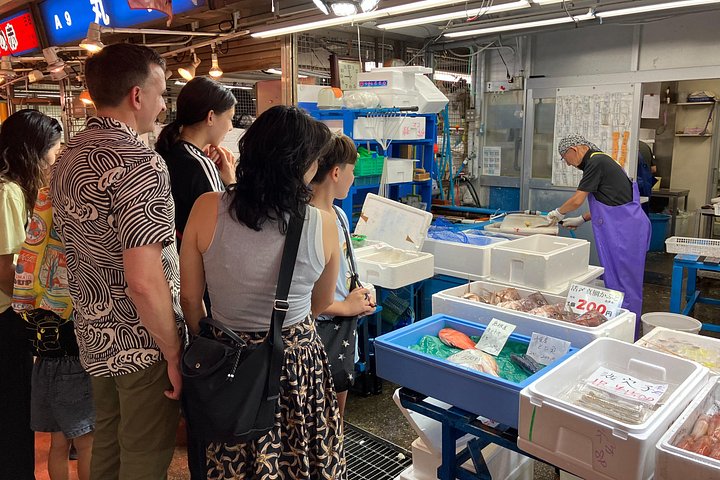
Yokohama has always been a food port, and its fish market is where much of the region's seafood arrives and is sold. A guided visit takes you behind the scenes to see how fish is graded, handled and sold, and teaches you what makes a fish sushi-grade. A licensed guide explains the terms, shows the species you are likely to meet on a plate and answers questions about sustainability and seasonal fish. It is a hands-on way to understand Japanese seafood culture and an excellent preparation for eating sushi in the city, where even a basic counter can serve superb fish.
The tour is short and focused. You meet the guide at a station or at the market and walk through the areas open to visitors, with explanations of how auctions work, how fish is kept fresh and what to look for in colour and texture. Guides often point out species such as tuna, sea bream, squid and shellfish, and explain how fish are prepared for sushi, sashimi and cooked dishes.
Some visits include a tasting or a breakfast stop at a nearby counter. Because markets are working environments, you should follow the guide and avoid blocking carts.
Timing matters. Markets are busiest in the early morning, and activity slows later, so tours often start early. Wear closed shoes with grip because floors are wet and slippery, dress in layers for chilly storage areas and avoid strong perfume. Photography rules vary, so ask before shooting people or stock. The market closes on certain days each week and on holidays, and some areas are restricted, so check the operator's schedule. If you are sensitive to fish odours, be prepared for strong smells.
After the tour, put the knowledge to use. Eat sushi for lunch at a local counter, try a kaisendon bowl in Chinatown or Kannai, or take a cooking class to prepare fish yourself. The tour is inexpensive, suitable for most adults and older children and a good fit for travellers who like to understand food, not just eat it. It combines well with an Iekei ramen tour or a Noge evening for a full food day. Note that details of access and tasting arrangements vary, so read the tour description carefully.
Food safety and hygiene matter at a market, so follow the guide's instructions on where to stand and what to touch. Do not handle fish or equipment unless invited, keep children close and avoid sudden movements near forklifts and carts. Many visitors enjoy a sushi breakfast afterwards, and a short walk to a nearby counter can turn the tour into a full morning. If you are interested in cooking, ask the guide about cooking classes and where to buy a good knife or ingredients.
The guide may point out the labels, boxes and handling methods that signal quality, which helps you choose better fish at supermarkets and restaurants later in your trip. Questions about sustainability and seasonality are welcome, and many guides share their favourite counters for lunch. Take a small bag for any purchases, and avoid wearing strong perfume, which stands out in a food market.
Check the weather forecast, because rain makes the floors slippery, and bring a light waterproof jacket in cool seasons.
What to expect
The experience
A short licensed-guide walk through a working fish market, with explanations of grading, species and sushi-grade quality.
Best time
Early morning, when the market is at its busiest and the fish is freshest.
How long
Ninety minutes to two hours.
Tips
Wear grippy closed shoes, dress in layers and follow the guide to stay out of the way.
Quick picks
- Best for
- Food lovers who want to understand sushi before eating it.
- Families
- Suitable for older children who can handle the smells and wet floors.
- Couples
- A different, early-morning activity to share.
- Pair with
- Lunch at a sushi counter and a Chinatown afternoon.
- Time needed
- Two hours plus a meal.
Good questions
What will I learn?+
You will learn how fish is graded and handled, what sushi-grade means and which species are in season.
Do I need to be there early?+
Yes. Markets are busiest in the morning, so tours start early.
Is photography allowed?+
Rules vary, so ask your guide.
Is it suitable for children?+
Older children can enjoy it, but the floors are wet and slippery.
Does the tour include food?+
Some visits include a tasting or breakfast. Check the description.