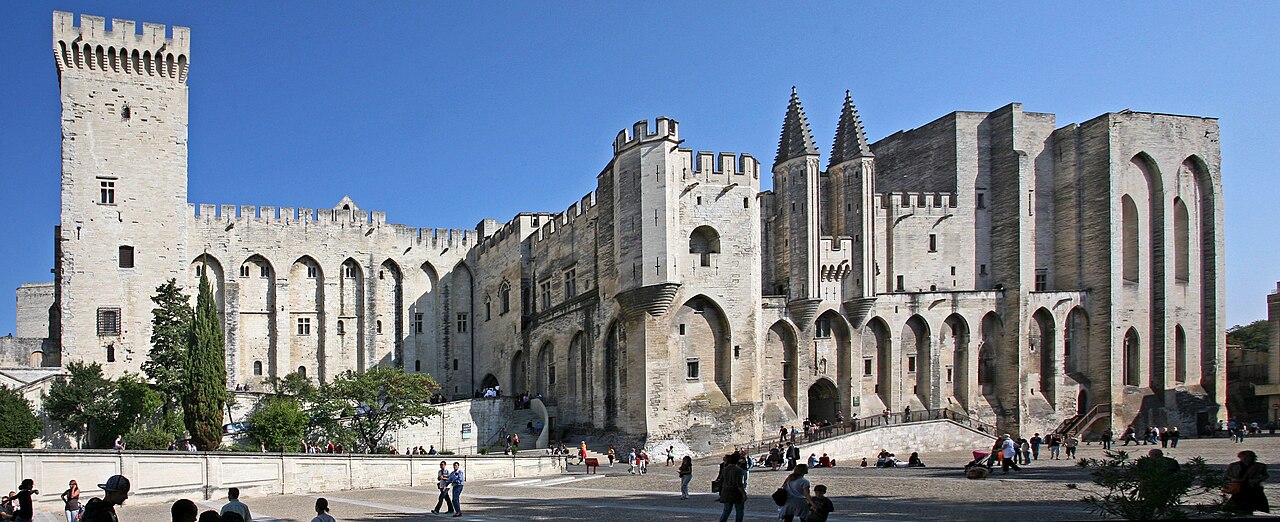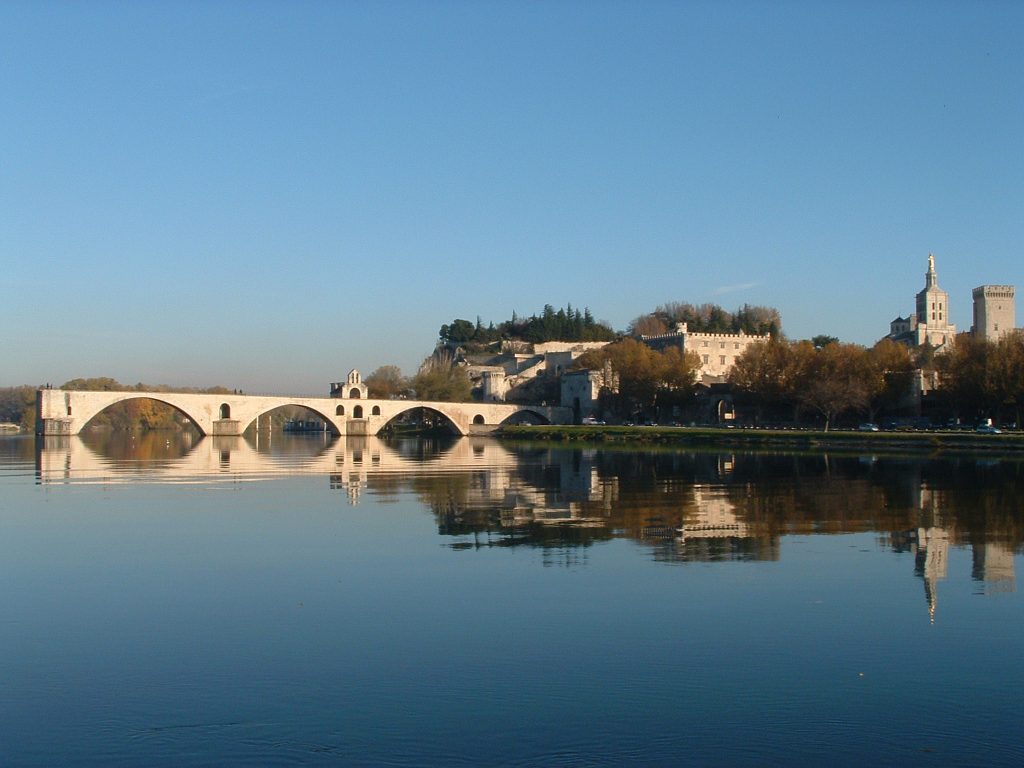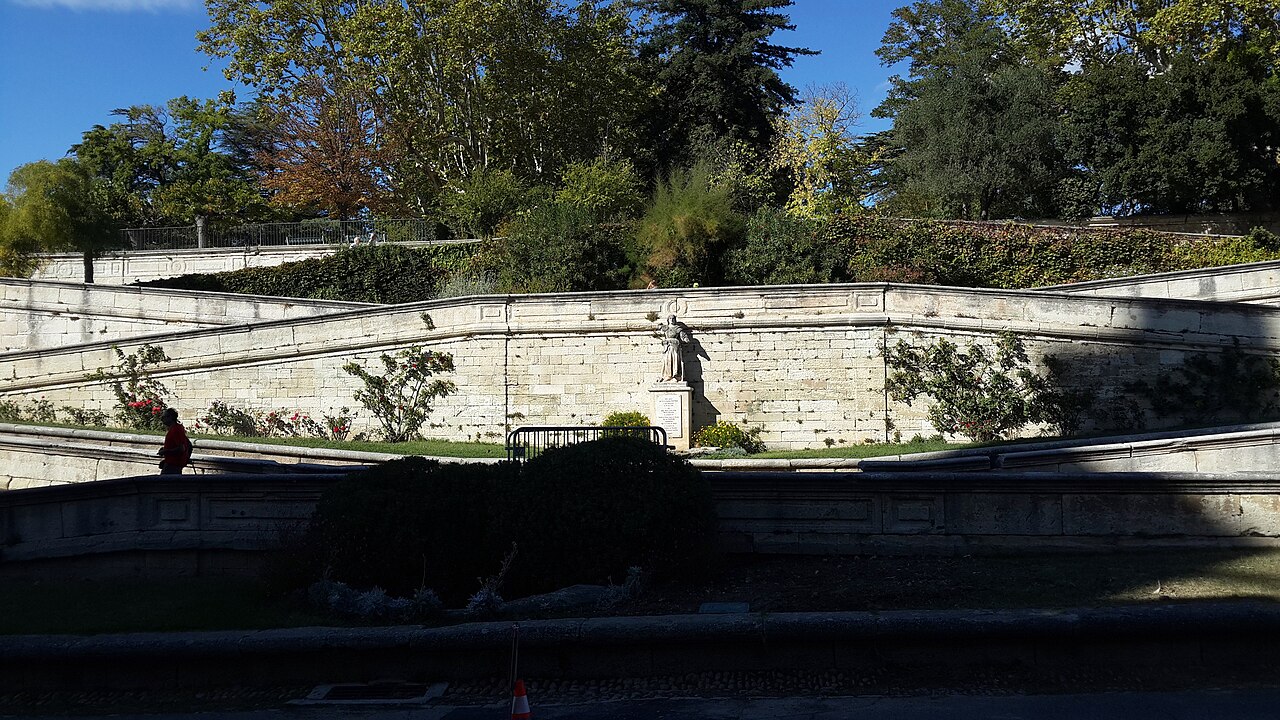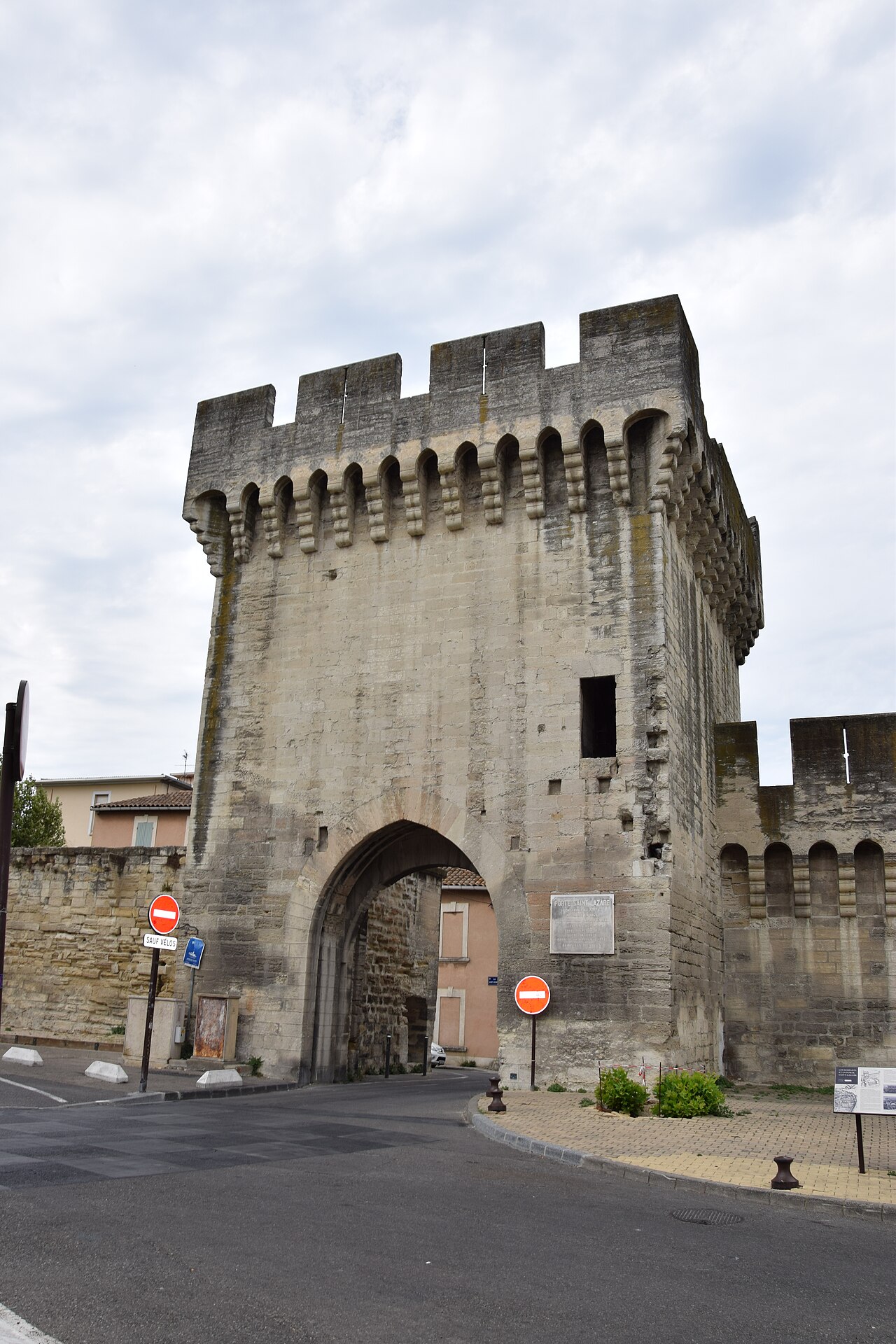
Avignon is one of the few French cities that still sits entirely inside its medieval walls. The ramparts run for 4.3 kilometres around the old town, and they were built quickly and deliberately: work began in 1355 under Pope Innocent VI and finished in 1370 under Urban V, when the popes needed to protect their city, their treasure and their palace from roaming mercenary bands. The defences are built of pale local limestone with square towers set at regular intervals and battlements along the top, pierced by gates that have been widened over the centuries for roads and trains. The walls were heavily restored in the nineteenth century, which is why they look so complete, and they are part of Avignon's UNESCO World Heritage status alongside the palace and the bridge. Visiting is free and open every day, with access from the entrance to the Pont Saint-Bénézet, beside the Rocher des Doms. Most visitors dip in and out as they cross town, but the circuit itself, on foot or by bicycle along the outside, makes a pleasant morning and a very different view of the city.
To understand the walls, think of the context. In the fourteenth century the south of France was plagued by free companies of unemployed soldiers, and a rich, papal city was an obvious target. The ramparts were a status symbol as much as a fortress, a way of saying that Avignon was a capital.
The result is a ring with some of the best-preserved medieval fortifications in Europe, including the Tour des Chiens and the châtelet gatehouse, both mentioned in the UNESCO description, and a line of gates that now carry cars, buses and the occasional street musician.
How to walk them
A full loop is a little over four kilometres on flat ground, which takes an hour to ninety minutes at a stroll, longer with stops at the gates. Start at the Pont Saint-Bénézet, follow the walls along the river, then curve around the southern and eastern sides, passing busy gates and quiet corners where locals walk dogs and children play.
Some stretches run beside busy roads, so the walk is more about atmosphere than solitude. Hire a bicycle in town to ride the circuit quickly, or follow a short section and head back into the old streets. The tourist office can tell you which stretches of the wall top are open on the day you visit.
Choose your time with the weather. Summer middays are hot and the walls give little shade, so go early or at sunset, when the stone turns honey gold. In winter the circuit is quiet and clear, and a coat is enough. Pair it with the palace, the bridge and the Rocher des Doms for a day that explains papal Avignon from every angle, and finish with a drink on a square inside the walls.
What to expect
The experience
A self-guided walk or bike ride around the outside of the 4.3 km walls, passing towers and gates, with free access from the entrance of the Pont Saint-Bénézet.
Best time
Early morning or sunset, when the stone glows and the air is cooler than at midday.
How long
One to one and a half hours for the full loop on foot; less by bicycle.
Tips
Wear comfortable shoes, carry water in summer, expect some road noise on a few stretches and ask the tourist office which wall tops are open.
Quick picks
- Best for
- History lovers and walkers who want to see how a papal city defended itself.
- Families
- Flat and free, so ideal for strollers, scooters and bicycles, though some stretches run alongside traffic.
- Couples
- A sunset stroll along the river side, ending with a drink inside the walls.
- Pair with
- The Pont Saint-Bénézet, the Rocher des Doms and the Palais des Papes.
- Time needed
- About ninety minutes for the circuit, or a few minutes at any gate as you cross town.
Good questions
Are the Avignon ramparts free?+
Yes, access to the ramparts is free and they are open every day. The easiest starting point is the entrance of the Pont Saint-Bénézet.
How long are the ramparts?+
They stretch for 4.3 kilometres and encircle the entire old town. The loop is flat and takes about an hour to ninety minutes on foot.
When were the ramparts built?+
Construction began in 1355 under Pope Innocent VI and was completed in 1370 under Urban V. They were restored in the nineteenth century.
Can you cycle around the ramparts?+
Yes, many visitors ride the outside circuit by bicycle, which takes under an hour. Hire one in town and stay alert near busy gates.
Are the ramparts part of a UNESCO site?+
Yes, they form part of the UNESCO World Heritage status for the historic centre of Avignon, together with the papal palace and the bridge.