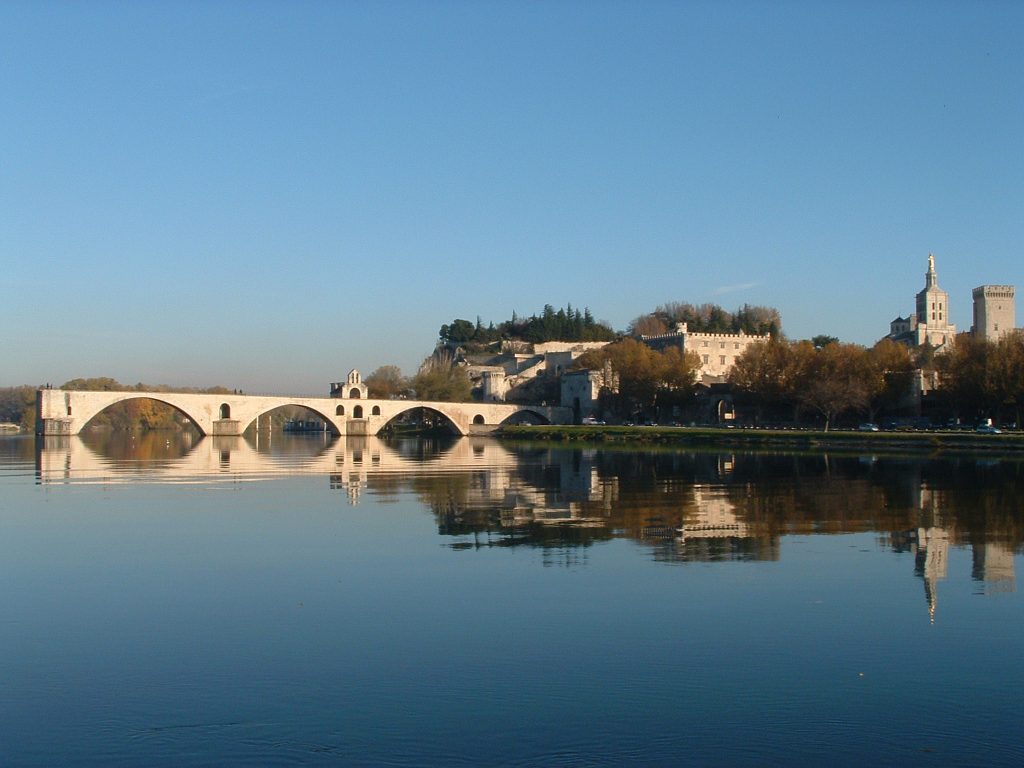
Everyone knows the song, and the real thing is better than the tune suggests. The Pont Saint-Bénézet was begun in the twelfth century, according to tradition after a young shepherd named Bénézet was told in a vision to build a bridge across the Rhône. It was a remarkable piece of medieval engineering that once ran for roughly nine hundred metres across the river on 22 arches. The Rhône is a wild river, though, and floods and ice repeatedly damaged the span until the city gave up repairing it in the seventeenth century. Today four arches survive, along with the little Chapel of Saint Nicolas built on the second pier, and together with the Palais des Papes and the ramparts, the bridge is part of Avignon's UNESCO World Heritage status. You walk out along the stub, which ends abruptly above the water, with the walls and towers of Avignon behind you and the fort of Villeneuve-lès-Avignon across the river. The exhibition inside the entrance building explains the bridge's history, and the audio guide covers the legend, the floods and the song. A lift gives access to the bridge for visitors with reduced mobility.
The song itself was once about dancing under the bridge, and the many versions you will hear sung by schoolchildren are part of the fun. The truth is more interesting. The bridge was a toll route and a lifeline for the city, tying the papal territory on the east bank to the kingdom of France on the west, and in the fourteenth century the popes made it an important crossing.
The chapel at its heart held the relics of Saint Bénézet, who gave the bridge its name. Over the centuries the arches fell one after another, and by the time repairs were abandoned the bridge ended in the middle of the river, a ruin that has become the city's emblem.
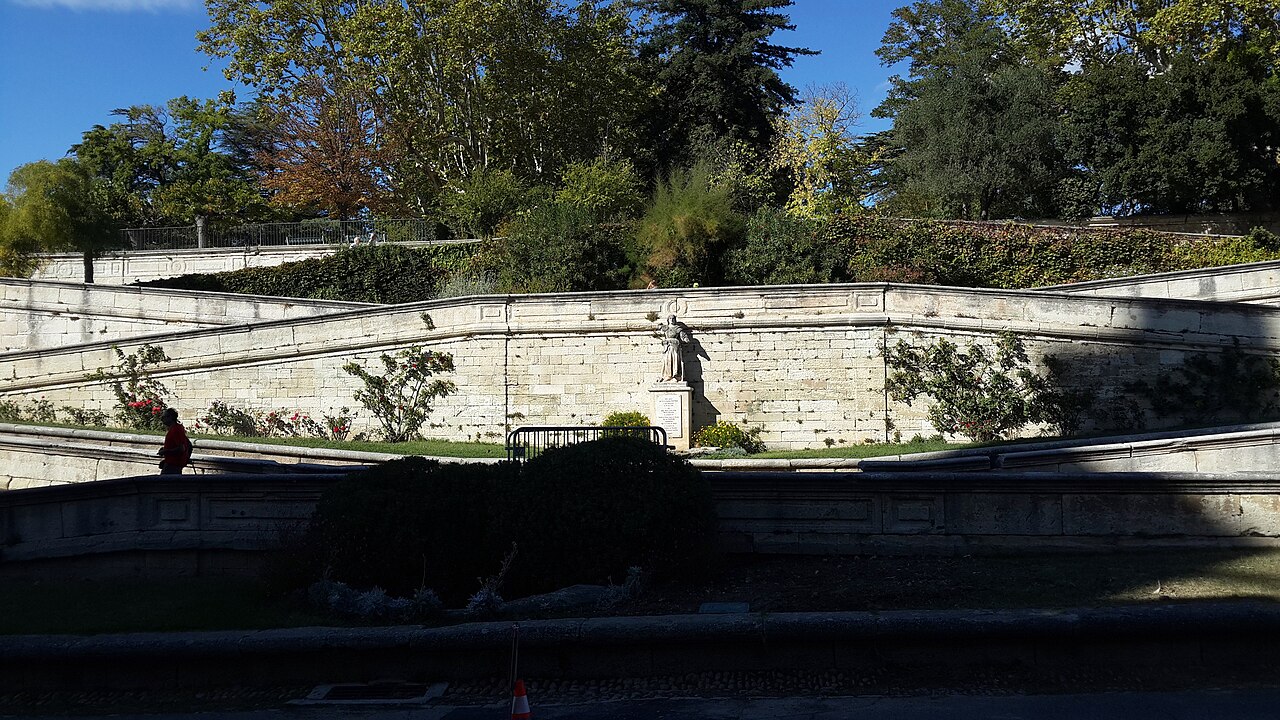
Visiting is simple. The entrance is on the river side of the walls, beside the Rocher des Doms gardens and a short downhill walk from the Palais des Papes, which is why most visitors combine the two with a single ticket. Allow about forty-five minutes: the walk out and back is short, but the views are the draw, and the exhibition and audio guide add depth.
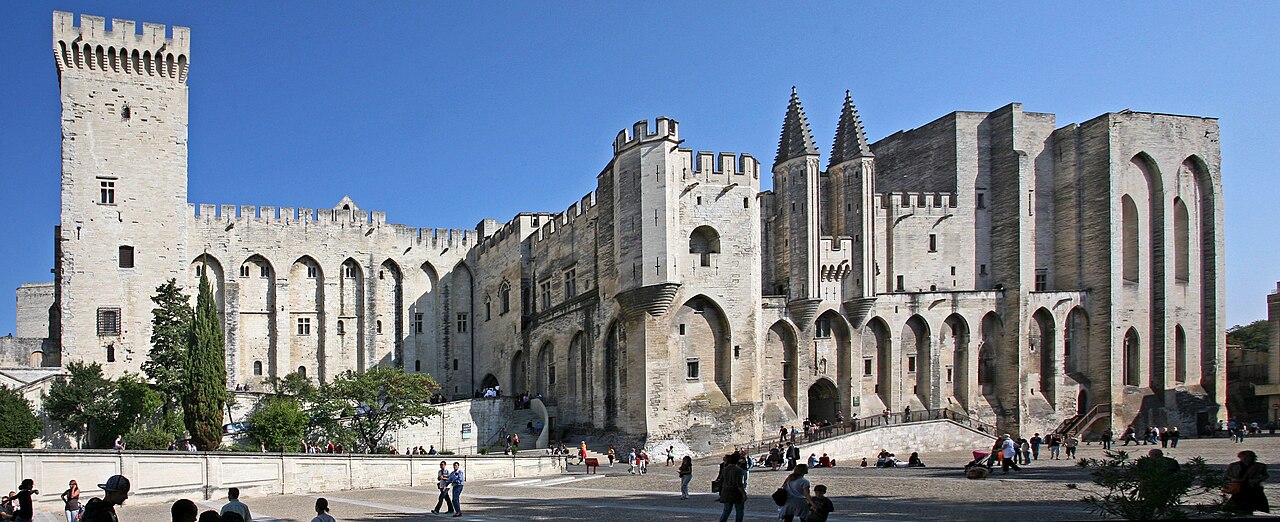
Stand at the far end for the photograph that every guidebook uses, with the palace and the cathedral on the rock behind. The bridge has no handrail at some points, so keep a close hold on small children, and note that the mistral wind can be fierce out over the water.
Timing matters. Mornings and the golden hour before sunset are the best light, and the middle of a summer day is hot and bright with little shade. In stormy weather or when the Rhône is in flood the bridge can close, so check before you set out. For a different view, walk or drive across the modern Daladier bridge toward Villeneuve-lès-Avignon, or take a river cruise, to see the arches from the water as medieval boatmen did.
What to expect
The experience
A walk out along the four surviving arches with an audio guide, the Chapel of Saint Nicolas on the second pier and an exhibition in the entrance building.
Best time
Morning or the golden hour before sunset, when the light on the palace is warmest and the bridge is less crowded.
How long
About 45 minutes including the exhibition and the walk to the end of the span.
Tips
Buy the combined palace and bridge ticket, hold small children close near the edges, bring a windproof layer for the mistral and check the bridge is open after storms.
Quick picks
- Best for
- Anyone who grew up singing the song, and every first-timer wanting the classic view of the palace and the river.
- Families
- Children love walking out over the river on a bridge that simply stops; keep hands held near the edges.
- Couples
- A late-afternoon walk to the end, then a riverside stroll as the palace lights up.
- Pair with
- The Palais des Papes, the Rocher des Doms and a walk along the ramparts.
- Time needed
- Under an hour, or as part of a half-day with the palace.
Good questions
Why is the Pont d'Avignon only half a bridge?+
Floods and ice repeatedly destroyed its arches, and the city stopped repairing it in the seventeenth century. Four of the original 22 arches remain.
Can you walk on the Pont d'Avignon?+
Yes, you can walk out along the surviving arches to the end of the span. A lift gives access to the bridge for visitors with reduced mobility.
Is there a combined ticket with the Palais des Papes?+
Yes, a combined ticket covers the palace and the bridge with an audio guide. It is the best value for most visitors.
How long do I need at the bridge?+
Allow about 45 minutes, including the exhibition and the walk out and back. Add time if you want to linger over the view.
What is the best view of the bridge?+
The view from the end of the span back toward the palace is classic, and the arches look best from the Rocher des Doms gardens or from the far bank of the Rhône.