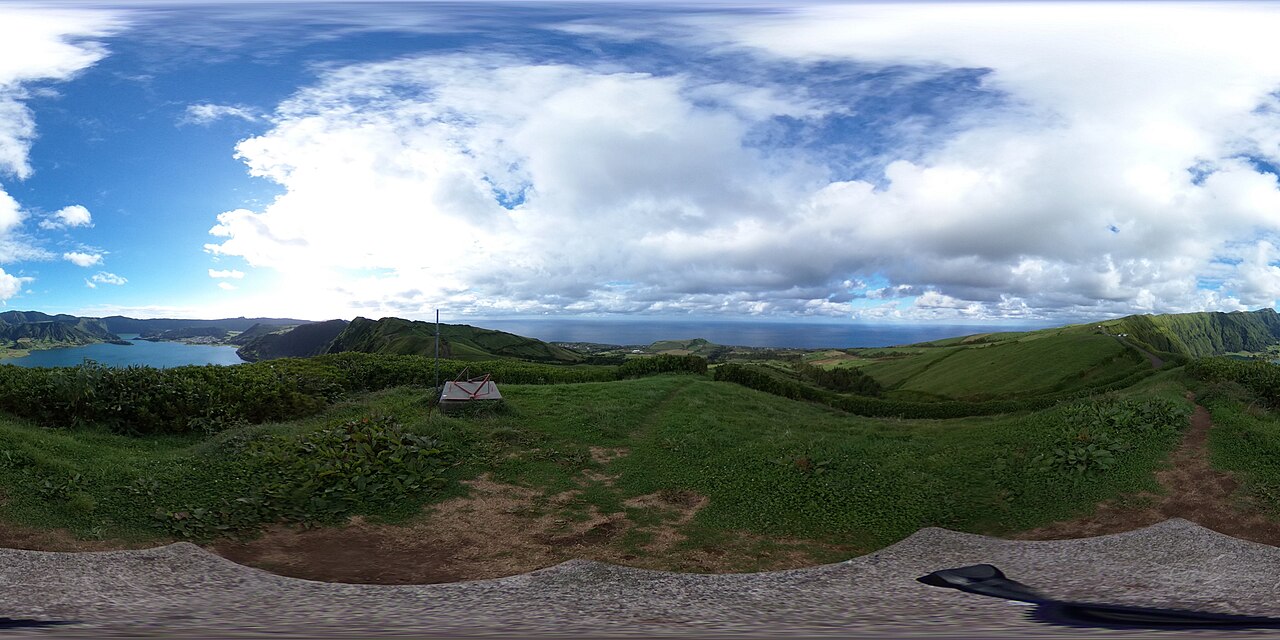
Furnas is one of the three great volcanic calderas of São Miguel, and its lake is the centrepiece of the valley. Lagoa das Furnas fills the floor of the crater, ringed by forested slopes, with a flat shoreline path that is easy to walk and a small neo-Gothic chapel on the water's edge that appears on many a postcard. The chapel dates from the 19th century and sits in a landscape of lawns, trees and reeds that feels almost English until the smell of sulphur reaches you. On the north shore the ground itself is alive. The Caldeiras das Furnas are a field of fumaroles, boiling springs and bubbling mud pools, where steam rolls across the ground and the earth is stained in rust, yellow and grey. Wooden walkways and short paths let you get close, and signs mark the hottest areas. A few steps away, small patches of ground are set aside as cooking pits, where the local stew, cozido, is lowered into the hot soil each morning and left to cook slowly for hours, a tradition that makes the valley unique among European food destinations. Several springs here also produce naturally fizzy, iron-rich water, and you can taste it from the taps in the park, though most people find the flavour an acquired one.
How to see it
The simplest plan is to park near the fumaroles, wander through the steaming area for half an hour, then walk or drive on to the chapel and the lakeshore. There is a marked trail that loops around the lake for those who want a longer outing, mostly flat and easy underfoot, and a shorter stretch along the water suits families with pushchairs. Cyclists use the lake road as a gentle ride, and the quiet lanes around the shore are pleasant for a slow walk with a camera, a picnic or simply a bench and the view.
Guided van tours from Ponta Delgada stop here as part of a Furnas day, usually together with Terra Nostra Park and a viewpoint over the valley, which is a good option if you would rather not drive.
Timing and weather
Furnas sits in a bowl, and mist gathers on cooler days, which is when the steam looks most dramatic. The fumaroles are active all year, so winter is just as rewarding as summer, and the fewer visitors make the walkways pleasant. Summer is busier at midday, so arrive in the morning or late afternoon. Bring a light waterproof layer, because showers pass through quickly, and sturdy shoes for the damp paths. The smell of sulphur is part of the experience, and it is stronger on windless days.
Staying safe and making a day of it: stay on the paths and walkways around the boiling pools, since the ground can be unstable and extremely hot, and keep children close. Do not touch the water, which is far hotter than the thermal baths you will soak in later. Combine the lake with a cozido lunch, a soak at Terra Nostra Park or a visit to the Poça da Dona Beija pools in the evening, and allow at least half a day in the valley.
If you are staying overnight in Furnas, the lake is a lovely early-morning walk before the day tours arrive, with mist on the water and the chapel standing quiet.
What to expect
The experience
A self-guided walk through the steaming caldeiras and along the lakeshore, or a stop on a guided van tour of the Furnas valley.
Best time
Morning or late afternoon, and cooler, misty days when the steam is most dramatic. The vents are active all year.
How long
About one hour for the fumaroles and chapel; two to three hours with a lakeshore walk.
Tips
Stay on the paths, do not touch the boiling water, wear sturdy shoes, and pair the visit with a cozido lunch or a thermal soak.
Quick picks
- Best for
- First-timers who want to see the volcanic forces at work without a long hike.
- Families
- Easy, flat paths and plenty to look at, but keep children well away from the boiling pools.
- Couples
- An early lakeside walk with mist on the water, followed by breakfast in the village.
- Pair with
- Terra Nostra Park, cozido for lunch and an evening soak at the Poça da Dona Beija.
- Time needed
- One to three hours, or a full day for the whole Furnas valley.
Good questions
Are the fumaroles safe to visit?+
Yes, if you stay on the marked paths and walkways. The ground and water are extremely hot, so keep children close and do not touch the pools.
Is there an entrance fee?+
Walking around the lake and the fumaroles is free. Terra Nostra Park and the thermal pools nearby are separate, paid visits.
Can I walk around the lake?+
Yes. A marked trail loops around the lake, mostly flat and easy underfoot. Allow a couple of hours for the full circuit at a gentle pace.
Why does it smell?+
The smell is sulphur from the volcanic gases rising through the vents. It is harmless at the paths and stronger on still days.
Can I taste the spring water?+
Some springs in the area run with naturally fizzy, iron-rich water, and taps let you try it. Many visitors find the taste unusual.