Cairo is a city that rewards several days, but its surroundings reward at least one escape. Within a few hours by road you can walk inside the earliest pyramids, stand on the Mediterranean coast or watch waterfalls tumble into a desert lake. Each trip suits a different traveller, and each makes a very different day from the monuments in the city, so here is how to choose.
Saqqara, Memphis and Dahshur: the pyramid age
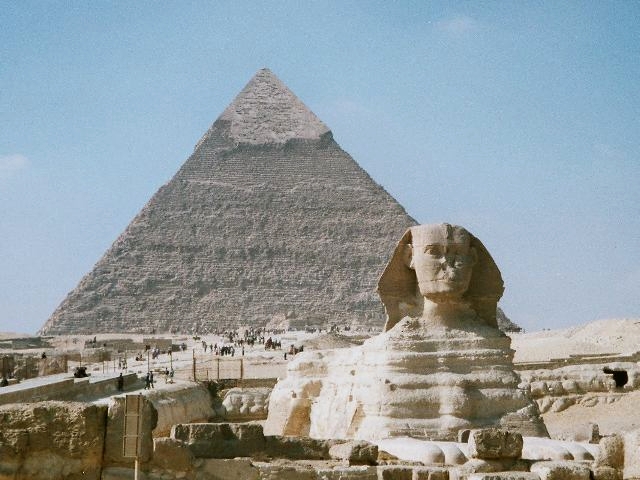
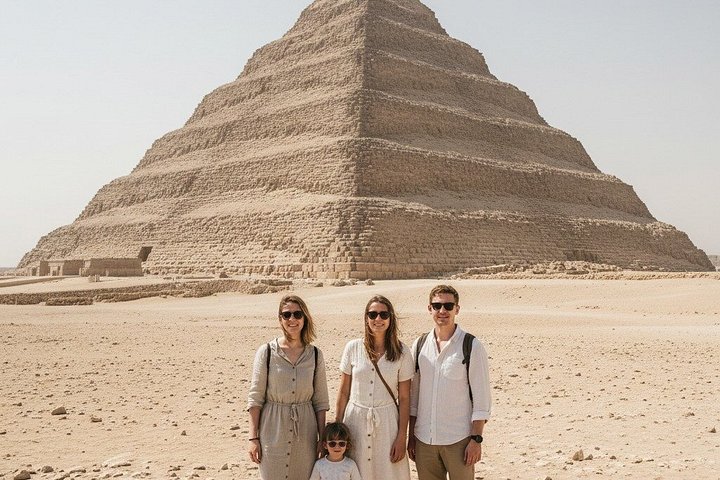
About an hour south of central Cairo, these sites are the best choice for anyone with an interest in how the pyramids began. Saqqara has the Step Pyramid of Djoser, designed by Imhotep some 4,700 years ago and the earliest large stone building in Egypt, with painted tombs of courtiers and administrators, the Serapeum and the Imhotep Museum nearby. Memphis, the first capital of united Egypt, is marked by an open-air museum with a colossal statue of Ramesses II. Dahshur, further south, has the Bent and Red pyramids of Sneferu, and you can often climb down into the Red Pyramid. Crowds are far lighter than at Giza, but distances are long and the sun is strong, so start early. Allow five to eight hours, including the drive, and hire a driver or join a small-group tour. Each site has its own ticket, and some tombs rotate their opening, so a guide helps. This is the day trip we recommend first, because it makes the Giza visit make sense.
Alexandria: the Mediterranean
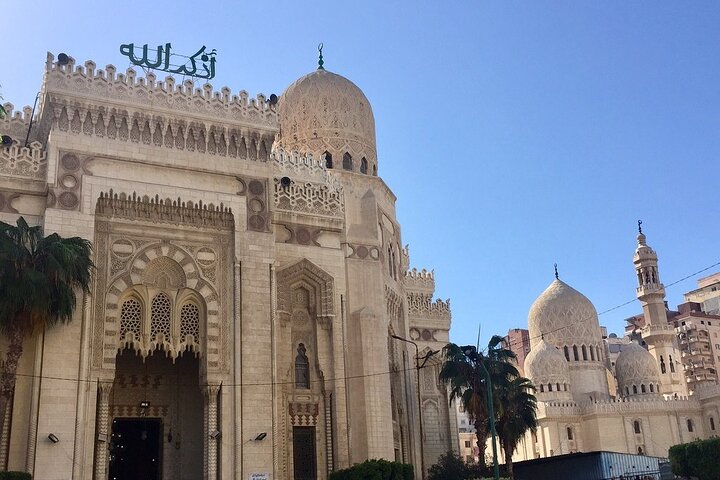
Alexander the Great founded Alexandria in 331 BCE, and for centuries it was one of the great cities of the ancient world. It lies roughly two and a half to three hours by road from Cairo, which makes it a long day, commonly around ten hours with the driving. Little of the ancient city is visible, but the remains are distinctive: the fifteenth-century Citadel of Qaitbay, built on the site of the Pharos lighthouse, one of the Seven Wonders of the Ancient World; the Roman-era Catacombs of Kom el-Shoqafa, which blend Egyptian, Greek and Roman styles; Pompey’s Pillar; and the Bibliotheca Alexandrina, the modern library. The Corniche curves around the harbour, and a seafood lunch is part of the experience. Choose Alexandria if you already have the pyramids and the museums covered, if you want sea air and a different rhythm, or if you are travelling in summer, when the coast is breezier than Cairo. In winter it can be damp and windy, so bring a layer.
The Fayoum and Wadi El Rayan: desert and water
The Fayoum is a green oasis depression in the desert south-west of Cairo, about two hours by road. Its main draw for visitors is Wadi El Rayan, a protected area with two lakes linked by what are generally described as Egypt’s only waterfalls, set among dunes and oasis vegetation. A typical day combines the lakes with a 4x4 drive over the dunes, sandboarding and a camel ride, and many tours add Wadi El Hitan, the Valley of the Whales, a UNESCO World Heritage site where fossil whales lie in the desert, or Lake Qarun and the potters’ village of Tunis. It is an outdoors day of about ten hours, best between autumn and spring, with closed shoes, a hat, a scarf and water. It suits families with older children, active travellers and anyone who needs a break from monuments and traffic.
How to choose
If you can only do one, make it Saqqara, Memphis and Dahshur, which gives you ancient Egypt at its quietest. If you have two, add Alexandria in the cooler months or the Fayoum for a change of landscape. If you have a spare half day rather than a whole day, consider Saqqara on its own, or stay closer to home with the royal palaces, Coptic Cairo or a cooking class. Trips beyond these, such as Luxor and Aswan far to the south, deserve their own journey, usually by an internal flight, and are better planned as a separate part of your holiday than squeezed into a Cairo stay.
Booking and practicalities
A private driver gives flexibility and suits families and small groups, while a guided small-group tour handles tickets, timings and lunch. Read the inclusions carefully, since entry fees, lunch and extra sites are not always bundled in the same way, and ask which stops are included. Leave early, carry water, a hat and sunscreen, and keep small notes for tips and extras. Roads can be busy at the edges of both Cairo and Alexandria, so allow for slow stretches. Wear modest, comfortable clothing and closed shoes, and bring a light layer for the drive back, since air conditioning can be strong. For desert areas, check your government’s travel advice and follow your operator’s instructions.
Where to base yourself
For Saqqara and Dahshur, a Giza hotel near the plateau shortens the drive, and for Alexandria and the Fayoum, a central or Giza base works equally well, since pickups usually cover both. If you plan more than one day trip, schedule a rest day in between, because the long drives and the heat add up. A rest-day option is the Pharaonic Village, a relaxed boat-and-exhibit morning on the Nile, or a Nile felucca at sunset, which gives a gentle contrast after a hard day on the road.