Food in Chefchaouen is simple, local and generous. The town sits among farms and mountain pastures, so the tables lean on vegetables, olive oil, bread baked in neighbourhood ovens, goat's cheese and slow-cooked stews. You will not find an overwhelming restaurant scene, but you will find many small places where a plate of good home-style cooking costs very little. This guide covers what to order, when to eat and how to learn a few recipes of your own.
Start with mint tea
Tea is the social currency of Morocco, and Plaza Uta el-Hammam is the best place to practise. Take a table in the late afternoon, order a pot of sweet mint tea and watch the square fill. Cafes directly on the plaza charge a little more for the position, while one lane back the price drops, so walk a few steps if you are watching your budget. Tea is poured from a height to make a froth, and it is polite to accept at least one glass if you are offered it in a shop or a home.
Breakfast
Most hotels and riads serve a Moroccan breakfast of flat breads, olive oil, soft cheese, jam, boiled eggs, pastries and coffee or tea. Several of the places we recommend include a free local breakfast, which is a good reason to choose them. For something more local, look for stalls and small cafes that sell fresh bread, msemen pancakes and harcha, a semolina griddle bread, along with strong coffee.
Lunch and dinner
The classics are tagine, couscous and grilled meat. A tagine is a slow-cooked stew made in a conical clay pot, with chicken and preserved lemon, lamb and prunes, or vegetables, and it is usually served with bread. Couscous is traditionally a Friday dish, so expect it to appear on menus then. Harira, a tomato and lentil soup, is a staple and very cheap, and salads of cooked vegetables arrive in small dishes. Vegetarians do well, because vegetable tagines and salads are everywhere, though ask about stock if you avoid meat entirely. Rooftop terraces give the best views for a sunset dinner, and many riads offer a hosted evening meal if you reserve in advance.
Cheese, honey and local produce
The Rif is known for goat's cheese, olive oil and honey. You will see small rounds of fresh white cheese on breakfast tables and in markets, and farm visits near Akchour often include tastings and a simple lunch. If you want to bring something home, honey, olive oil and dried herbs travel well, while cheese is best eaten fresh.
Street food and the evening scene
After dark, the town's food stalls come out, selling grilled skewers, fried snacks, soups, nuts and sweet pastries. A guided evening walk is a good way to sample them with someone who knows what is fresh and where the locals queue. Go early if you have a sensitive stomach, choose busy stalls where food is cooked in front of you and carry a little hand sanitiser.
Learn to cook
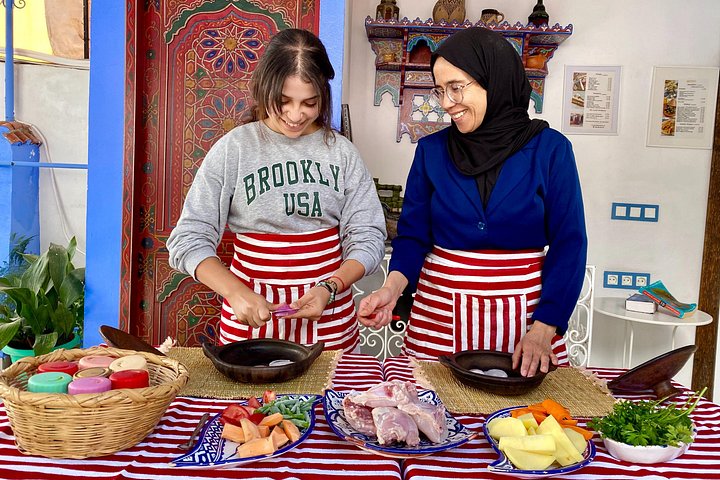
The best food experience in town is a cooking class with a local family. You usually start with a visit to the market to choose vegetables and spices, then cook a tagine, a salad and bread in a family kitchen, and finish by eating together. Classes run for a few hours, suit beginners and give you a real sense of how families eat. Book ahead in spring and autumn, tell the host about dietary needs and ask whether they can adapt dishes for vegetarians.
Drinking
Tea and coffee are the default, with fresh orange juice sold everywhere and bottled water cheap and widely available. Alcohol is limited in the medina, because many cafes and restaurants do not serve it, so ask before you order or plan to drink at a hotel that has a licence. Always buy sealed bottled water and avoid ice if you are unsure of its source.
Etiquette and costs
Eat with your right hand when sharing a dish, tear bread rather than cutting it, and wait for the host to begin. Tips of a few coins to a small note are appreciated in cafes, and a bit more in restaurants. Prices are modest compared with Europe, and menus are often posted outside, so compare before you sit. During Ramadan, many places close during the day and open for the evening meal, so plan for flexibility.
Where to stay for food
Riad Nila offers a restaurant and a hosted evening meal, which saves you a walk after a long day, and Maison D'hôtes Afassi gives families a free local breakfast and a rooftop terrace. If you are staying near the main square, Vancii Hotel has two restaurants on site. Whatever you choose, ask your host to recommend a favourite local place, because the best tables are rarely the loudest ones.