Chengdu is one of the best bases in China for day trips. Within a couple of hours by high-speed train or road you can reach a giant cliff-carved Buddha, a sacred Buddhist mountain, a 2,000-year-old irrigation system, a Taoist mountain of temples and one of the strangest archaeological museums in Asia. The difficulty is not finding things to do but choosing, because each trip eats most of a day. This guide helps you pick.
Leshan Giant Buddha: the one monument to see
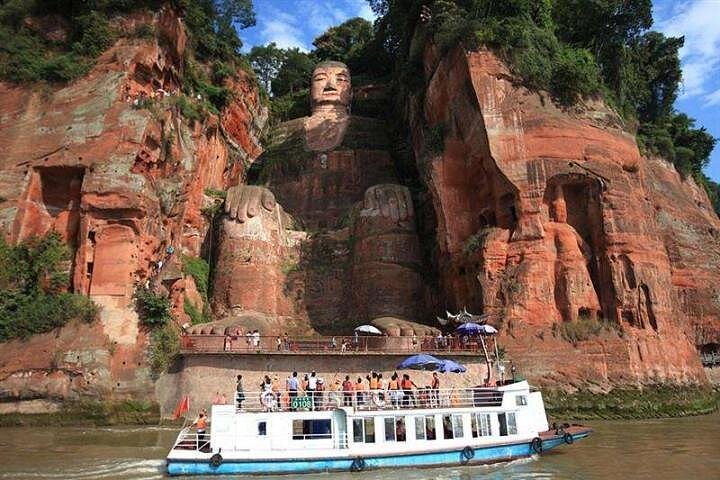
Carved into a cliff where three rivers meet, the seated Buddha stands 71 metres tall and is the largest stone Buddha in the world. It takes about an hour or so to reach from Chengdu and works as a single day out. See it from the river on a boat for the scale, then climb to the cliff-side stairway if the queue is manageable; in busy periods it is slow. This is the best pick for a first visit with only one day to spare, and the day trip entry is Leshan Giant Buddha Day Trip.
Dujiangyan: engineering and pandas
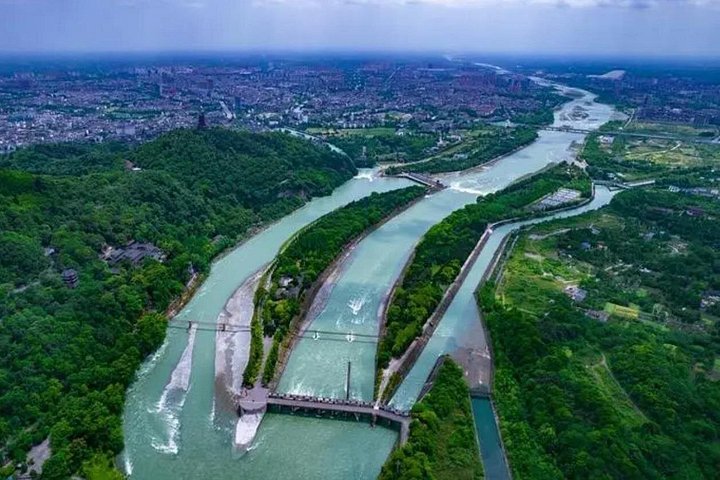
Built more than 2,000 years ago and still in use, the Dujiangyan system tamed a flood-prone river and made the Chengdu plain fertile. Walking its bridges and embankments is a good half-day, and the town is close enough that many tours pair it with a panda park or with Mount Qingcheng. It is a short high-speed journey from the city, which makes it the easiest trip to fit into a tight schedule. Read the entry for the Dujiangyan Irrigation System and Panda Base if you want the combined day.
Mount Qingcheng: green, quiet and walkable
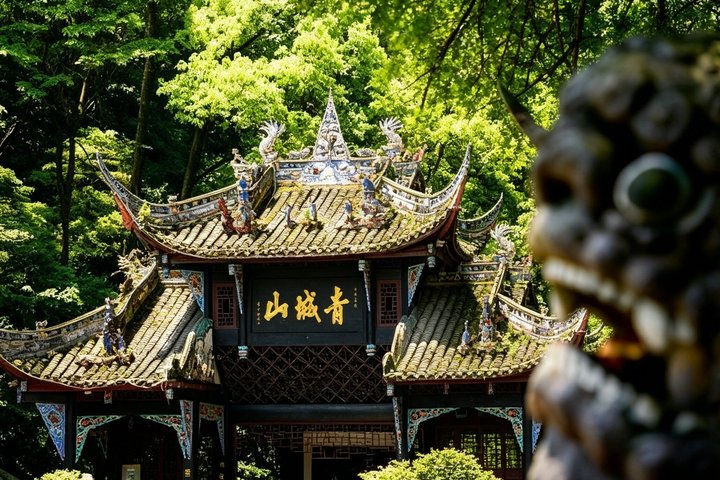
A Taoist holy mountain beside Dujiangyan, it is the best day out for walking and shade. The front mountain is the cultural half, with stone steps, working temples and cave shrines; the back mountain is wilder, with waterfalls and gorge paths. It takes about an hour and a half by road, so most people combine it with Dujiangyan. It is cooler than the city in summer and a lovely escape in spring and autumn.
Mount Emei: best with a night
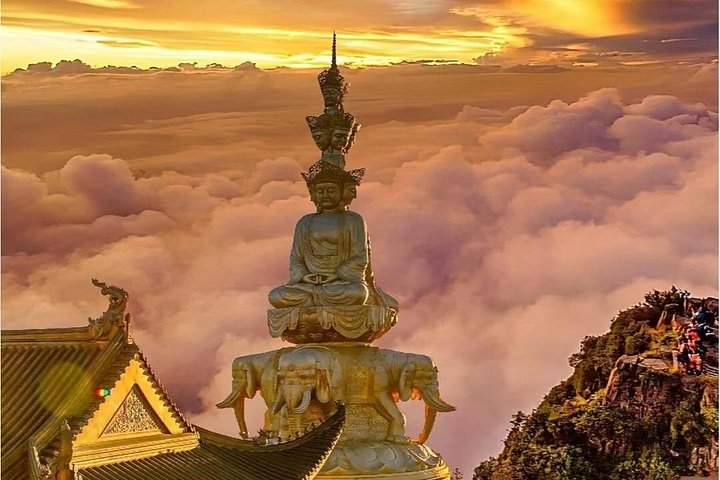
A UNESCO World Heritage mountain with monasteries, monkeys and the Golden Summit, Emei is a big place. A day visit to the lower temples is possible, but the full experience means an overnight stay and an early start to reach the summit for sunrise. It is the right choice for travellers who like hiking and Buddhist culture, and it combines naturally with Leshan since the two are close by. Weather on the summit changes fast and even in warm months it can be cold, so pack layers. Our entry is Mount Emei.
Sanxingdui: the museum that surprises
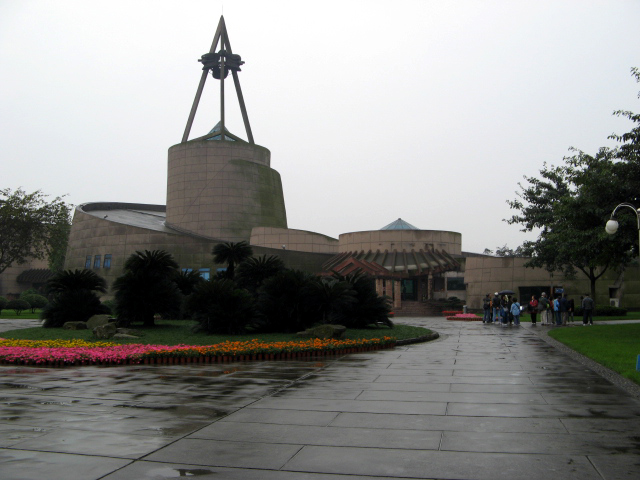
North of the city in Guanghan, the Sanxingdui Museum holds Bronze Age masks with protruding eyes, a tall bronze tree and ritual objects from a civilisation that left no written records. The displays are modern and impressive, and a guide adds a great deal because there is so little text to rely on. It is a half to full day with travel and suits history lovers and families with curious older children. Details are on the Sanxingdui Museum page.
Choosing and combining
For a first trip, choose Leshan. For walking and quiet, choose Dujiangyan with Qingcheng. For mountains and monasteries, give Emei an overnight, and add Leshan on the way if time allows. For history, go to Sanxingdui. Do not try to stack more than two sights in a day, since transfers and queues are slower than they look on a map. A full week allows three of these comfortably.
Practicalities
Carry your passport for ticket checks and book popular entries ahead in busy seasons. High-speed trains serve Leshan, Emeishan, Dujiangyan and Guanghan, but the last stretch from station to site is often by bus or taxi, so a guided tour or private car saves effort. Spring and autumn are the best seasons; summer brings heat and rain, and winter can be grey and cold in the mountains. Avoid China’s national holidays, when every site is crowded.
Longer trips
If you have three spare days, Jiuzhaigou and Huanglong in northern Sichuan offer turquoise lakes and travertine pools, but the transfers are long and this is an expedition, not a day trip. Treat it as a separate part of your itinerary.