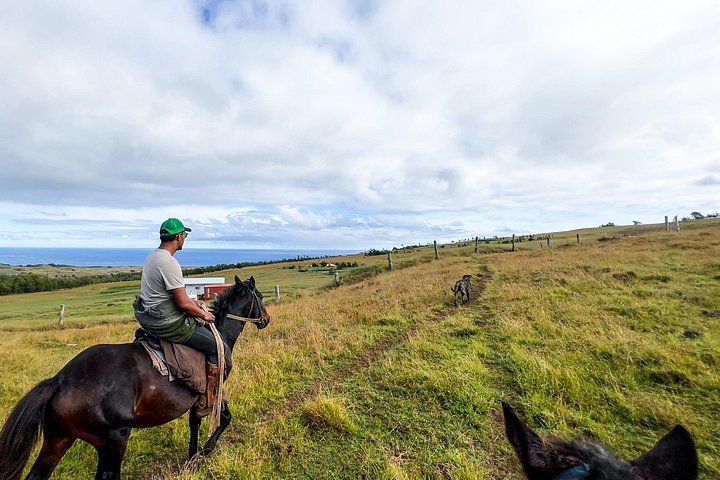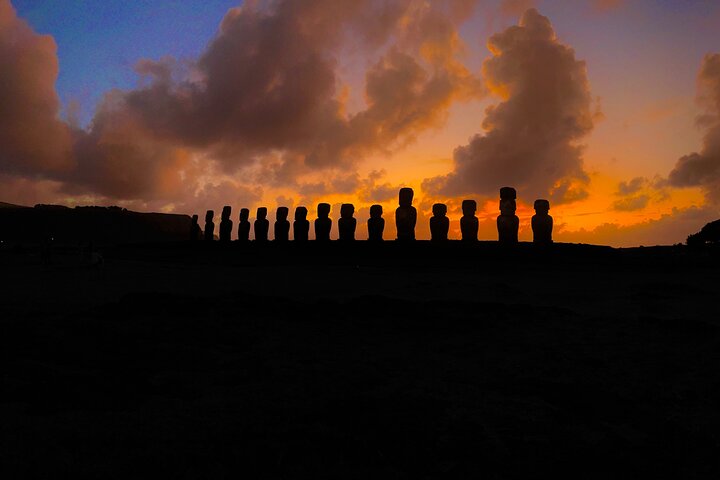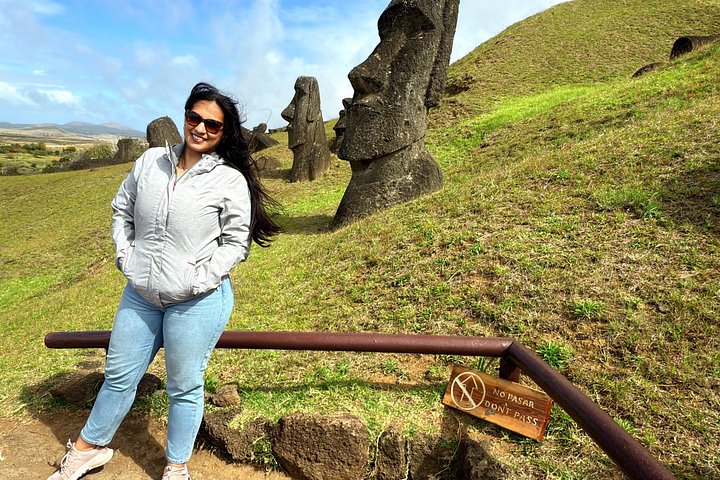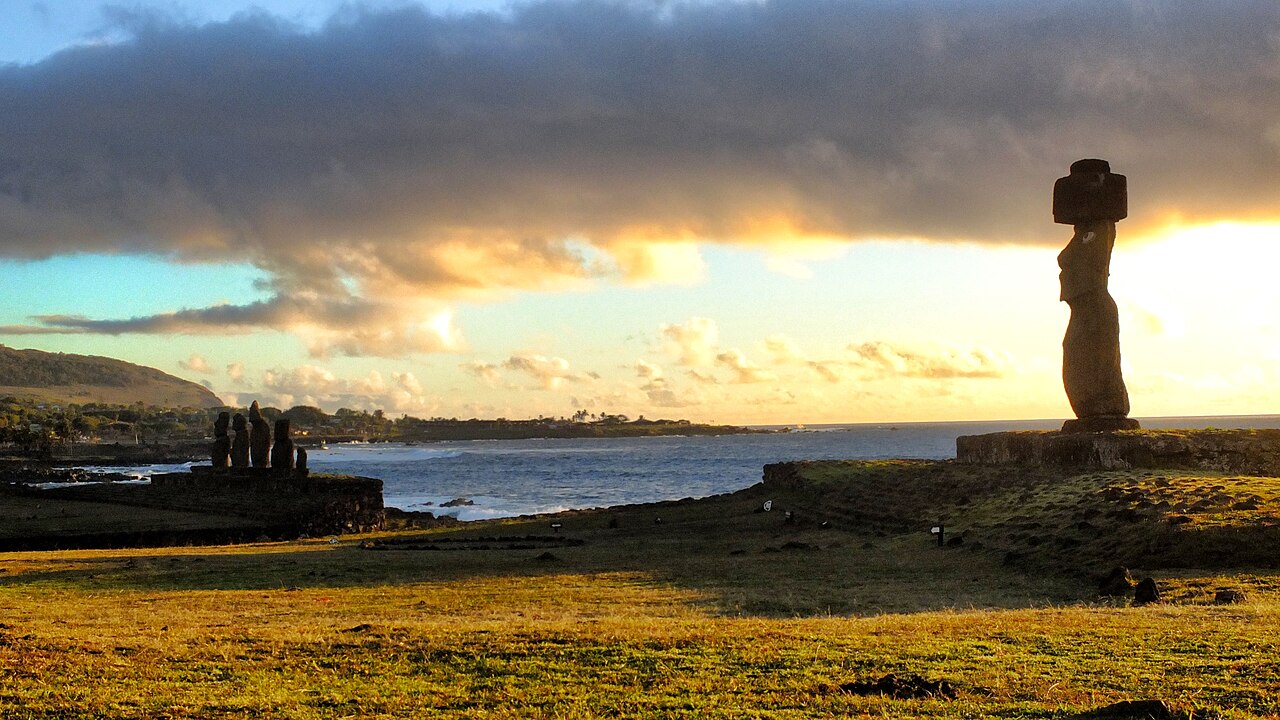
Most of Rapa Nui's moai stand with their backs to the sea and their faces to the community they protected. Ahu Akivi is the exception: seven statues, all roughly the same height, placed on a platform in the interior of the island, looking toward the ocean. They are the only moai known to do this, and the pattern invites an explanation. One tradition says the seven represent the explorers sent by Hotu Matu'a to scout the island before the main party landed. Another focus is the astronomy: the platform aligns with the setting sun at the equinox, and the statues face the point on the horizon where the sun goes down. Ahu Akivi lies on a gentle grassy slope under the island's highest hill, in an area that feels very different from the coast, with open pasture, grazing horses and an expanse of sky. Because it is not on the coast road, it is often quieter than the east coast sites.
The restoration here is a small piece of archaeological history. In the 1960s an American archaeologist, William Mulloy, and a Chilean colleague, Gonzalo Figueroa, rebuilt the platform and raised the fallen moai, using local labour and traditional methods wherever they could. Their work helped establish the model for later restorations around the island, and it also showed how much archaeological information could be recovered from sites that looked like piles of rubble. The statues here stand without topknots, and their weathered surfaces make them look more austere than the carved figures of Anakena.
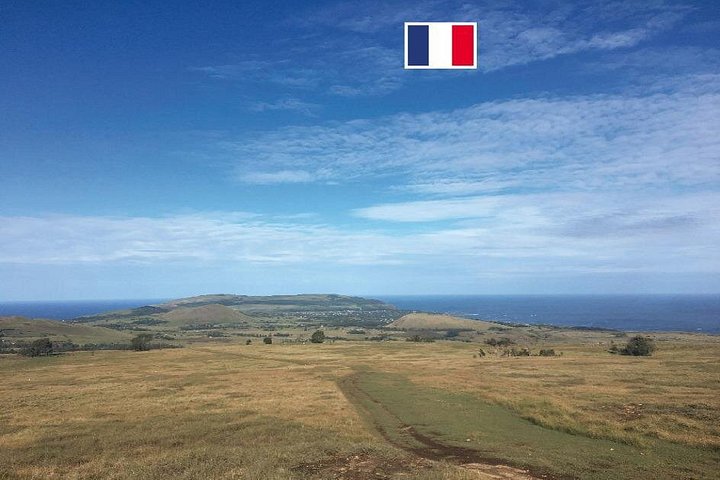
Visiting is simple. A short flat path leads from the car park to the platform, and a low barrier keeps you at a respectful distance. The area is exposed and the wind can be strong, so a layer is useful at any time of year. The site is also a good place to understand the geography of the island, since from the platform you can see across the interior toward the coast.
Guides often use the stop to talk about land use, the history of the island's farms, and the role of horses and cattle in modern Rapa Nui life.
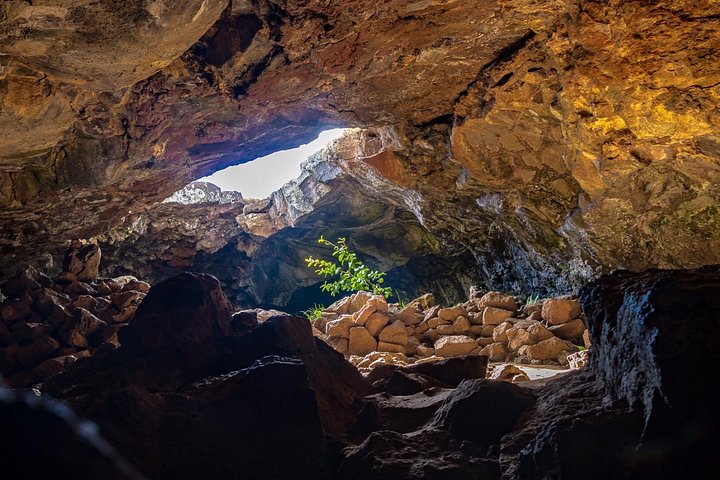
Ahu Akivi is usually visited in combination with other interior sites. Many half-day tours pair it with Ana Te Pahu, the lava tube cave with its gardens, or with the road up to Terevaka, the island's highest point. The product linked here is a day tour of the upper part of the island, which reflects how the site is normally visited.
Because the site is inland, it is a good option for a cloudy morning when coastal views might disappoint. Come in the late afternoon if you want to enjoy the equinox alignment in March or September, though the sun sets over the hills on any clear day and softens the stone in a flattering light.
The setting is part of the appeal, so give yourself time to look around rather than just photographing the platform. Notice the gentle slope of the land and the way the line of statues sits against the sky, and compare their plain faces with the more elaborate figures elsewhere. A good guide will point out the small stone structures nearby that hint at ordinary life, and the grazing animals that shape the landscape today.
Stay on the path, avoid stepping on the grass beside the platform, and remember that the site is peaceful partly because few visitors linger. Bring a light jacket, because the wind picks up in the afternoon.
What to expect
The experience
A short guided stop at an inland platform of seven moai, with a talk on the legend of the seven explorers and the equinox alignment.
Best time
Late afternoon for soft light, particularly near the March and September equinoxes. Mornings are quieter.
How long
About an hour, or longer as part of an interior tour.
Tips
The site is exposed, so bring a layer. Stay behind the barriers, and combine it with Ana Te Pahu or the Terevaka road.
Quick picks
- Best for
- Travellers who like quieter sites and an astronomical angle.
- Families
- A short, easy stop that children can manage, with open grass to walk on.
- Couples
- A calm and reflective place, especially at sunset.
- Pair with
- Terevaka summit and the Ana Te Pahu caves in the island's interior.
- Time needed
- About an hour.
Good questions
Why do these moai face the sea?+
Most moai face inland toward their community. These seven are the exception, and tradition links them to seven explorers who scouted the island, with an astronomical alignment as well.
Is there a link to the equinox?+
Yes. The platform aligns with the sunset at the equinox, which is why guides often mention March and September.
Is Ahu Akivi busy?+
Less than the east coast sites. It is inland, and many visitors only see it as part of a tour.
What else is nearby?+
Ana Te Pahu caves and the road to Terevaka, the highest point on the island.
Do I need a park ticket?+
Yes. It is inside Rapa Nui National Park, so you need the ticket and a guide.