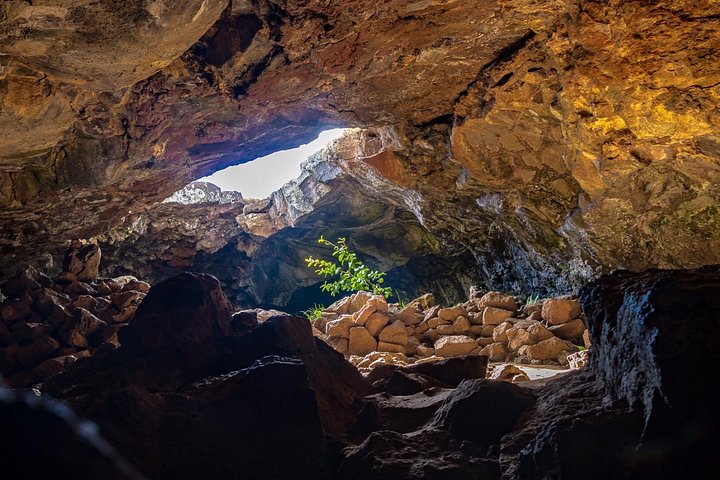
Rapa Nui sits on volcanic rock, and its lava flows left hundreds of tunnels and caves beneath the grass. People used them for shelter, storage, burial and refuge, and some of the best have become quiet visitor stops. The most popular is Ana Te Pahu, a lava tube reached through a gardened sinkhole on the island's interior slopes. The entrance is surrounded by bananas, taro and sweet potatoes growing in the sheltered pits, and the tunnel itself runs back into the dark, with chambers where families once lived. Another well-known stop is Ana Kakenga, the cave of two windows, where narrow openings in the sea cliff frame the ocean from within. The experience is different from anything else on the island, and it adds a human dimension to the archaeology: instead of carved giants, you see the places where people hid, worked and survived.
The history behind the caves is sobering. In the nineteenth century, slave raids from Peru carried off a large portion of the population, and an epidemic followed. Caves became places of refuge in turbulent times, and some have walls and narrow entrances built to keep out enemies. Guides often explain how families sheltered during the wars of the island's later centuries.
Standing in a low chamber with a torch, you feel the pressure of those times more than in an open museum. The caves are also used for family memorial, so treat them with respect, take nothing, and follow the guide.
Practical preparations matter. Wear sturdy shoes, because the floor is uneven, and expect to bend or crouch in places. Take a head torch or phone light, though most guides provide lamps. Avoid the caves after heavy rain, when the entrance pits are muddy and the passages drip. Anyone with claustrophobia should discuss the route in advance, since some tunnels are narrow. Temperatures inside are cool and constant, which is a relief on a hot day, and the quiet is striking after the wind of the exposed sites.
The half-day tour linked here covers caves and volcanic refuges with a guide, which is the practical way to visit because many entrances are on private or protected land and are hard to find. It fits well with an interior morning that includes Ahu Akivi and a stroll through the gardens.
Do not expect polished attractions
These are natural features with a few signs and rough paths, and the guide makes the difference. If you enjoy adventure and want a break from the sun, it can be one of the most memorable half days of your visit. Bring water, a layer, and a little curiosity.
Before you enter, ask your guide to explain the safety rules and the cultural expectations. Some caves hold family burials or are used for private ceremonies, and visitors should never take objects or move stones. Keep your head low in the narrow passages, step carefully on the uneven floor, and stay together as a group.
After the tour, spend a few minutes in the garden entrance to see the fruit trees and root crops growing in the sheltered pit, which shows how clever the island's farmers were. A change of clothes is useful if you get muddy, and a plastic bag for dirty shoes is a smart extra.
What to expect
The experience
A guided half-day visit to lava tubes and cave refuges, including the garden entrance of Ana Te Pahu, with torches provided or recommended.
Best time
Any time of day; caves are cool and sheltered. Avoid after heavy rain.
How long
Three to four hours.
Tips
Wear sturdy shoes, bring a head torch, and expect low ceilings and uneven floors. Treat the caves with respect.
Quick picks
- Best for
- Adventurous visitors and anyone curious about daily life and conflict in the island's past.
- Families
- Fun for children who like caves; keep them close and supervised in the dark.
- Couples
- A different and slightly mysterious experience.
- Pair with
- Ahu Akivi and Terevaka on the same interior route.
- Time needed
- Three to four hours.
Good questions
What is Ana Te Pahu?+
A lava tube reached through a garden sinkhole where bananas and taro grow. It was used as shelter and has several chambers.
Why are there so many caves?+
The island's volcanic lava left a network of tubes. People used them for shelter, storage, burial and refuge in dangerous times.
Do I need a torch?+
Guides usually provide one, but bring a head torch or phone light as a backup.
Is it suitable for children?+
Often yes, with supervision. Some passages are low and narrow, so check the route.
Is it safe in the rain?+
Avoid it after heavy rain, when entrances become muddy and slippery.