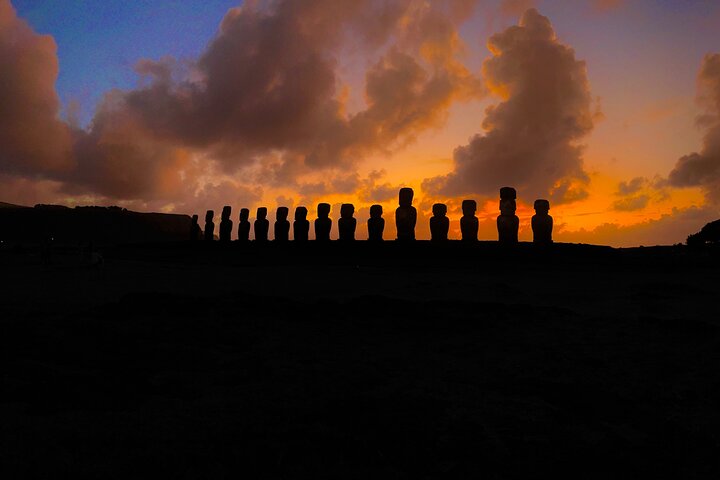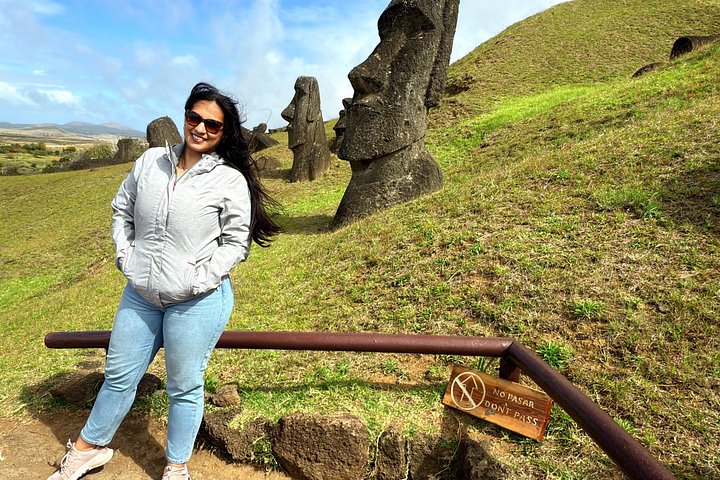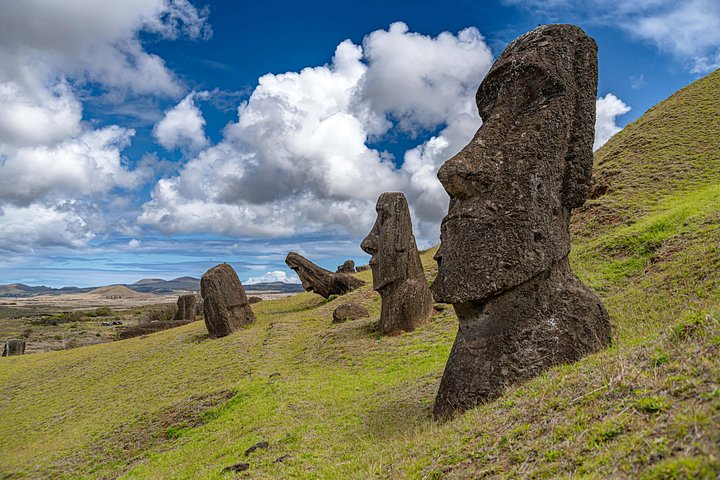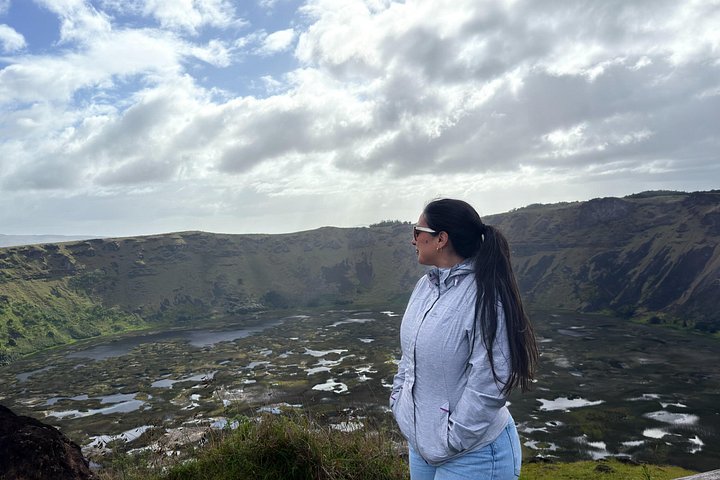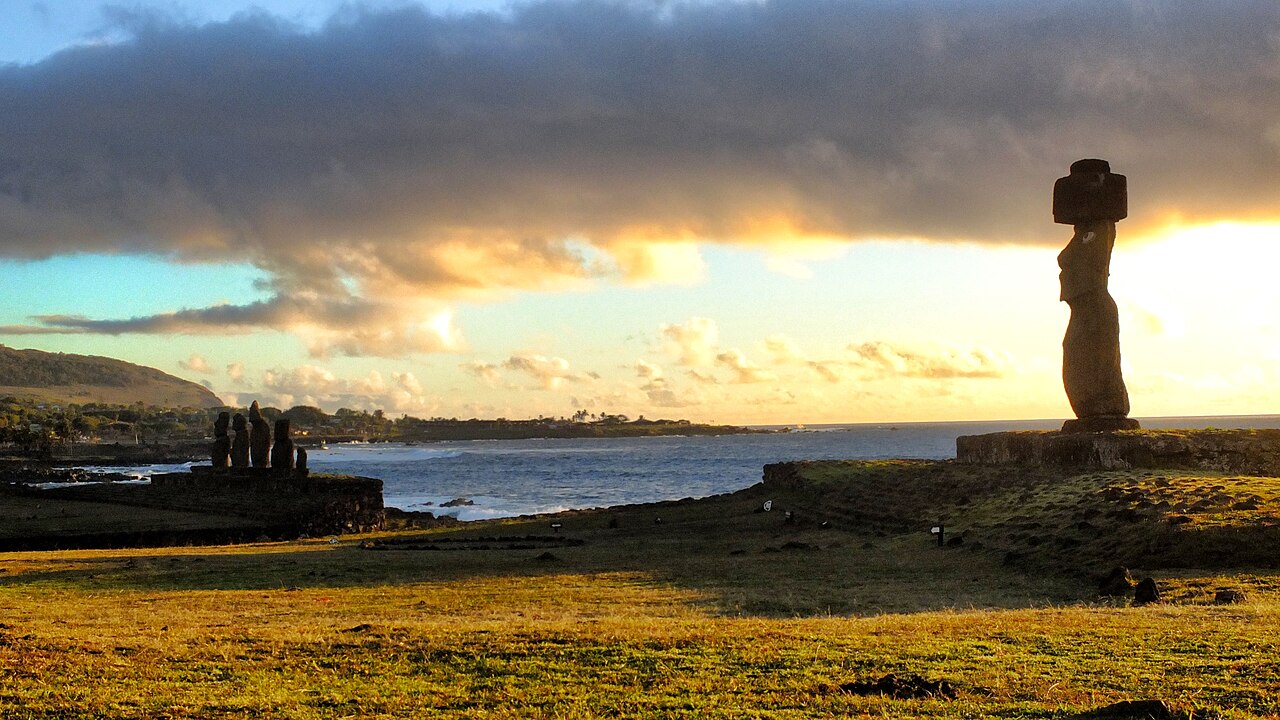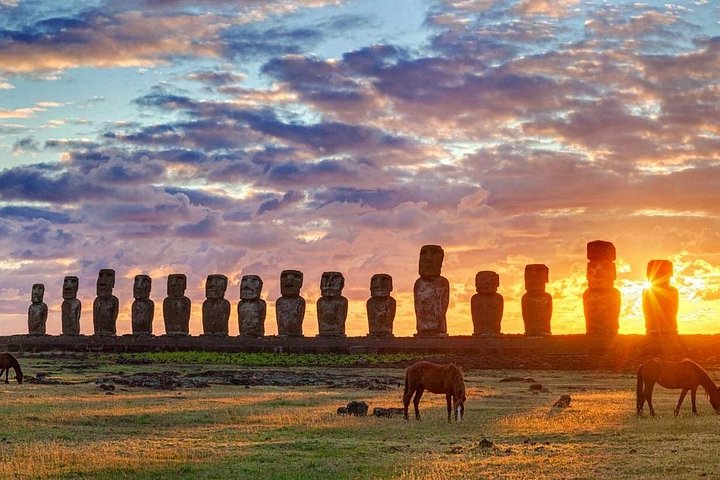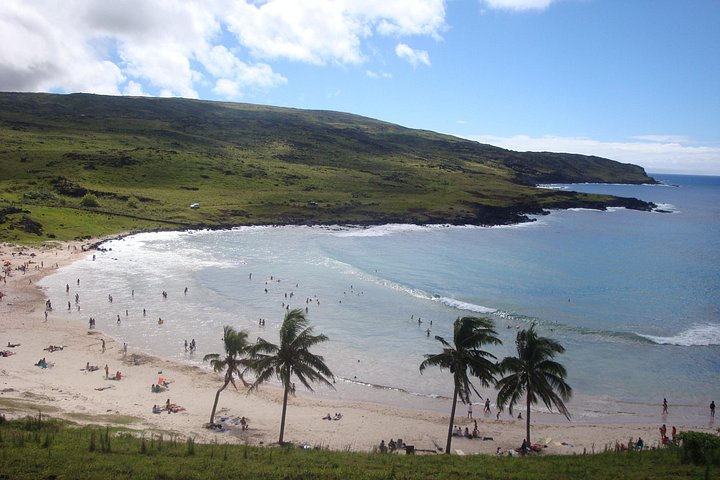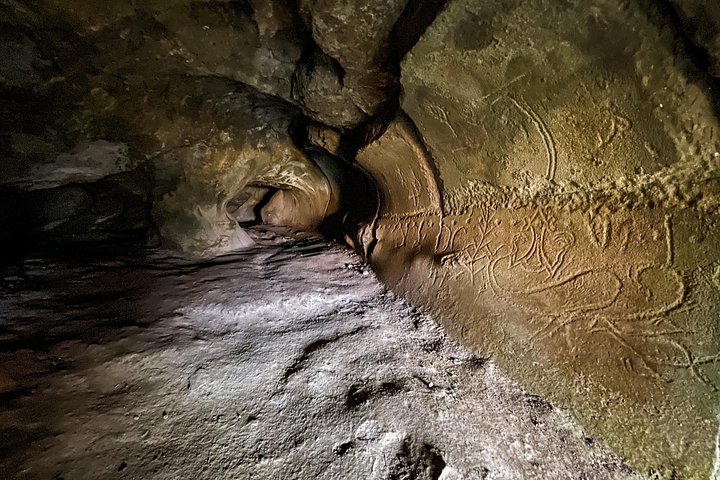
Poike is the oldest part of Rapa Nui, an extinct volcano that forms the island's eastern headland. Most visitors see it only from a distance, as a long green backdrop to Ahu Tongariki at sunrise. Heading out onto it, however, takes you into a very different island: open grassland, a steep volcanic cone called Maunga Pu A Katiki, remote cliff-top paths, and a sense of space and silence that is hard to find near the more popular platforms. Poike was heavily farmed in the nineteenth and twentieth centuries and still carries traces of that history, from stone walls and old enclosures to the odd abandoned building. Archaeologically it holds fewer big statues than the rest of the island, but it has some of the most rewarding walking and viewpoints, and a rich tradition of stories about the island's past conflicts.
One story dominates the peninsula. Local tradition describes a great defensive ditch dug across the neck of Poike, said to have been the site of a war between two groups, the Long Ears and the Short Ears. Archaeologists have found the ditch to be a natural geological feature modified for farming, and many guides now present the legend and the science side by side.
It is a good example of how oral history and archaeology can overlap and conflict, and discussing it on the spot, with the landscape around you, is more engaging than reading a plaque.
The walking is the main attraction. From the high points of the peninsula you look down on the Tongariki platform and back along the whole south coast, and you can follow the cliff tops to a series of small coves where fishermen once launched boats. There are few formal facilities, no shade and few signposts, so a guide is highly recommended, and for a site inside the park a guide is required in any case.
You may share the tracks with grazing horses and cattle. After rain the grass and clay become slippery, so choose a dry day if possible, and wear shoes with good grip.
The tour linked here is a private tour of the Poike peninsula, and it is aimed at travellers who have already seen the headline sites and want a quieter experience. It is also a good option if you are travelling with a small group and want flexibility over timing and pace.
Combine it with a late-afternoon visit to Tongariki, where the light is gentler and the crowds have gone, for a full circuit of the eastern end. Bring water, sun protection and a layer for wind, and allow extra time for photographs, because the light on the grass and sea here is very good.
Give yourself a flexible day and let the guide set the pace. Poike is best enjoyed slowly, with time to sit on a ridge and watch clouds cross the sea. Look for the old stone walls that mark former farms, and for the volcanic rocks that glitter with crystals. If the weather is windy, ask whether a more sheltered route is available.
Pack lunch, because there are no cafes, and keep a close eye on the time so you reach Tongariki in the late light if you plan to end the day there. Remember that the peninsula is a working landscape, so close any gates you open.
What to expect
The experience
A guided private tour on foot and by vehicle across the grassy Poike volcano, with cliff-top views, the legend of the ditch and views down onto Tongariki.
Best time
Morning or late afternoon, on a dry day. Avoid after heavy rain when tracks are slippery.
How long
Three to five hours depending on how much you walk.
Tips
Bring water, sun protection and a windproof layer. A guide is required in the park and highly useful here.
Quick picks
- Best for
- Repeat visitors, walkers and anyone who prefers quiet places.
- Families
- Better for older children who like walking; there is no shade and no facilities.
- Couples
- A secluded, scenic outing away from the crowds.
- Pair with
- Ahu Tongariki and Rano Raraku, both close by.
- Time needed
- Three to five hours.
Good questions
What is the Poike ditch?+
A long trench across the neck of the peninsula that local legend links to a war between two groups. Archaeologists consider it a modified natural feature.
Is Poike hard to visit?+
The terrain is open and mostly gentle, but there are few paths and no facilities, so a guided outing is best.
What will I see?+
Grassy slopes, a volcanic cone, sea cliffs and views over Ahu Tongariki and the south coast.
Is it good for photography?+
Yes. The light on the grass, cliffs and sea is especially good in the early morning and late afternoon.
Do I need a guide?+
Yes. Poike lies inside the national park, so park rules require a guide, and local knowledge helps a great deal.