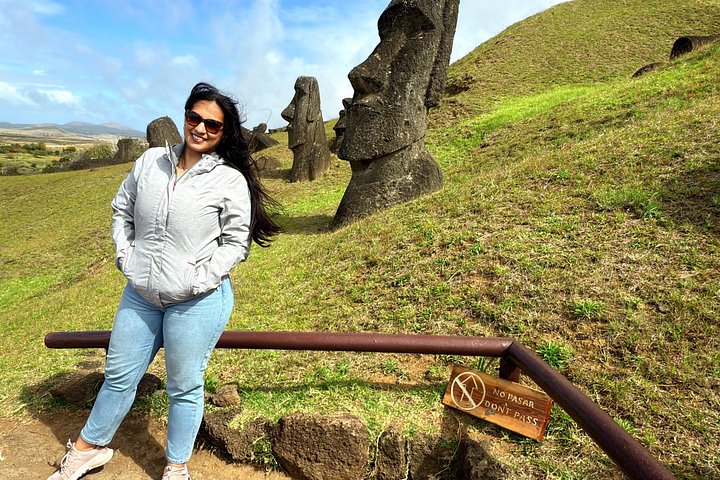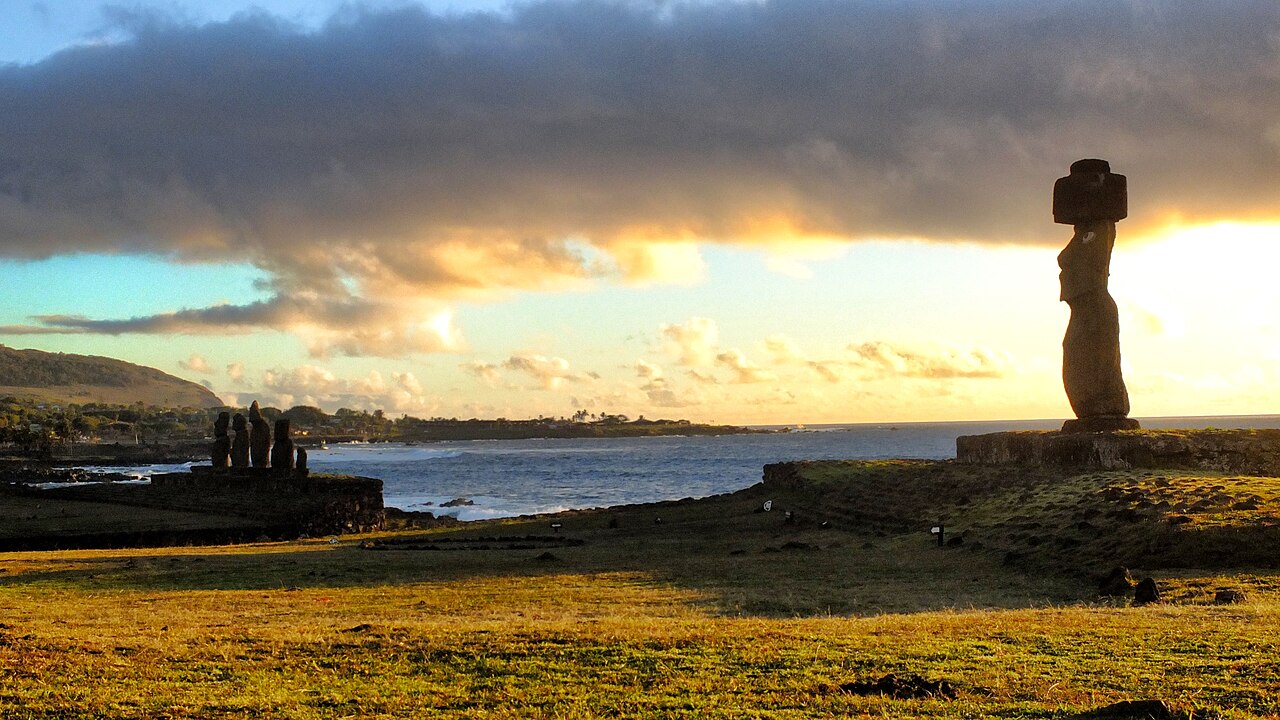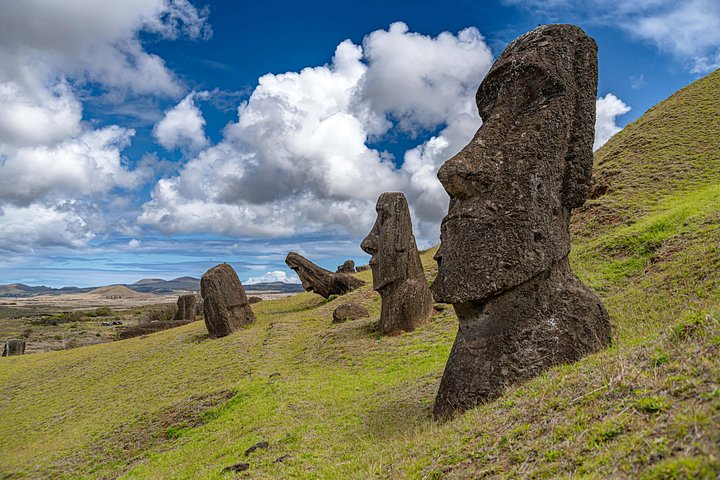
The south coast of Rapa Nui is where the island feels most like a ruin. Along the road east from the airport, a string of ahu sit on low black cliffs above the surf, and most of them tell the same story: the statues were toppled during the turbulent centuries before the island's population collapsed, and many still lie where they fell, face down in the grass, their topknots rolled nearby. The first major stop is Ahu Vinapu, just beyond the end of the runway, where one platform is built from large basalt blocks fitted together with extraordinary precision. The joinery looks astonishingly similar to Inca masonry, and in the twentieth century this comparison encouraged theories about South American contact. Most archaeologists today attribute the building to local skill, but the debate still colours the way guides present the site. Further along the coast, Ahu Akahanga and Vaihu continue the picture of fallen giants.
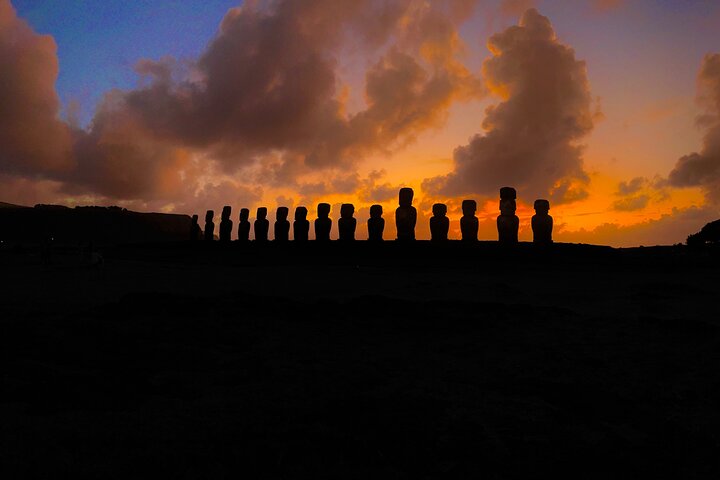
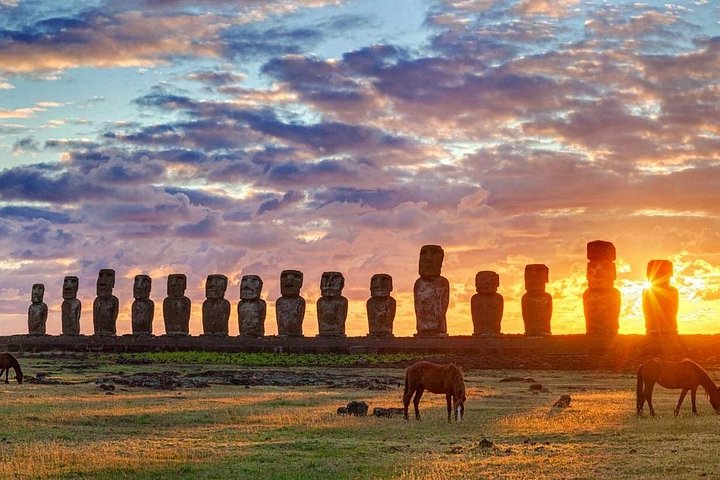
The south coast gives the island's story a different shape from the neat fifteen at Tongariki. Here the moai are not restored, and walking among them you can see the process of collapse. At Vaihu and Akahanga, statues lie with their faces in the dust, crowned with red topknots nearby, and beyond them lie ruined houses and boat-shaped foundations.
Rapa Nui people describe the toppling as part of the island's history of conflict, and guides who are from the community often speak with feeling about the families who lived and died here. The tone is not that of a museum but of a landscape that remembers.
The coastline itself is dramatic. Black lava cliffs, rough surf and wide pasture produce long open views, and in the afternoon the light can be spectacular. Horses graze among the ruins, and white-tailed tropicbirds sometimes wheel over the cliffs. Because the road runs beside the sea you can combine the sites easily in a half-day loop, and many tours treat the south coast as the first leg of the classic east coast route, continuing to Rano Raraku and Tongariki.
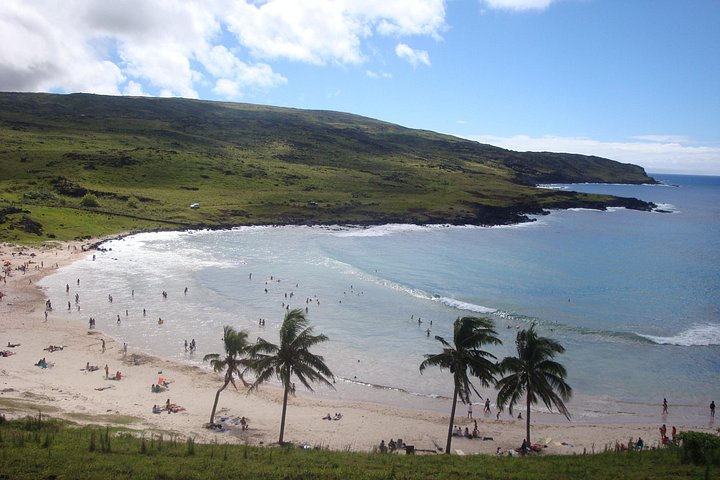
The long full-day tour linked here follows the south-coast route and finishes at Anakena, so you see both the ruined and the restored sides of the story in one trip.
Check your expectations before you go. The stonework at Vinapu is a small but fascinating detail rather than a vast display, so it works best when a guide explains what you are looking at and why it matters. Take care not to step on the platforms, which are fragile, and keep to the marked tracks. The road is partly unpaved in places and can be dusty or muddy depending on the weather, so a guided vehicle is the easiest way to travel.
Come with water and a hat, because shade is rare, and bring a camera for the late light on the cliffs and the lying moai, which photograph beautifully when the sun is low and the shadows are long.
To get the most from the south coast, go with an open mind. These sites are not polished attractions, and their power comes from atmosphere and story. Take time to look closely at the Vinapu stonework, noticing how the blocks curve and fit, and then stand back to see how the platform sits in the landscape.
At the fallen statues, picture the day they came down and think about the families who lived nearby. A late-afternoon visit gives the best light, and a windbreaker keeps the sea breeze at bay. Bring a hat, because there is no shade between stops.
What to expect
The experience
A drive along the southern coast road with guided stops at Vinapu, Vaihu and Akahanga, looking at toppled statues, precision stonework and cliff scenery.
Best time
Late afternoon for low light on the cliffs. Mornings are good if you plan to continue east.
How long
A half day for the south coast, or a full day continuing to Anakena.
Tips
Wear sturdy shoes, keep to the paths, and ask your guide about the debate over the Vinapu stonework.
Quick picks
- Best for
- History lovers and photographers who like raw, unrestored sites.
- Families
- Open space and animals suit children, but the road is long and there are few facilities.
- Couples
- A quiet coastal drive with very few other visitors.
- Pair with
- Rano Raraku and Ahu Tongariki on the same loop.
- Time needed
- A half day, or a full day including Anakena.
Good questions
What makes Vinapu special?+
One of its platforms uses large basalt blocks fitted together with great precision, which has led to comparisons with Inca stonework.
Why are so many moai lying face down?+
Moai were toppled during a period of conflict and decline before the modern era. Many remain where they fell and have not been restored.
How far is Vinapu from town?+
It is just beyond the end of the airport runway, a few minutes by car from Hanga Roa.
Is the road good?+
The main coastal road is paved in parts and unpaved in others, so a guided vehicle is the simplest way to travel.
Can I combine it with other sites?+
Yes. It is the first leg of the classic east coast route, continuing to Rano Raraku, Tongariki and Anakena.