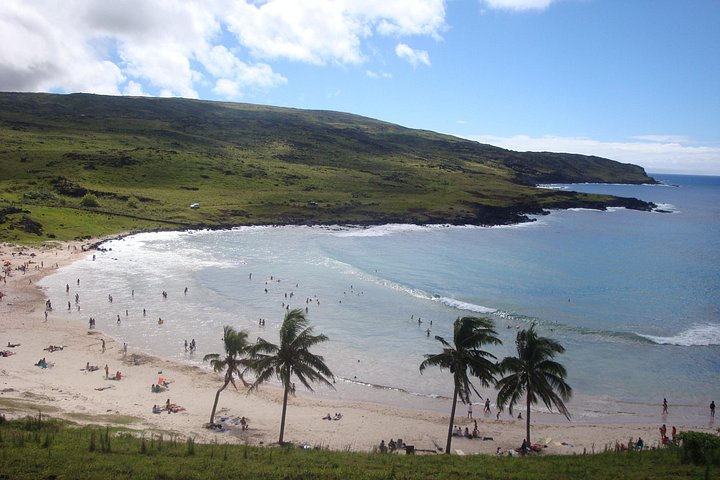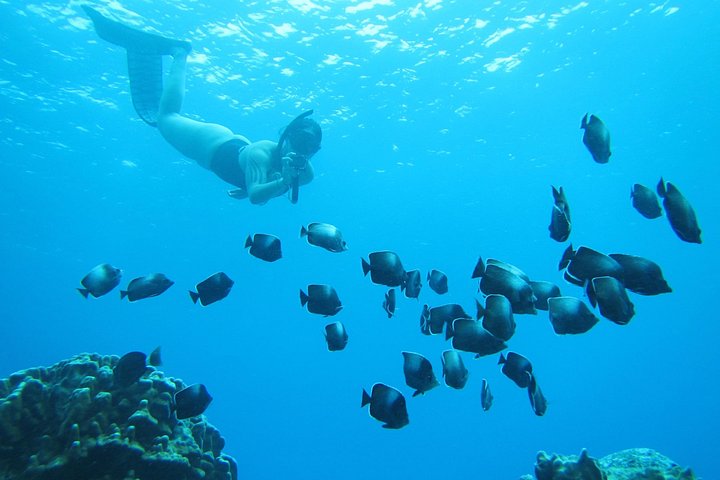
Rapa Nui has few beaches, but it has some of the clearest ocean water you will ever swim in. Because the island is so remote and has no rivers dumping silt, visibility in the sea is often thirty metres or more, and the underwater landscape of black lava, ledges and sandy patches is easy to read from the surface. The marine life is not as lush as in the tropics, since the reefs are partly coral and partly volcanic rock, but you can expect to see colourful reef fish, many of them found nowhere else, and sometimes a turtle. A guided snorkel trip takes you to a sheltered spot near Hanga Roa, supplies equipment and gives a safety briefing. It is a relaxing contrast to the dusty tours and a good way to cool down in the afternoon.
Conditions deserve respect. The Pacific swell can be strong, particularly on the western coast, and there are no wide lagoons to protect swimmers. A local guide knows which coves are safe on any given day and avoids places with currents. The water temperature varies through the year, comfortable in the Southern summer and cool in winter, when a wetsuit makes a big difference. Many operators supply wetsuits, and you should ask when you book. Beginners can join with a life jacket, but you should be comfortable in open water.
What you see depends on the site. Common species include parrotfish, wrasses and butterflyfish, with a high proportion of endemic fish, plus sea urchins and the occasional moray eel in the rocks. Divers visit deeper sites where moai statues have been placed underwater for tourists, and some fish species are found only around this island. Snorkellers should keep their distance from the bottom, avoid touching coral or urchins, and use reef-safe sunscreen. Protecting the marine environment is a growing concern for the community, and guides will remind you not to remove shells or stones.
The tour linked here is a guided snorkel excursion, an easy add-on to any itinerary and a good family option for confident swimmers. Choose a morning slot for calmer water and better light, and bring a towel, water and sun protection. If you are travelling during winter, ask about wetsuit hire.
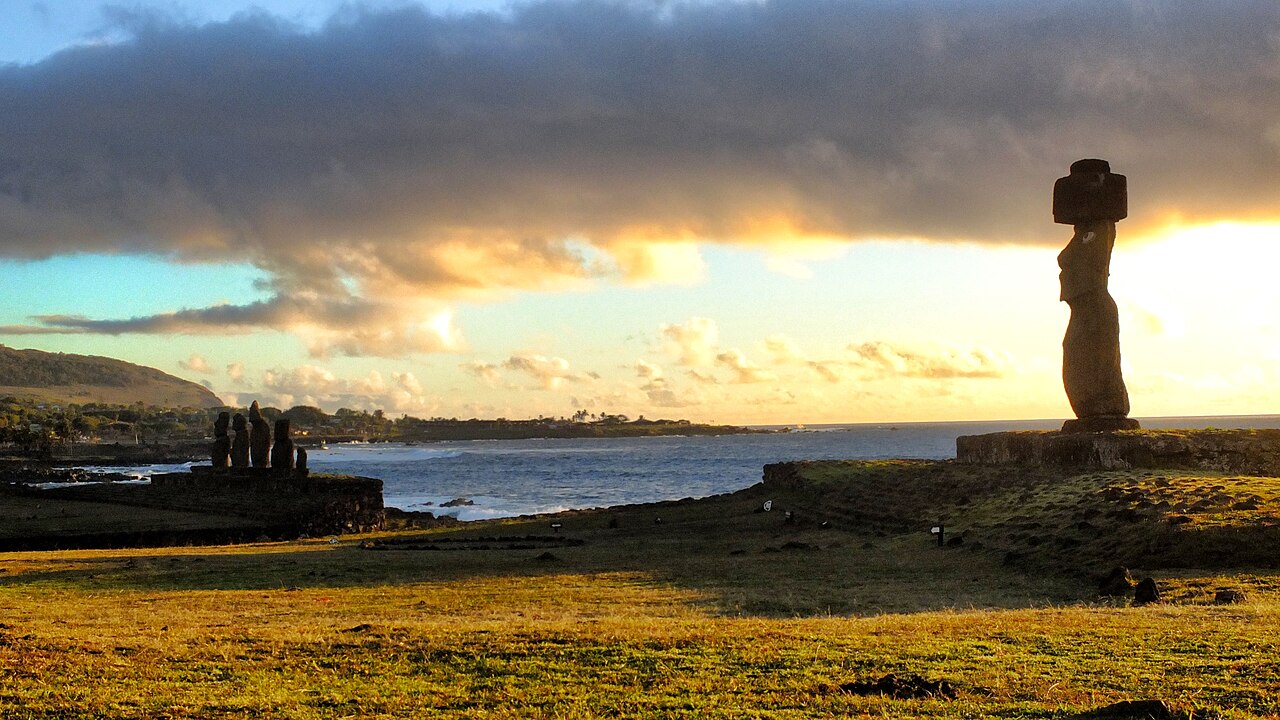
Pair the swim with a visit to Ahu Tahai or a seafood lunch in Hanga Roa harbour, where you can watch fishermen bring in the catch. For those who want more, local dive operators offer certified dives, but the snorkel trip is the best introduction to the island's underwater world.
Prepare well for the water. Practise breathing through your snorkel in a calm place before heading out, and tell the guide if you are nervous. Apply reef-safe sunscreen at least twenty minutes before entering the water, and wear a rash vest to protect your back from the sun.
Do not chase fish or touch anything, and keep your fins away from the bottom to avoid stirring up sand. If conditions are rough, accept the decision to postpone, because safety comes first. After the swim, rinse your equipment, dry off, and enjoy a warm drink and a snack on the shore.
What to expect
The experience
A guided boat or shore snorkel excursion to a sheltered site near Hanga Roa, with equipment and a safety briefing.
Best time
Morning, when the water is calm and visibility is best.
How long
Two to three hours.
Tips
Ask about wetsuits in winter, use reef-safe sunscreen and bring a towel. Do not touch the bottom.
Quick picks
- Best for
- Confident swimmers and anyone who wants a break from archaeology.
- Families
- Good for children who swim well. Life jackets are recommended.
- Couples
- A quiet and beautiful outing in clear water.
- Pair with
- A seafood lunch in Hanga Roa harbour, or sunset at Tahai.
- Time needed
- A half day.
Good questions
Is the water clear?+
Yes. Visibility is often very good because there are no rivers or large settlements nearby.
Do I need experience?+
Basic swimming skills are essential. Beginners can use a life jacket, but open water can have swell.
Is the water cold?+
It is comfortable in summer and cool in winter. Ask about wetsuits.
What marine life will I see?+
Reef fish, including species found only around the island, sea urchins and sometimes turtles.
Can I dive instead?+
Yes, local operators offer certified dives, including at sites with underwater statues.