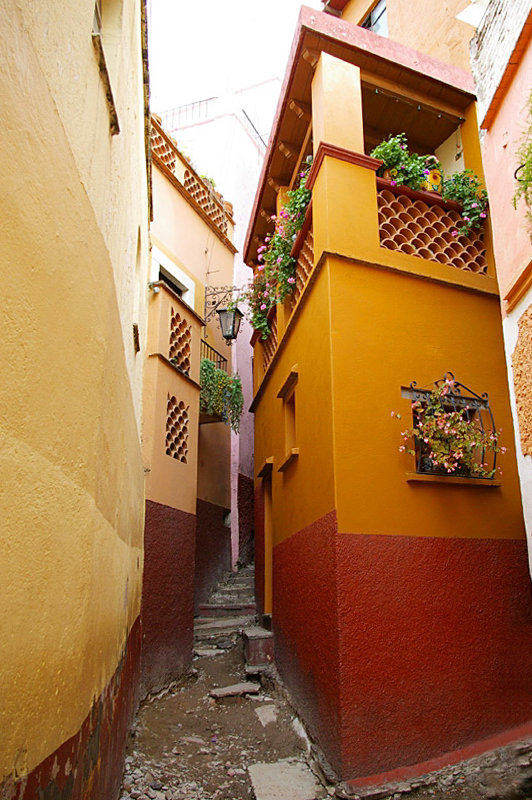
The Monumento al Pípila stands at the top of San Miguel Hill and is the viewpoint that sums up Guanajuato: a sea of coloured houses packed into the ravine, domes and church towers poking through, and the hills closing in on every side. The monument honours Juan José Martínez, known as El Pípila, a hero of Mexican independence who played a key role in the capture of the Alhóndiga de Granaditas. It was inaugurated on 5 February 1940 and designed by the sculptor Juan Fernando Olaguíbel, who led a team of about a hundred people. The figure is carved from pink stone quarried at La Bufa Vieja and weighs more than eight hundred tons. There are three ways up. The panoramic funicular climbs in a few minutes and gives views on the way, for a small fare. A free walking route climbs from Sopeña street or from the Plazuela de los Ángeles beside the Callejón del Beso, longer and steeper but rewarding for the alleys and architecture you pass. A taxi or car can use the panoramic road, though parking near the top is limited, so a taxi is the sensible choice. The terrace is as good by day as by night.
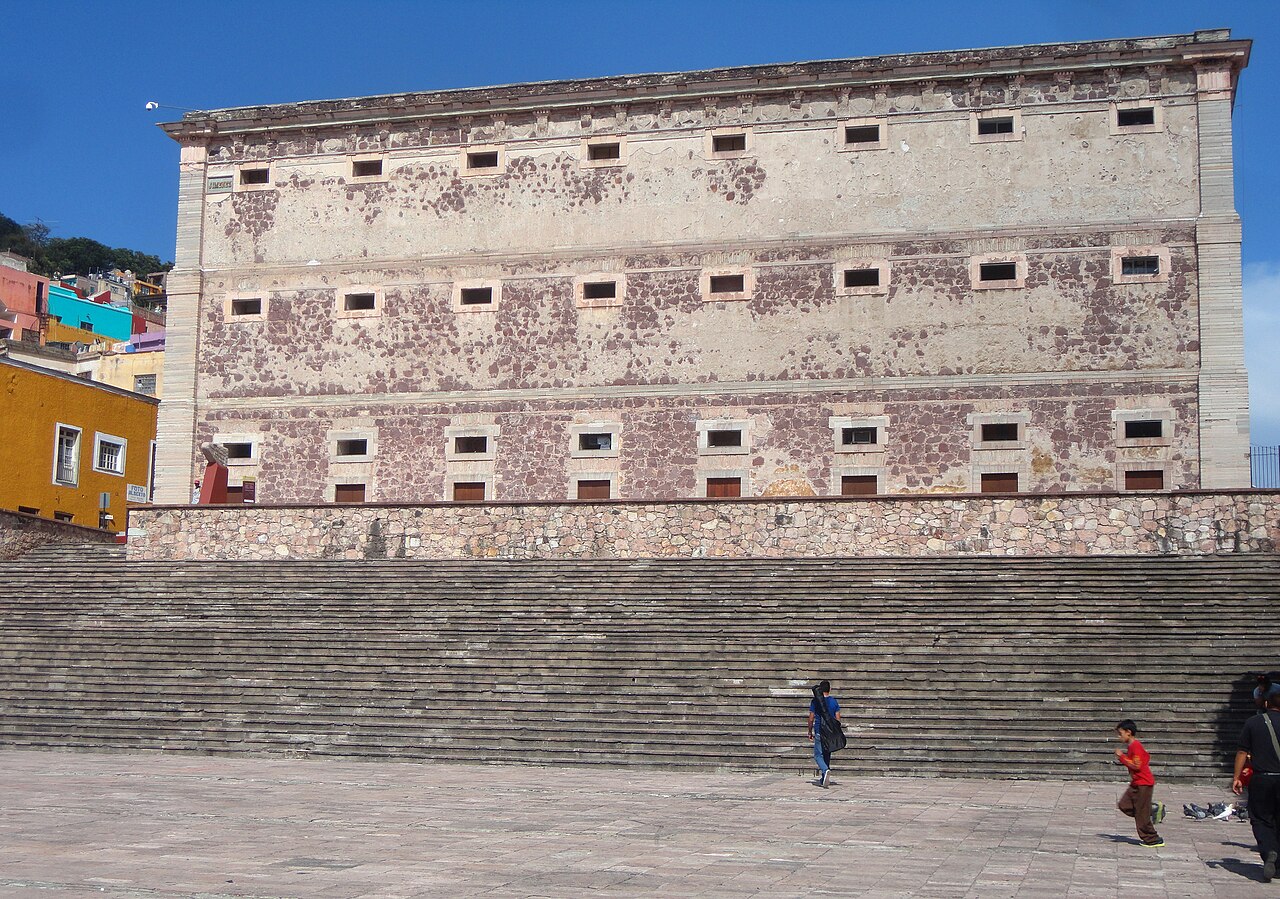
Learn the story before you climb. In 1810 the royalist families of Guanajuato took shelter in the Alhóndiga, and the insurgents could not break through its door until, the legend goes, a miner nicknamed El Pípila strapped a flat stone to his back to shield himself from gunfire and set the door alight.
Whether or not every detail is true, the figure became a symbol of ordinary people's courage, and the monument above the city is a statement of civic pride as much as a viewing platform. The torch he holds is the sculpture's most dramatic element, especially at dusk.
Working the visit
The funicular is the easiest approach for most people, particularly with children or in the heat, and it starts in the centre near the Teatro Juárez. The walk is the better choice if you enjoy stairs and want to see the city from within as you climb. Either way, aim for the last hour of daylight and stay as the lights come on: the view changes from pastel to gold to a glittering carpet of lamps, and most visitors say the evening panorama is the best of the trip.
Keep a layer to hand, since the hilltop is breezy, and watch your belongings in the busiest hours.
Who it suits
Everyone. It is the quintessential Guanajuato photograph and a rare sight that is accessible to all ages, though the walking route is demanding. Pair it with the Alhóndiga to understand the monument's story, and with the Callejón del Beso, from which the walk begins. If you want to skip the legwork, the Silver Mines and Museums Tour on this site includes a stop at the monument, and a taxi back down after dinner is easy to find near the terrace.
What to expect
The experience
A hilltop terrace with a monumental stone statue and a sweeping view of the city, reached by funicular, taxi or a walking route up the stepped lanes.
Best time
The last hour of daylight into evening, when the city turns gold and then lights up.
How long
One to two hours including the ride or climb, photographs and time to sit.
Tips
Take the funicular up and a taxi or the stairs down, bring a light jacket for the wind and avoid the busiest midday sun.
Quick picks
- Best for
- Every first-timer; this is the panorama that defines Guanajuato.
- Families
- The funicular ride is a hit with children, and the terrace is spacious, but keep hold of little ones near the edges.
- Couples
- Go for sunset and stay for the lights; it is one of the most romantic spots in the city.
- Pair with
- The Alhóndiga museum, the Callejón del Beso and dinner on the Jardín de la Unión.
- Time needed
- Allow ninety minutes, or half an evening if you linger.
Good questions
Who was El Pípila?+
Juan José Martínez, nicknamed El Pípila, a hero of Mexican independence associated with the capture of the Alhóndiga de Granaditas in 1810. The monument was inaugurated in 1940.
How do I get up to the monument?+
By the panoramic funicular, on foot via a stepped route from Sopeña street or the Plazuela de los Ángeles, or by taxi on the panoramic road. A taxi is recommended over driving because parking is limited.
Is it free?+
The monument and terrace are free to visit, and walking up is free. The funicular charges a small fare, so confirm the current price at the station.
When is the best time to go?+
Late afternoon through sunset and into the evening. The view is good by day but is at its best as the city lights come on.
How big is the monument?+
It is carved from pink stone and weighs more than eight hundred tons. It was designed by Juan Fernando Olaguíbel with a team of about a hundred people.