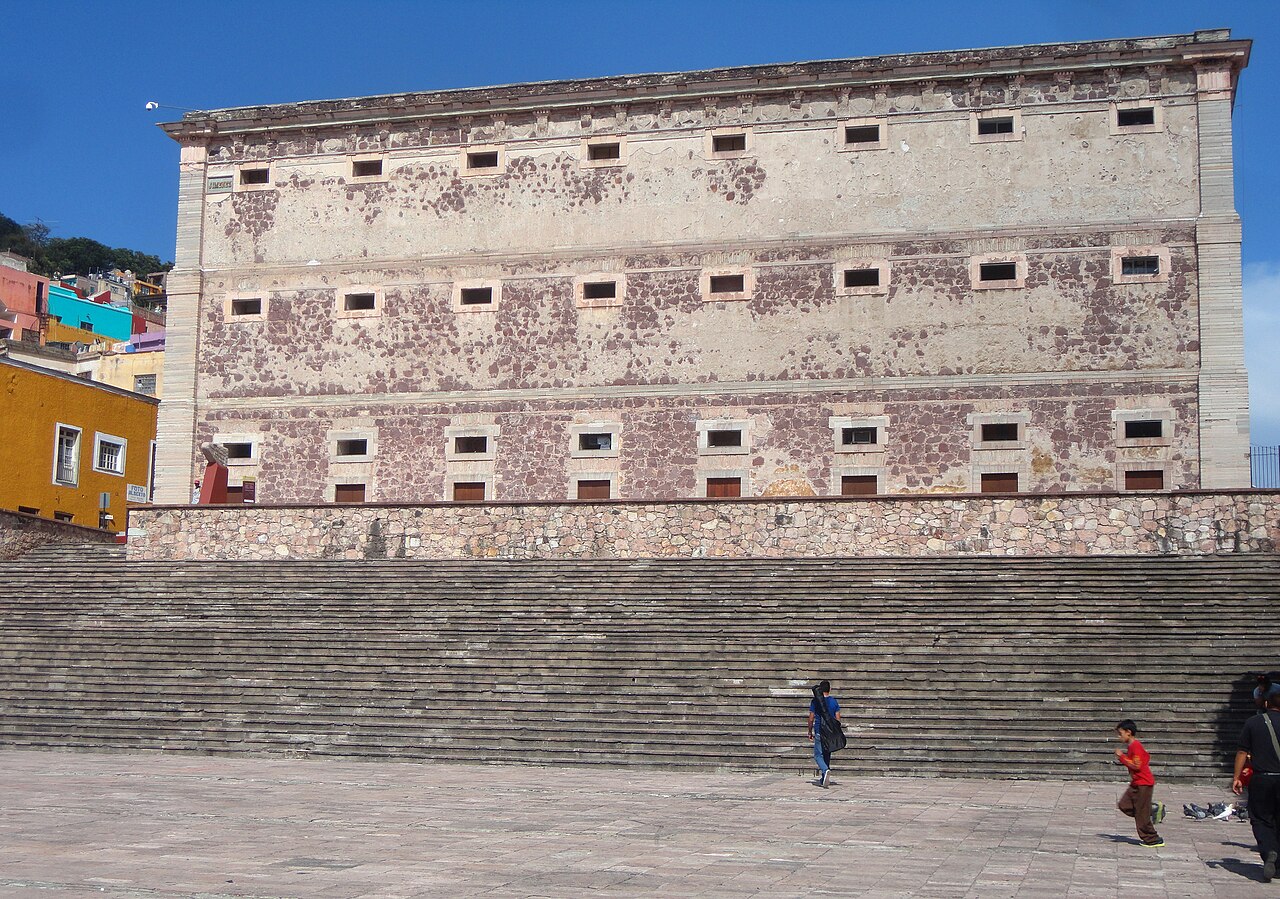
Guanajuato is a university town as much as a colonial one, and the University of Guanajuato's Central Building is where that identity is most visible. Its monumental stairway, the Escalinatas del Auditorio General, rises from the street to the entrance of the General Auditorium and has become a symbol of the institution and a favourite meeting point for students, academics and visitors alike. Construction began on 4 February 1950 under the architect Vicente Urquiaga Rojas, the stairways opened in 1952 and the whole building was completed on 20 August 1955. Today the steps host events, conferences and artistic activities, which means the scene changes from day to day: you may find a concert, a graduation photograph, a protest or simply a crowd of students eating lunch in the sun. The tourism board describes the stairways as accessible and open to visit at any time, and the building sits in the historic centre on Pedro Lascurain de Retana street, only moments from the Jardín de la Unión and the Teatro Juárez. It is not a museum with a ticket office but a living part of the city, and one of the best places to feel the youthful side of Guanajuato.
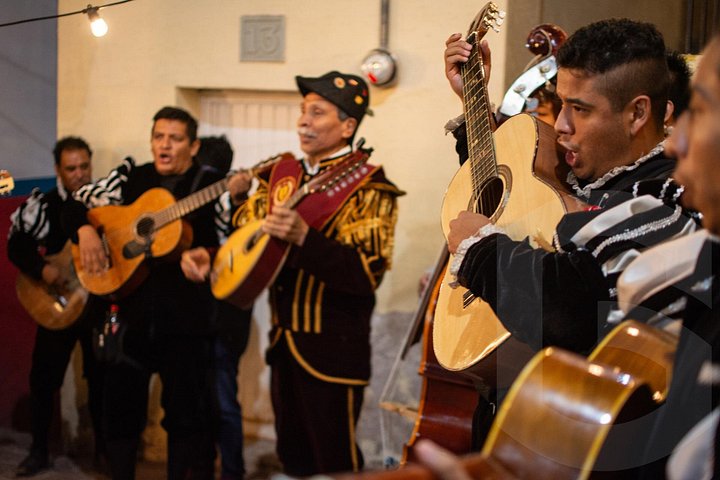
The staircase is part of why the city feels young. Students fill the alleys with music, cafés, bookshops and bars, and the university's presence is the reason the Estudiantina tradition of costumed student musicians survives. The Central Building, with its white mass and its dramatic approach, is the visible centre of that culture. Its architecture is of the mid-twentieth century and contrasts nicely with the colonial streets around it, which is part of its charm.
Working the visit
Climb the steps for the view back over the rooftops, then walk around the building and explore the nearby streets, which are the most lively in the city, particularly at lunchtime and in the evening during term time. Check the date: during the Festival Internacional Cervantino and other events the steps may be closed or crowded, and exams and graduations change the atmosphere. Dress modestly if you intend to enter any of the university buildings that are open to the public, and ask before photographing students and events.
Who it suits
Everyone on a first visit, since it is free and central, and especially visitors who want something other than a museum. Walking tours of the city often end here, which says something about its role as a landmark. Pair it with a lunch in the student quarter, the Teatro Juárez next door and an afternoon at the Diego Rivera House Museum, and you will have seen the cultural spine of Guanajuato in half a day without paying a single entrance fee.
What to expect
The experience
A free, open-air stop at the monumental steps of the University's Central Building, with views over the rooftops and the student quarter around it.
Best time
Lunchtime or early evening in term time, when the steps and streets are full of students.
How long
Thirty to forty-five minutes, longer if you explore the surrounding streets or stop for a coffee.
Tips
The steps are open at any time, but events can close them or crowd them, so look at the day's activity before you plan a photograph.
Quick picks
- Best for
- Anyone who wants to feel Guanajuato's student energy and take a classic photograph without paying.
- Families
- A good, free break in a sightseeing day; children can climb the steps while adults take in the view.
- Couples
- Sit on the steps in the evening and watch the quarter come to life, then have a drink nearby.
- Pair with
- The Teatro Juárez, the Callejón del Beso and the Diego Rivera House Museum.
- Time needed
- Half an hour, or an hour with a coffee stop.
Good questions
Can you visit the University steps?+
Yes. The tourism board says the stairways are accessible and can be visited at any time. They are in the historic centre and free to climb.
When was the building constructed?+
Work began on 4 February 1950 under the architect Vicente Urquiaga Rojas. The stairways opened in 1952 and the building was completed in August 1955.
What is the best time to go?+
Lunchtime or early evening in term time, when the area is busiest with students. For a quiet photograph, try early morning.
Is there an entrance fee?+
No, the steps are a public space and there is no charge. Some interior spaces may have their own rules.
How does it fit with a walking route?+
It is a few minutes from the Teatro Juárez and the Jardín de la Unión, and many walking tours end here. It works well as the last stop of a morning.