A city that eats on its feet
Guanajuato is a student town, a market town and a tourist town all at once, so you can eat very well at almost any price. The best approach is to mix the three: a market lunch, a plaza café for the view and a late snack in a side lane. Menus change and places come and go, so treat this guide as a map of habits rather than a list of restaurants.
Start at the Mercado Hidalgo
The 1910 iron-and-glass market is the best single place to taste the city. On the ground floor you will find stalls selling fresh fruit and vegetables, cheese, cured meats and prepared food, and the tourism board points to the food stalls as the way to try authentic Guanajuato cooking. Look for enchiladas mineras, the miners' enchiladas, a regional signature made with corn tortillas dipped in a chile sauce, fried and served with potato, carrot, cheese and a salad. Tacos, tortas, fresh fruit juices and sweets fill out the menu. Go late in the morning, choose a stall where locals are sitting and carry small notes and coins, since many vendors do not accept cards. The upper floor is for crafts, so you can combine lunch with souvenir shopping.
The plaza experience
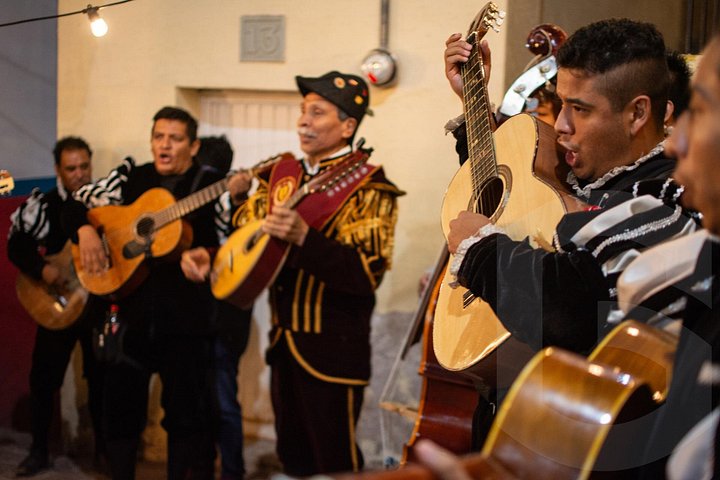
The Jardín de la Unión is where you go for atmosphere rather than bargains. Cafés, restaurants and bars ring the garden with tables facing the kiosk, and mariachis and student musicians drift between them in the evening. A coffee or a glass of wine on a terrace is the classic way to spend an hour, and prices are higher than in the side streets, which is the fair cost of the view. Other plazas offer a quieter version of the same: the Plaza de San Roque has a few cafés in a calm setting, and the lanes behind the Basílica hide small spots where you can sit with a coffee and a pastry.
Evenings and drinks
After dark the city becomes a university town, with bars and live music spreading along the lanes and plazas. The Night Walk with the Estudiantina is the best way to see the evening scene, because the student musicians lead you through the alleys with songs and stories, often with a stop for a drink along the way. If you prefer to go alone, stay on the lit, busy streets around the garden and the University, and walk back in a group late at night. Many bars are small, loud and crowded, which is part of the charm, but those wanting quiet will do better with an early dinner and a stroll.
Sweets, snacks and breakfast
Ask at the market and in shops around the centre for traditional sweets, including the candies known as charamuscas, and look for fresh bread, fruit cups and ice cream near the garden. Breakfast at the market stalls is a hearty local affair, while hotels range from the free local breakfast at Hotel Corazón Mexicano to the continental breakfast at Hotel Mansión del Cantador. If your hotel does not include breakfast, a bakery and a coffee in the lanes is an inexpensive and pleasant way to start.
Eating on a budget
The cheapest meals are at the market and in small lunch places that serve a set menu at midday, often a soup, a main dish and a drink for a fixed price. Eat your main meal at lunch and keep dinner light, and save the plaza terrace for one special evening. Free breakfasts at some hotels make a real difference. Street snacks are inexpensive but choose busy stalls where food is cooked fresh in front of you, and carry bottled or purified water.
Practical notes
Tipping is customary in sit-down restaurants, and cash is useful in small places. Altitude and strong sun make hydration important, and spicy sauces are often served separately, so you can add as much as you like. If you have dietary needs, ask in simple Spanish about ingredients, since lard and cheese are common. Markets are busiest at midday, so go slightly early or late for a calmer meal. Pair a market lunch with a visit to the Alhóndiga or the Plaza de San Roque nearby for an easy morning.