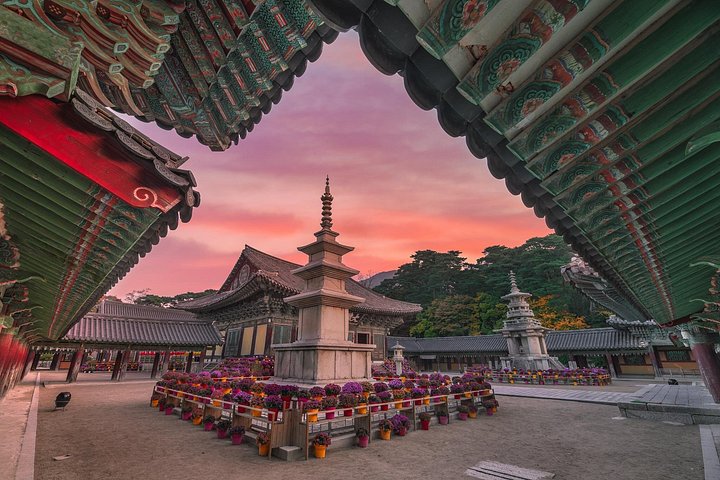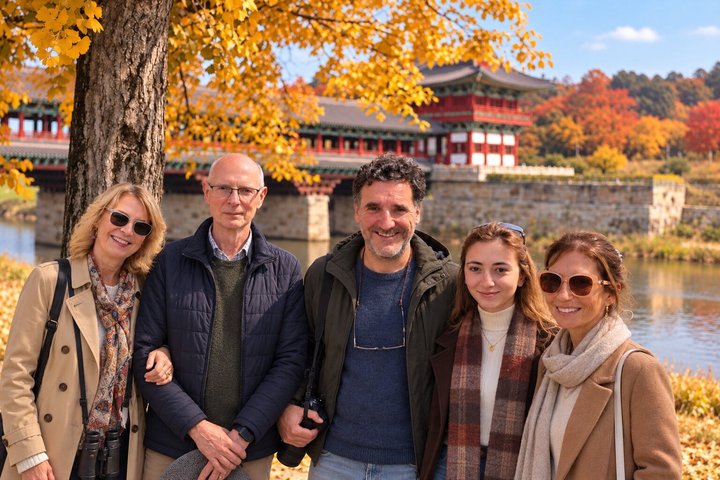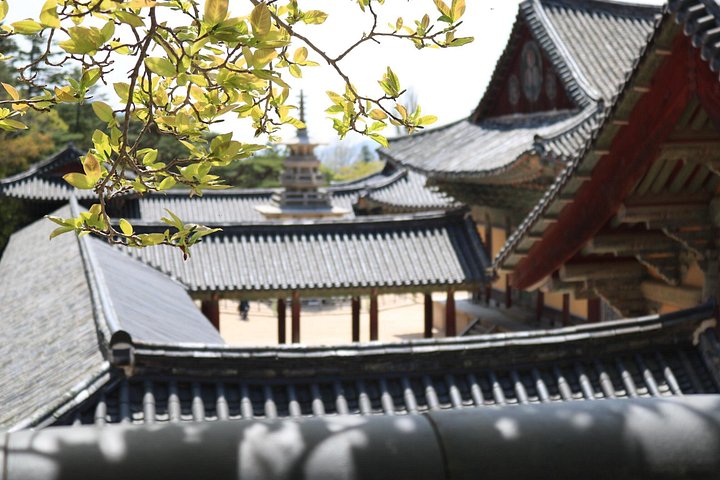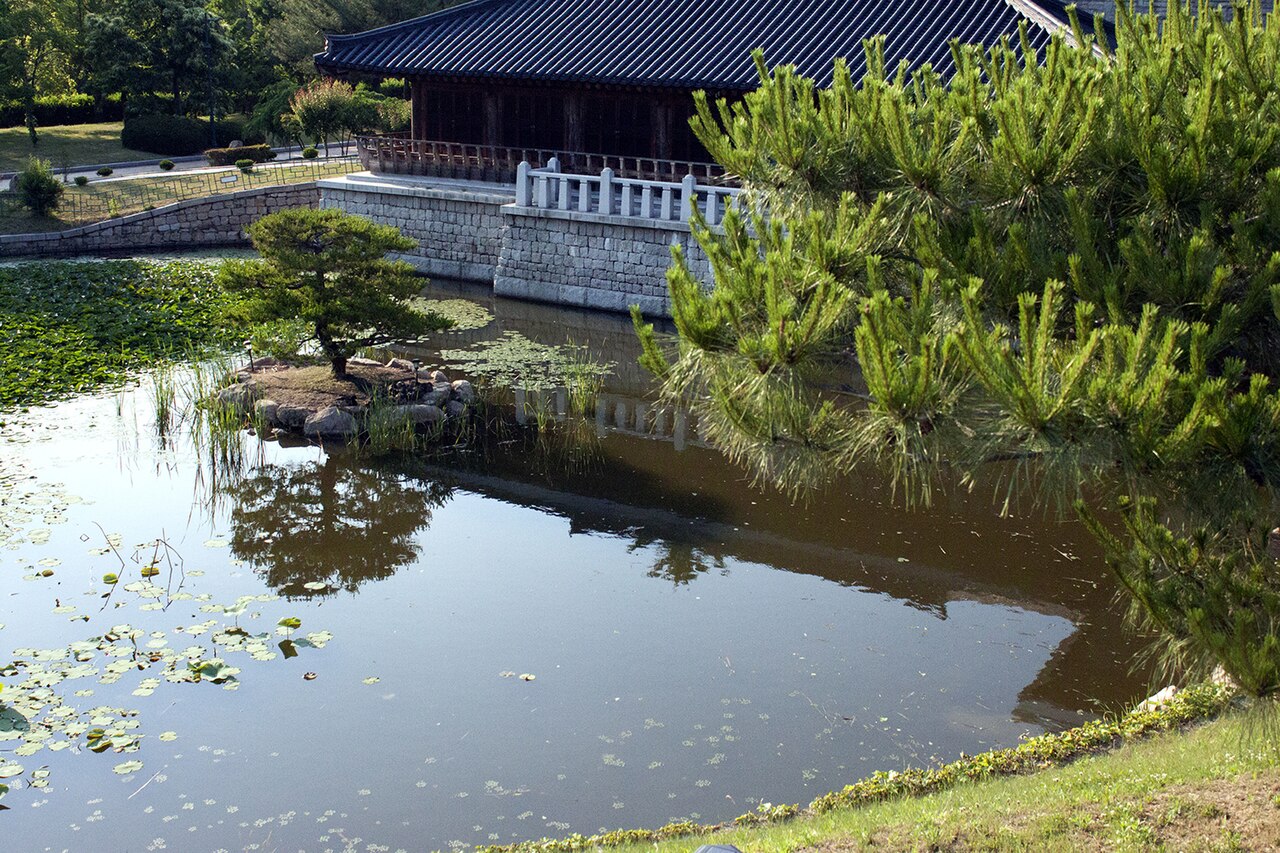
Yangdong is one of Korea's best-preserved clan villages, set in a fold of mountains north-east of Gyeongju. Founded in the fifteenth century, it grew around two prominent families, and today more than a hundred traditional houses climb the slopes in ranks, from humble thatched homes to large tiled mansions with garden pavilions. UNESCO inscribed it in 2010 together with Hahoe Village as the Historic Villages of Korea. Unlike a museum village, Yangdong is still home to residents, so visitors walk lanes between private houses, peek at stone walls and courtyards, and are asked to keep voices low. A modest entrance fee covers the village, which is arranged along a stream with a few viewing points where the layout is clear. Trails continue up the hillside for views over the rooftops and rice fields, and the autumn colour of persimmon trees, maples and ginkgo makes the village especially photogenic in November. Allow a couple of hours, wear walking shoes and bring water.
The village layout tells you about old Korean society. Families built their houses with the main residence facing south, a separate wing for guests and a garden pavilion for study and relaxation. Houses were placed on hillsides according to geomancy principles, with water and mountains in the right positions. The two clans, the Wolseong Son and the Yeogang Yi, still have descendants here, and some of the largest houses are open to visitors, with notices explaining their history.
As a visit, Yangdong takes more time than most sights because it lies outside the city. It is roughly half an hour by car from Gyeongju, with limited public transport, so many visitors reach it on a day tour or by taxi. Plan on two to three hours.
The paths are uneven stone and can be steep, so wear comfortable shoes. Respect signs that mark private homes, avoid photographing residents, and do not enter closed gates. Cafes and a few small restaurants serve simple meals near the entrance, but there are fewer options than in the city.
Timing
Autumn is a lovely season, with persimmons on the bare branches and orange leaves along the stream, though it can be busy at weekends. Spring blossoms and summer greenery are also pleasant. Because the village is quiet in the evening, most visitors leave by late afternoon. Day tours from Busan and Gyeongju that include Yangdong often combine it with Bulguksa and Daereungwon and cover admission, which can be the simplest way to see it without arranging transport. Check the opening hours and the current fee before you go.
What to expect
The experience
A self-guided walk through the lanes and hillside paths of a living village, usually as a half-day outing from the city or on a day tour.
Best time
Morning or mid-afternoon, with autumn colour in late October and November.
How long
Two to three hours.
Tips
Wear sturdy shoes, keep voices low, respect private homes and arrange transport in advance.
Quick picks
- Best for
- Travelers who like traditional architecture, quiet walks and rural scenery.
- Families
- Fine for older children who enjoy walking, less so for strollers because of the stone lanes.
- Couples
- A slow afternoon among old houses and autumn trees.
- Pair with
- Bulguksa Temple or a Busan-to-Gyeongju day trip.
- Time needed
- Half a day with travel.
Good questions
Is Yangdong a real village?+
Yes, people still live in many of the houses, so visitors are asked to be quiet and respectful. Some of the grander houses are open to the public.
How do I get to Yangdong Folk Village?+
It is outside Gyeongju city, so most visitors go by taxi, private car or a day tour. Public bus service is limited, so check times if you go independently.
Is there an entrance fee?+
Yes, a modest fee is charged, and it is included on many tours. Confirm the current price and hours before you go.
How long should I stay?+
Two to three hours is enough for the main lanes and a short hillside walk. Add time if you want to climb to the viewpoints.
Is it worth visiting in autumn?+
Yes, persimmons, maples and ginkgo add colour, though weekends can be busy. A weekday morning is calmer.