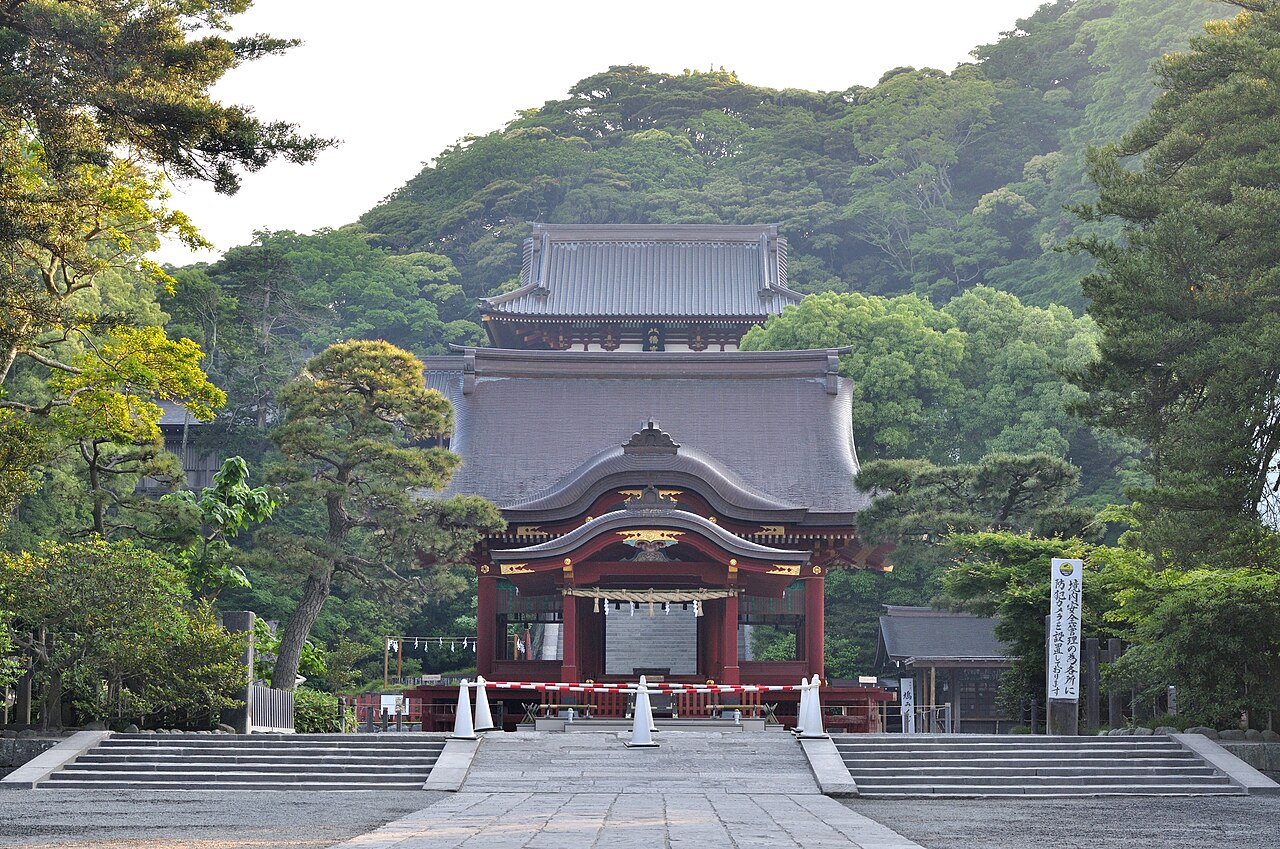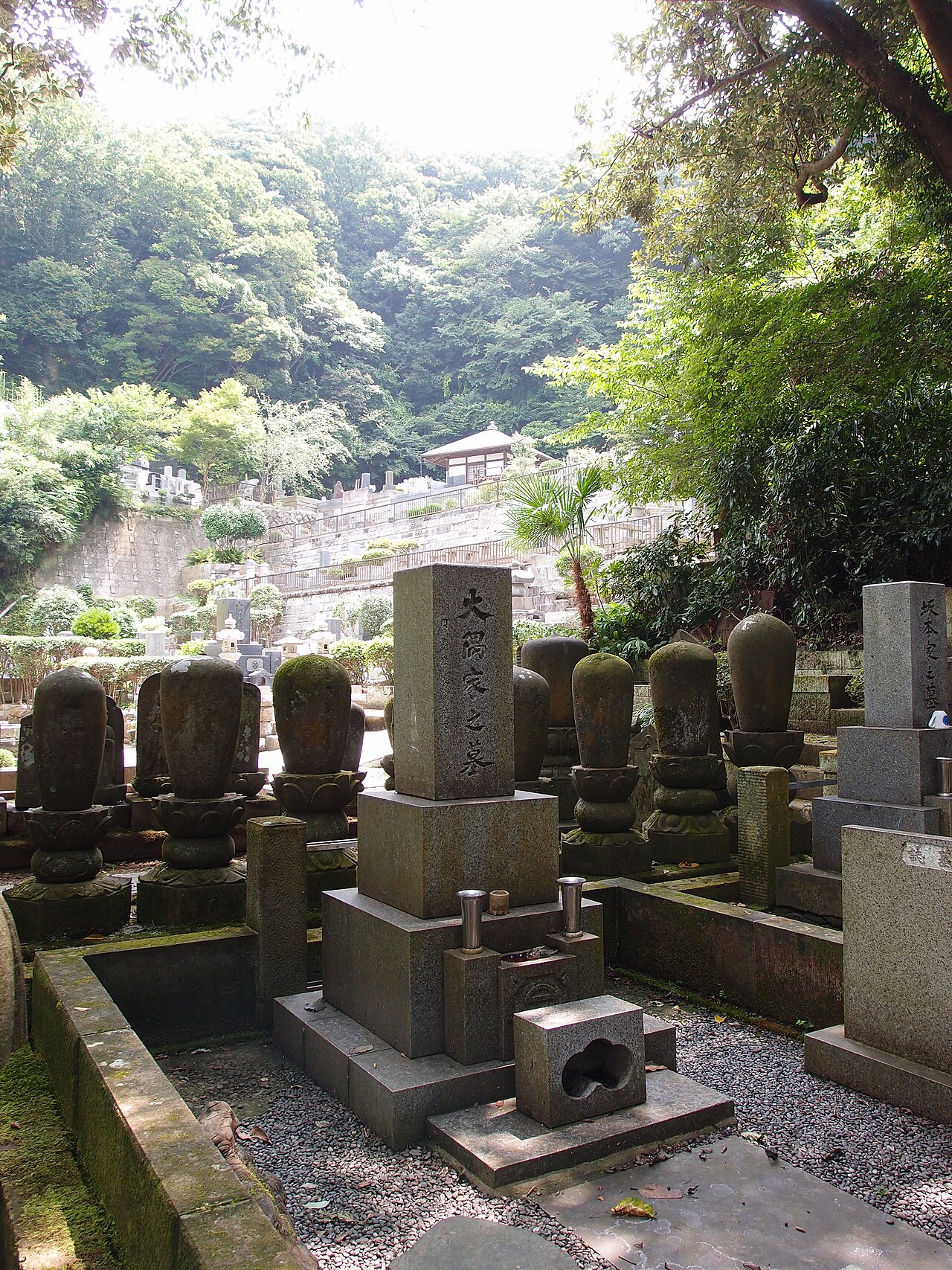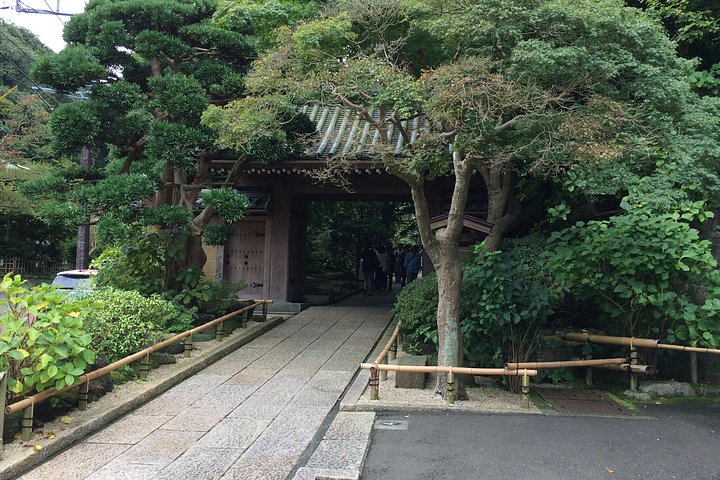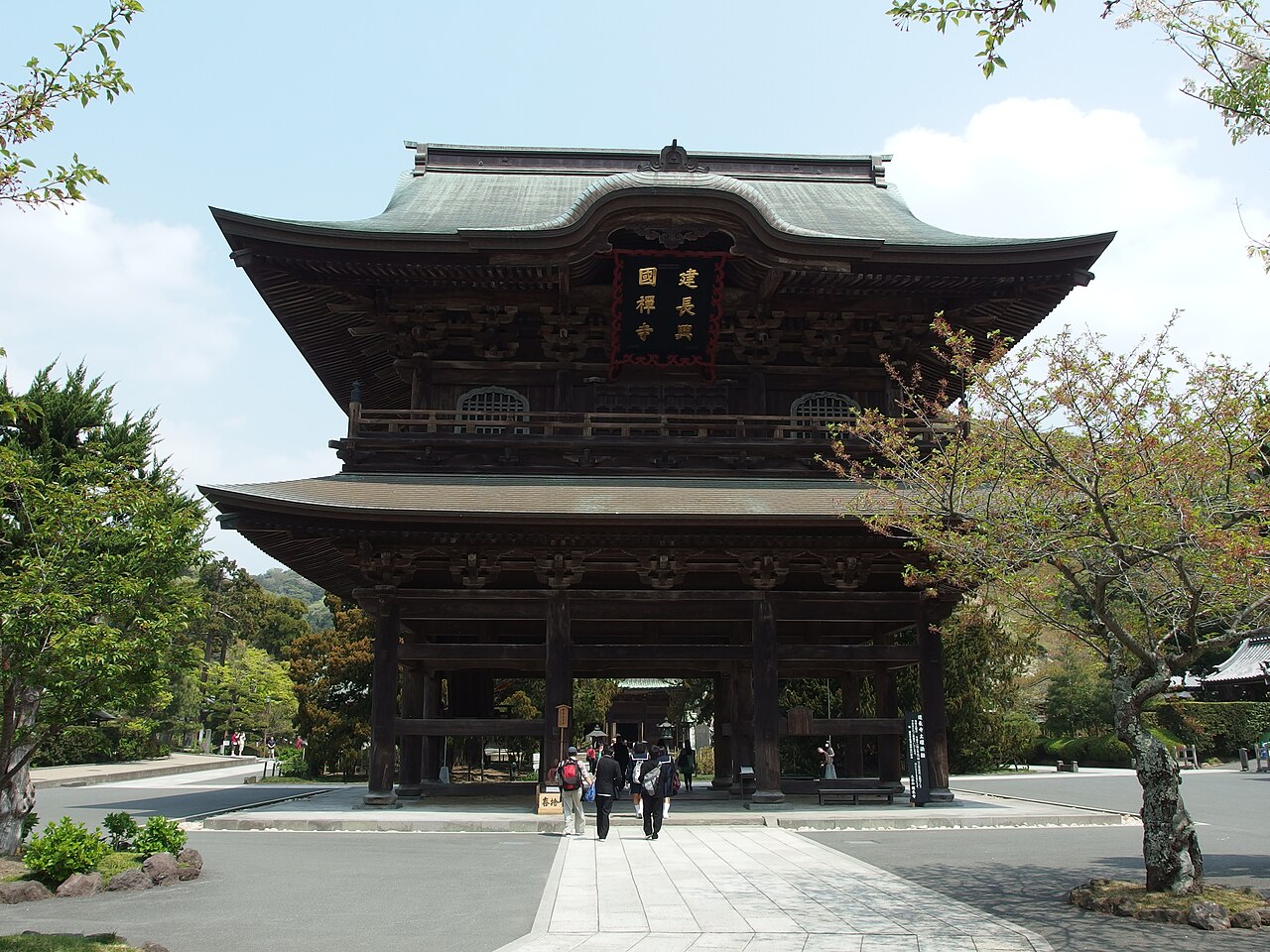
Kencho-ji is the head temple of the Kencho-ji school of Rinzai Zen and is often called the oldest Zen training monastery in Japan. It was founded in 1253 by the regent Hojo Tokiyori, who invited a Chinese monk, Lanxi Daolong, to lead it, and its layout still follows the plan of a Chinese Zen temple. A procession of buildings climbs the hill in a straight line: the big Sanmon gate, the Buddha Hall, the Dharma Hall and beyond. The Dharma Hall ceiling carries a large dragon painted in the early 2000s, and a heavy old gate and a bell give the temple its character. Old juniper trees in the courtyard are said to date from the founding. Entry is a modest fee, and a classical garden behind the abbot's quarters can be viewed from the veranda. The temple is quieter than the better known sights, and the long gravel approach is a pleasant change from the crowds.
The temple suits visitors who want to feel the discipline of Zen without joining a retreat. Monks live and train here, and the temple holds dharma talks on Saturdays. Check the temple's schedule before you go if that appeals. Walk slowly, bow as you pass the gates and keep your voice down. Shoes come off to enter some halls.
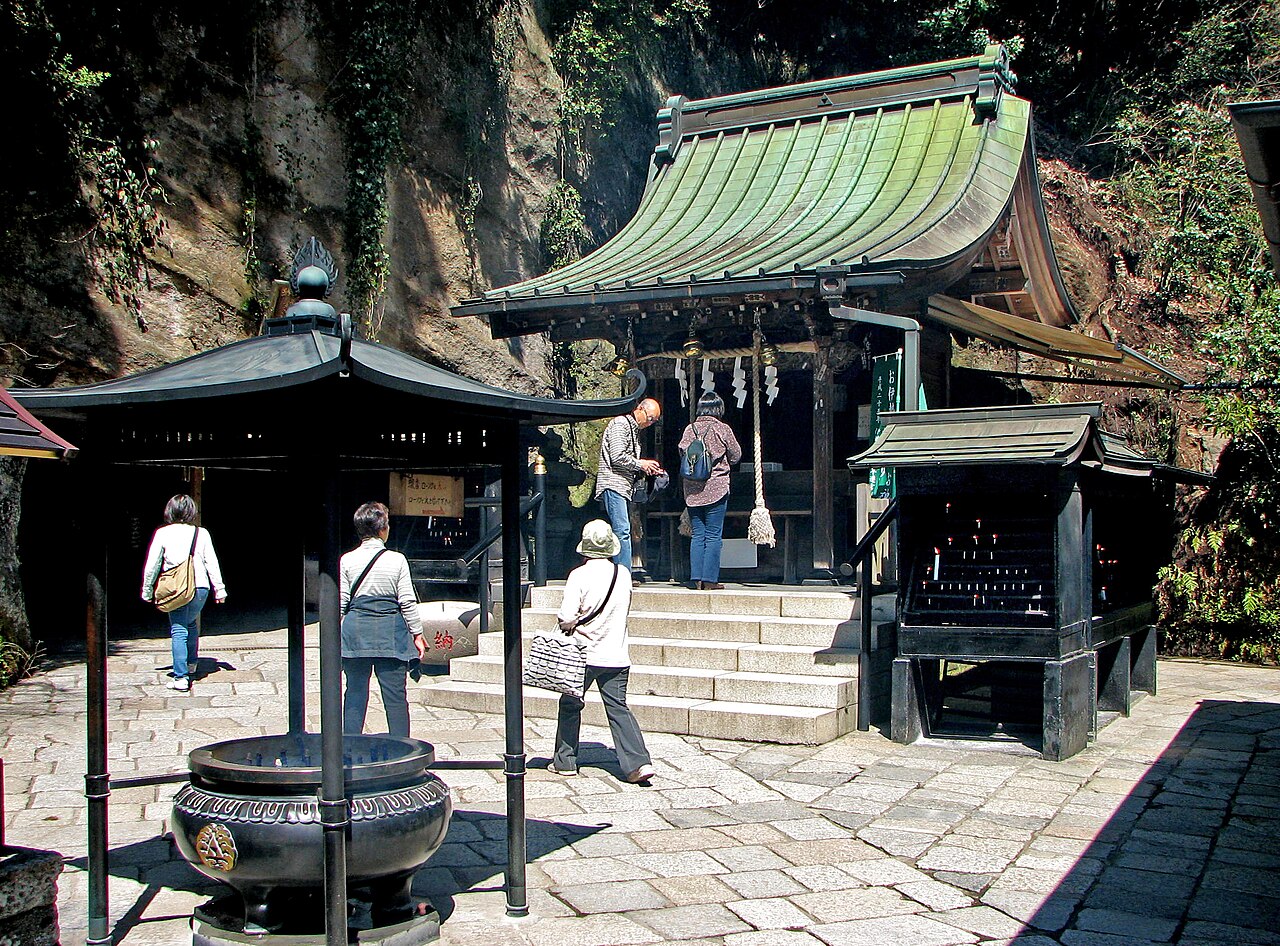
A path behind the temple climbs to Hansobo, a small shrine with tengu statues and, on clear days, a glimpse of Mount Fuji. It follows a steep stairway and is sometimes closed or open only at set times after storms, so ask at the gate. The temple is about a fifteen to twenty minute walk from Kita-Kamakura Station, or a short bus ride from Kamakura Station, and the way passes lovely smaller temples and cafes.
Autumn is the best time, when the colours inside the compound peak, but the temple is not as crowded as Engaku-ji. Allow about an hour, and combine it with Tsurugaoka Hachimangu on the southern side, a twenty minute walk. A guide can explain the Zen architecture, which has fewer signs in English than the big attractions.
What to expect
The experience
A self-guided walk up the monastery's central axis through the gate, Buddha Hall and Dharma Hall, with a garden behind.
Best time
A weekday morning, and mid to late November for the autumn colours.
How long
About an hour, more with the Hansobo climb.
Tips
Check the schedule for Saturday dharma talks, ask at the gate whether Hansobo is open and wear shoes you can remove easily.
Quick picks
- Best for
- Visitors who want a quiet Zen temple with real depth.
- Families
- Calm and spacious, though there are no hands-on activities for small children.
- Couples
- Walk the gravel approach slowly, then stop at a tea house in Kita-Kamakura.
- Pair with
- Engaku-ji and Tsurugaoka Hachimangu.
- Time needed
- About an hour.
Good questions
Why is Kencho-ji important?+
It was founded in 1253 and is regarded as Japan's oldest Zen training monastery, modelled on Chinese Zen temples.
Can I see the dragon painting?+
Yes, on the ceiling of the Dharma Hall, which visitors can view from the entrance.
Is Hansobo open?+
Sometimes. The hillside path can close after bad weather, so ask at the gate.
How much does it cost?+
A modest fee, a few hundred yen, at the entrance gate.
How do I get there?+
Walk fifteen to twenty minutes from Kita-Kamakura Station, or take a bus from Kamakura Station.