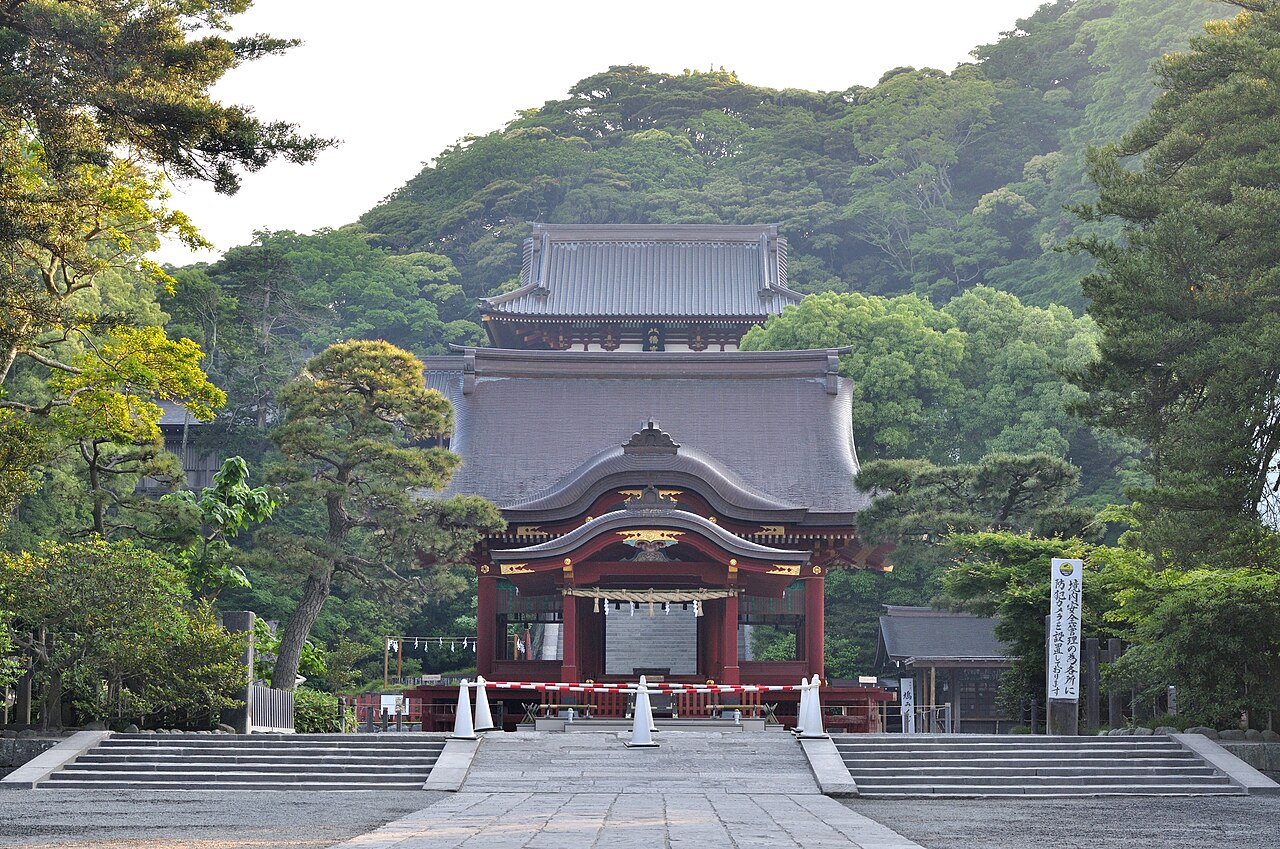
Tsurugaoka Hachimangu is the spiritual heart of Kamakura. It was moved to its present hillside site by Minamoto no Yoritomo, the first shogun, in 1180, and the whole old capital was laid out around it. The wide Wakamiya-oji avenue runs straight from the beach at Yuigahama to the shrine, passing under a great torii and a raised pathway lined with cherry trees. Past two lotus ponds, named for the Genji and Heike clans, a broad stone staircase leads to the main hall, with the older lower shrine and its dance stage below. The grounds themselves are free to enter and open early, so many visitors treat it as a morning walk before the crowds. Inside, a small museum shows temple treasures for a fee, and in spring and winter a peony garden opens for a modest charge. In mid September the shrine hosts horseback archery, one of its best known events, when riders gallop along a track and shoot at targets.
Start at the beach end if you have energy. Walk the Wakamiya-oji from Yuigahama, with the sea behind you, then cross the red bridge between the two ponds. The ponds are beautiful in early summer when the lotus blooms. Climb the staircase slowly and turn around at the top for the view straight down the avenue to the bay. The main hall is richly painted, and visitors queue to pray, bow twice, clap twice and bow once.
The shrine is a five to ten minute walk from Kamakura Station, close to the Komachi-dori shopping street, so it fits any itinerary. The grounds are free, but the museum and the peony garden are separate paid areas with their own hours. Weekends and holiday periods, especially New Year, are very busy, and shrine festivals fill the grounds. If you want the avenue empty, go at sunrise.
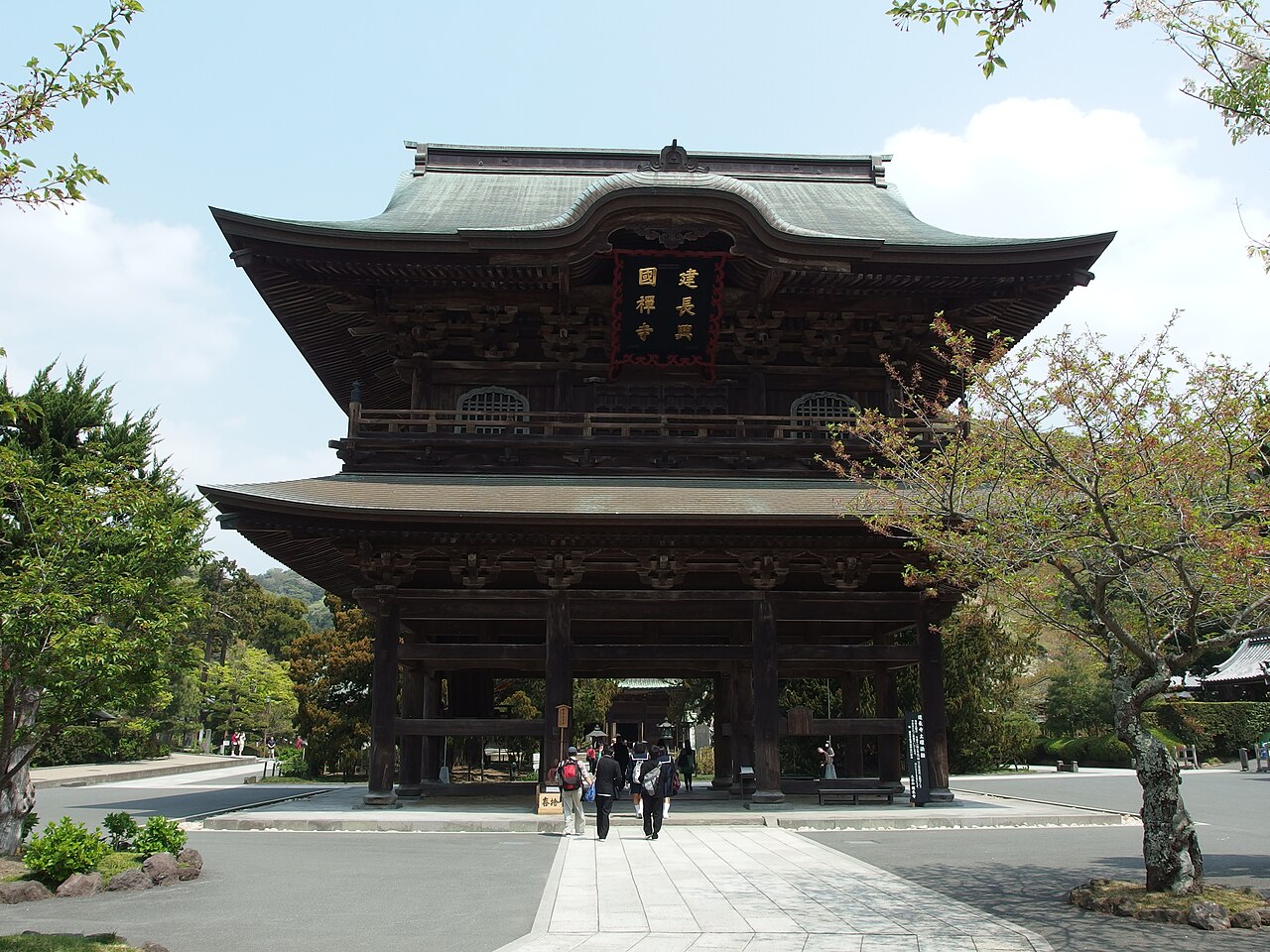
Look out for wedding processions, which often move across the courtyard on weekend mornings, and keep a respectful distance. The shrine sells good luck charms and sealed amulets, and the stamp books are popular. A local guide can explain the Minamoto story and the layout of the medieval city, though the shrine is easy to enjoy on your own. Pair it with Kencho-ji, a short bus ride away, for a day of Kamakura's best-known religious sights.
What to expect
The experience
A self-guided walk along the Wakamiya-oji avenue past two ponds to the stone staircase and the main hall.
Best time
Early morning for an empty avenue, or April when the cherry trees bloom.
How long
One to two hours with the ponds, the staircase and the museum.
Tips
Entry to the grounds is free, the museum and peony garden cost extra, and weekends and festivals are crowded.
Quick picks
- Best for
- History lovers and anyone who wants Kamakura's most important shrine.
- Families
- Open space, ponds and a staircase to climb, so children are rarely bored.
- Couples
- Walk from the beach up the avenue at golden hour and watch the lanterns come on.
- Pair with
- Komachi-dori, Kencho-ji and the Kamakura Station area.
- Time needed
- About ninety minutes.
Good questions
Is Tsurugaoka Hachimangu free?+
Yes, the shrine grounds are free to enter. The museum and the peony garden have separate admission.
What is the best time of year to visit?+
Early April for cherry blossoms, early summer for lotus flowers and mid September for the horseback archery.
How do I reach the shrine from Kamakura Station?+
Walk up the Wakamiya-oji avenue for about ten minutes. Taxis and buses are available but unnecessary.
Can I take photographs?+
Yes, outdoors. Avoid photographing worshippers closely, and observe any signs at the main hall.
How long does a visit take?+
An hour is enough for the grounds. Allow two with the museum or the peony garden.