Kamakura's food is shaped by the sea, the hills and the temples. Fishermen land small silvery whitebait and other catches from Sagami Bay, farms in the surrounding hills grow vegetables that appear on local menus and the monasteries have given the town a long tradition of vegetarian temple cooking and tea. This guide explains what to try, where to look and how to eat well without queueing for hours.
Whitebait, the local star
Shirasu are tiny whitebait, and in Kamakura and Enoshima they are served in several ways. A bowl of rice topped with lightly boiled shirasu is the classic order, and when the catch is good you may find a version with raw fish. The raw version depends on the weather and the fishing, so it is not always available, and restaurants will tell you what they have. Whitebait also appears in crackers, tempura, omelettes and pizza toppings. The harbour end of Enoshima and the streets near Kamakura Station both have specialist restaurants. If you only try one local dish, make it this.
Street snacks on Komachi-dori
The pedestrian lane beside Kamakura Station is a long tasting menu. Look for sweet potato soft serve, croquettes, grilled rice cakes, matcha ice cream, dried and cured seafood and dove-shaped butter biscuits that have become a symbol of the town. Many stalls ask you to eat at the counter, so follow the signs. Go in the late morning for a snack lunch, or in the afternoon for something sweet.
Soba, noodles and set meals
Handmade buckwheat noodles are a long-standing favourite in Kamakura, served cold on bamboo trays in summer and hot in broth in winter. Many soba shops cluster around Kita-Kamakura and the roads leading to the shrine, and a lunch set is a good way to rest between temples. Ramen, curry and grilled fish set meals are easy to find too, and the station area has cafes with English menus.
Temple food and vegetarian options
The Zen monasteries gave Kamakura a tradition of shojin ryori, the vegetarian cooking of Buddhist temples, built from tofu, seasonal vegetables, sesame and soy. Several restaurants near the temples of Kita-Kamakura serve set meals in this style, and they usually need advance booking. Vegetarians should note that many Japanese dishes use fish stock, so ask clearly and look for places that describe their food as vegetarian or vegan.
Matcha and sweets
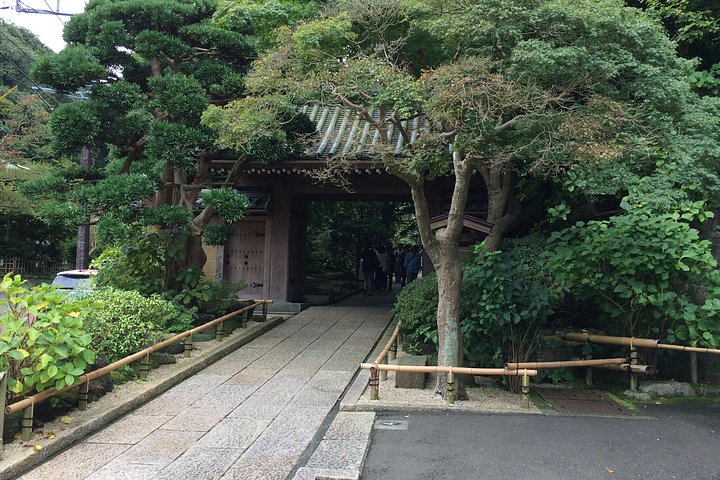
Tea is part of the temple experience. At Hokoku-ji's bamboo garden you can drink matcha with a sweet while looking at the bamboo, and at other temples and cafes you will find matcha, red bean sweets and rice cake desserts. Tea ceremony and matcha-making experiences are offered by small operators, and booking ahead is wise in busy seasons.
Enoshima specialities
On the island, look for octopus crackers pressed flat on a hot plate and sold on the lanes, grilled seafood skewers, shellfish and rice bowls topped with local catch. Remember the black kites that swoop for food, so eat indoors or beneath a roof.
Drinks and evenings
Kamakura has small craft beer and sake bars, and a few seaside cafes where a glass of beer at sunset is an easy pleasure. The evening scene is quieter than Tokyo's, so book dinner early, and remember that many shops close by early evening. A guided izakaya evening can help if you want a local introduction.
A simple food itinerary
Begin with a coffee and a pastry near the station, spend the late morning on Komachi-dori for snacks, and book a soba or temple vegetarian lunch in Kita-Kamakura if you are visiting the Zen temples. Take matcha and a sweet in the afternoon at a temple garden, then ride the Enoden to the coast for a whitebait dinner or a seaside drink at sunset. On an Enoshima day, reverse it: octopus crackers on the climb, a rice bowl at the harbour and an early evening beer once the sights are done. This pattern balances small tastes with one proper meal and keeps you from queueing at the busiest hours.
Etiquette at the table
Say a short greeting before eating, do not stick chopsticks upright in rice and carry tissues, because small restaurants may not provide napkins. Tipping is not expected. Many small restaurants have only a few tables, so be ready to share a counter or wait briefly, and please keep voices low in the narrow dining rooms. Some places accept only cash, so carry yen, and look for ticket machines at the entrance, where you choose a dish and hand the ticket to the staff.
Practical tips
Carry some cash for small stalls, learn a few phrases to explain allergies and plan lunch outside the noon rush, when popular restaurants fill. If you are staying near the station, ask your hotel to book dinner. Weekends mean waiting lists, so a weekday is the stress-free way to eat well.