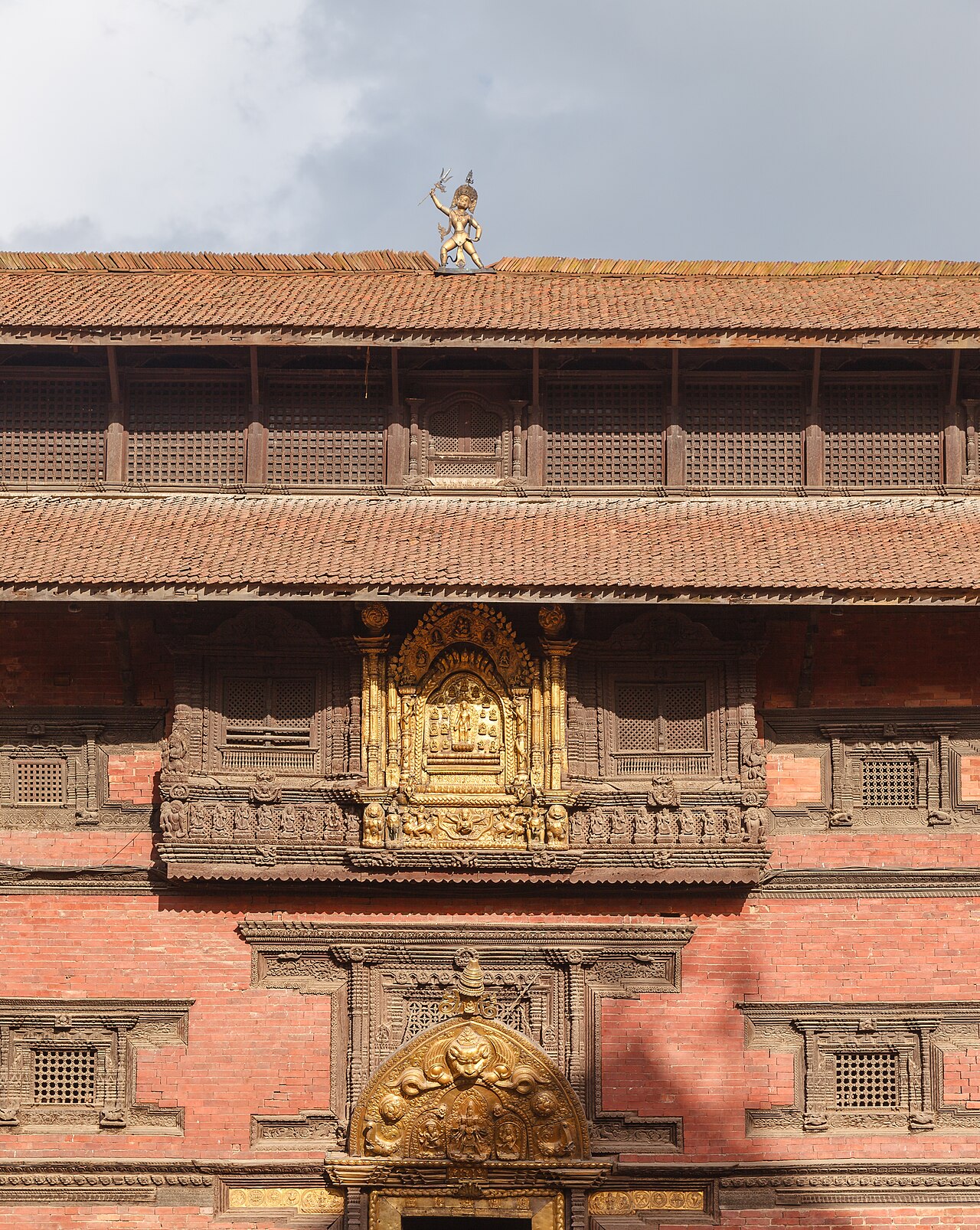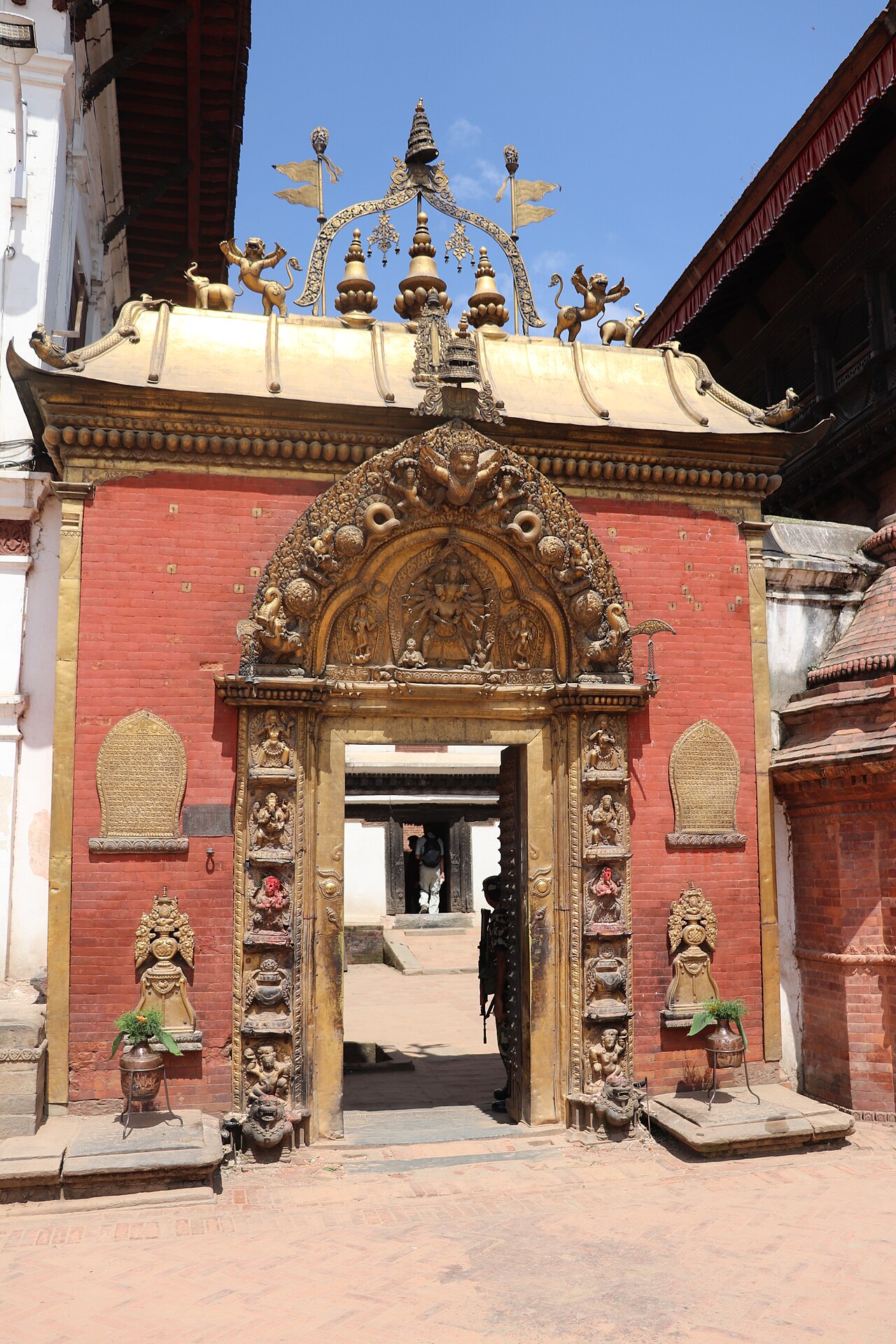
Bungamati and Khokana lie a short drive south of Patan, and they are among the best places to see how Newar village life looked before the modern city spread. Bungamati is a quiet hilltop settlement of brick houses and temples, known as the home of a famous woodcarving tradition and as the second home of Rato Machhindranath, the red god of rain whose chariot festival is among the biggest in the valley. Khokana, a few minutes away, is a compact village of narrow lanes, shrines and mustard-oil presses. In Bungamati you walk between carved windows and courtyards toward the Machhindranath temple, a Shikhara-style shrine where the deity is brought for part of the year. Craftsmen work in small workshops along the lanes, carving statues and architectural pieces with chisels and hammers, and you can usually watch the work and buy small pieces directly. In Khokana the pace is even slower: farmers lay mustard stalks to dry on the road, women pound grain and old oil presses thump in the background.
The villages were hit hard in the 2015 earthquake, and rebuilding has been gradual, so you will see damaged houses, scaffolding and recently repaired temples next to untouched corners. That mix is part of the story, and respectful visitors help by buying from local craftspeople and not photographing people without asking. A guide is useful here because the villages have few signs, and the stories of the festival chariots, the brick patterns and the oil presses are the real attraction.
Food adds another reason to go. Khokana is known for fresh mustard oil, and tours often include a Newar lunch with beaten rice, spiced meat or vegetable dishes, lentil patties and local drinks at a family-run place. If you have a sweet tooth, ask for sweets made with local ingredients. Vegetarians can usually find good options, but ask in advance. Tourist menus can be bland, so a tour that eats in a local home is worth the small extra effort.
A half day is plenty, and many visitors combine the villages with Patan Durbar Square or with Kirtipur, another hilltop town nearby. Go in the morning for the best light, and avoid midday heat in the dry season. Wear sturdy shoes for cobbles and dust, bring small notes for temple donations and purchases and keep to the paths in farmland. If you visit near a chariot festival, expect crowds and limited road access, but also a rare chance to see living tradition at full volume.
Photographers will find plenty to frame, from carved window lattices to drying mustard stalks and shrines wrapped in marigold, and the soft morning light flatters the red brick. Stay patient, step aside for residents and never block a doorway for a shot. Because the villages are small, the best visits are slow ones. Sit for a while near a temple courtyard and watch daily life: children in school uniforms, farmers carrying loads, women laying out grain and men sharpening chisels.
Many workshops welcome visitors to try a few strokes of carving, and some offer short lessons, which makes a good activity for curious travelers. Carry a small bag for purchases, ask prices politely and remember that the quality of work is high, so a small piece is better than a large one made in haste.
What to expect
The experience
A half-day guided visit to two villages, with walking between workshops and temples and sometimes a Newar meal.
Best time
Morning for light and cooler air, and avoid the hottest part of the day in the dry season.
How long
Allow three to four hours, or a full day if you add Patan or Kirtipur.
Tips
Wear sturdy shoes, carry small notes, ask before photographing people and buy directly from craftspeople if you wish.
Quick picks
- Best for
- Travelers who want to see village life and craft after the major squares.
- Families
- Children can enjoy watching carvers and farm life, but the lanes are uneven and tuk-tuk traffic can surprise small walkers.
- Couples
- Share a slow Newar lunch and wander the lanes in the late morning.
- Pair with
- Patan Durbar Square for the museum and the metalwork lanes, or a gentle day with Kirtipur.
- Time needed
- Half a day; a full day with Patan.
Good questions
Why visit Bungamati?+
It is a well-preserved Newar village known for woodcarving and for the temple of Rato Machhindranath, a major deity in the valley.
What is Khokana known for?+
Khokana is famous for its mustard oil, produced in old village presses, and for its narrow brick lanes and traditional houses.
How far are the villages from Patan?+
They are a short drive south of Patan, usually twenty to thirty minutes depending on traffic.
Is the area still affected by the earthquake?+
Some buildings were damaged and have been rebuilt or are being repaired. The villages remain open and welcoming to respectful visitors.
Can I buy woodcarvings here?+
Yes. Many carvers sell directly from their workshops, and buying there supports the craft. Ask about shipping if the piece is large.