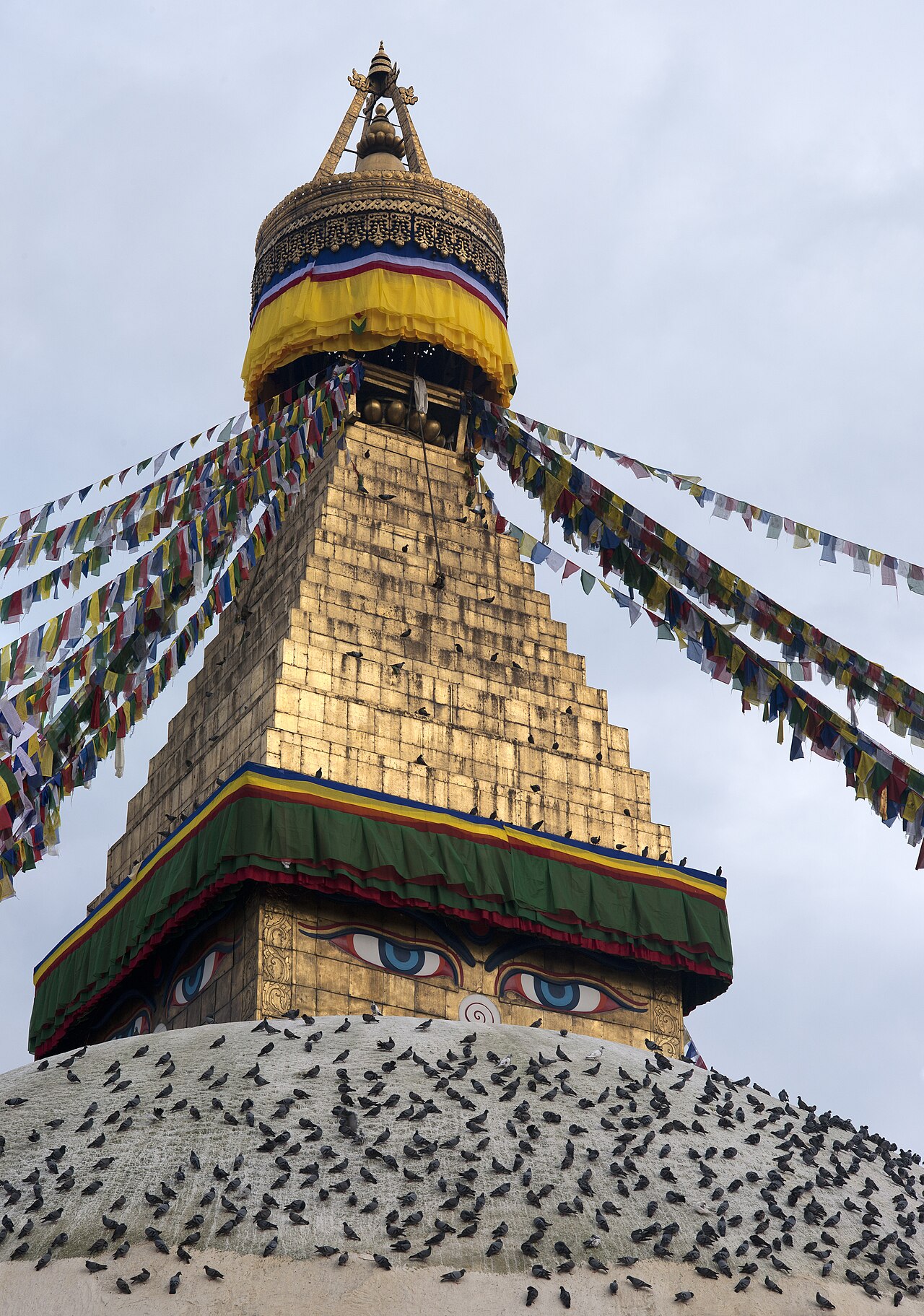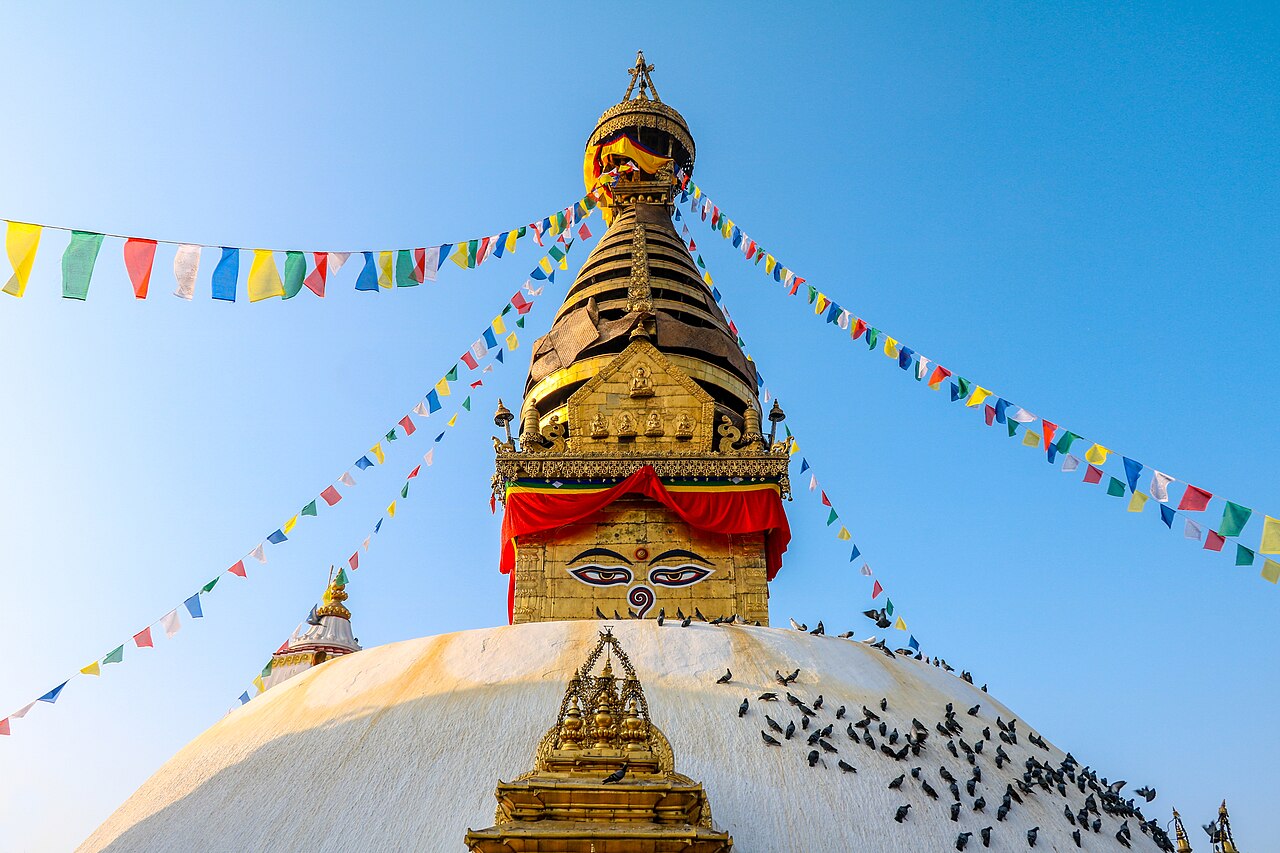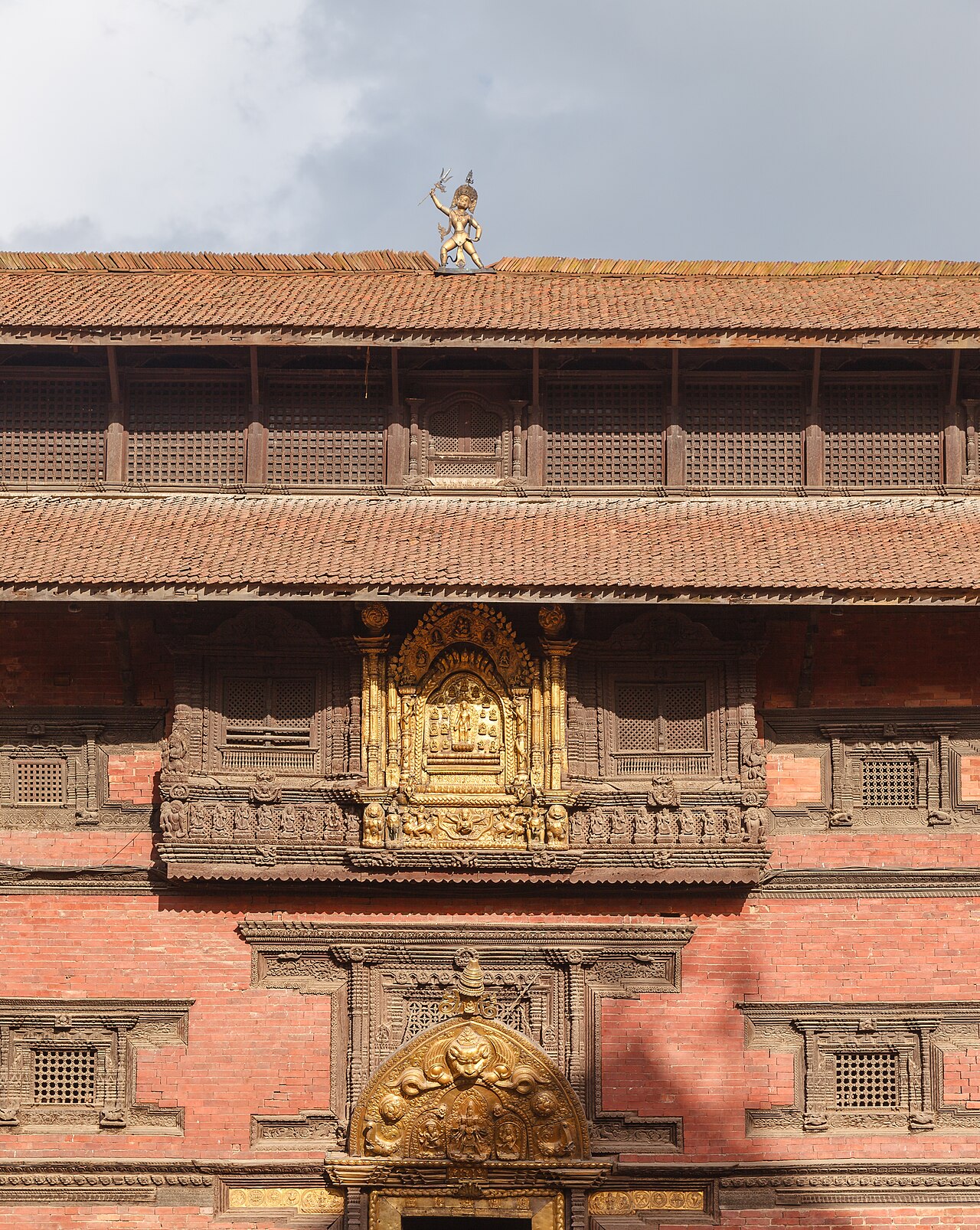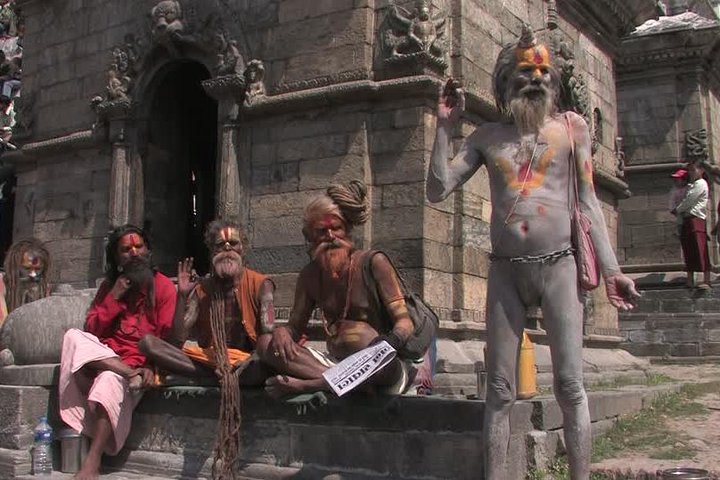
Namo Buddha, also called Namobuddha, is one of the most important Buddhist pilgrimage places in Nepal, set on a forested hill about forty kilometers southeast of Kathmandu. According to the Jataka tale, a prince once came upon a starving tigress and her cubs and offered his own body to feed them, and the stupa on the hilltop marks the place where that compassion is remembered. Pilgrims from Nepal, Tibet and beyond walk here to circle the stupa, turn prayer wheels and sit with the view. The site has two parts: the older stupa with its strings of prayer flags and a small shrine nearby that shows the story in carved stone, and a large hilltop monastery with a golden-roofed temple, a school for young monks and terraces for sitting. Red-robed novices cross the courtyards at lesson time, horns and drums sound at prayer hours and visitors are generally welcome to watch quietly from the edges. The mood is gentler and less crowded than the stupas inside the city.
Getting there is part of the pleasure. The road climbs out of the valley past brick kilns and terraced fields, and many visitors pair Namo Buddha with the old Newar town of Panauti or with Dhulikhel, a ridge town with good views toward the Himalaya. Day tours cover the drive, and walkers can choose a trail from Dhulikhel that crosses villages and forest for a few hours before the final climb to the monastery. The route is not technical, but it is warm and dusty in the dry season, so carry water and start early.
At the top, walk clockwise around the stupa, spin the prayer wheels and take time to look at the story panel carved on the hillside. The monastery temple has colorful murals and a large seated Buddha, and you can usually step inside quietly with shoes removed.
Many visitors take a simple lunch at a monastery café or nearby guesthouse, and some stay overnight on the hill to see the sunrise and hear the morning chanting. If you do, ask about conditions in advance, because rooms are basic and the nights can be cold outside the monsoon.
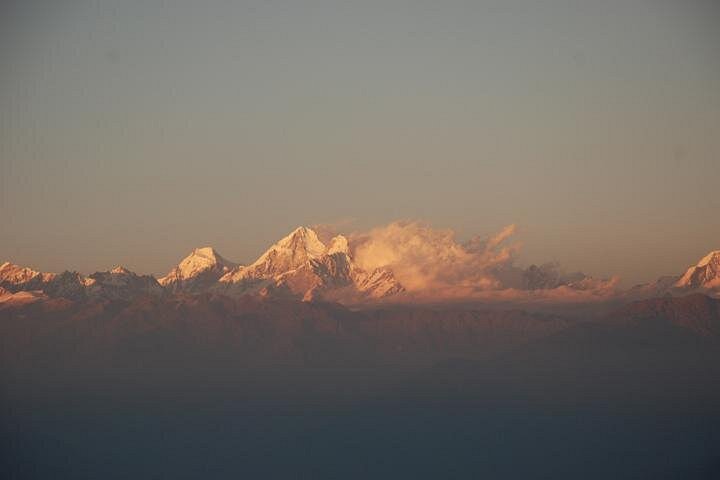
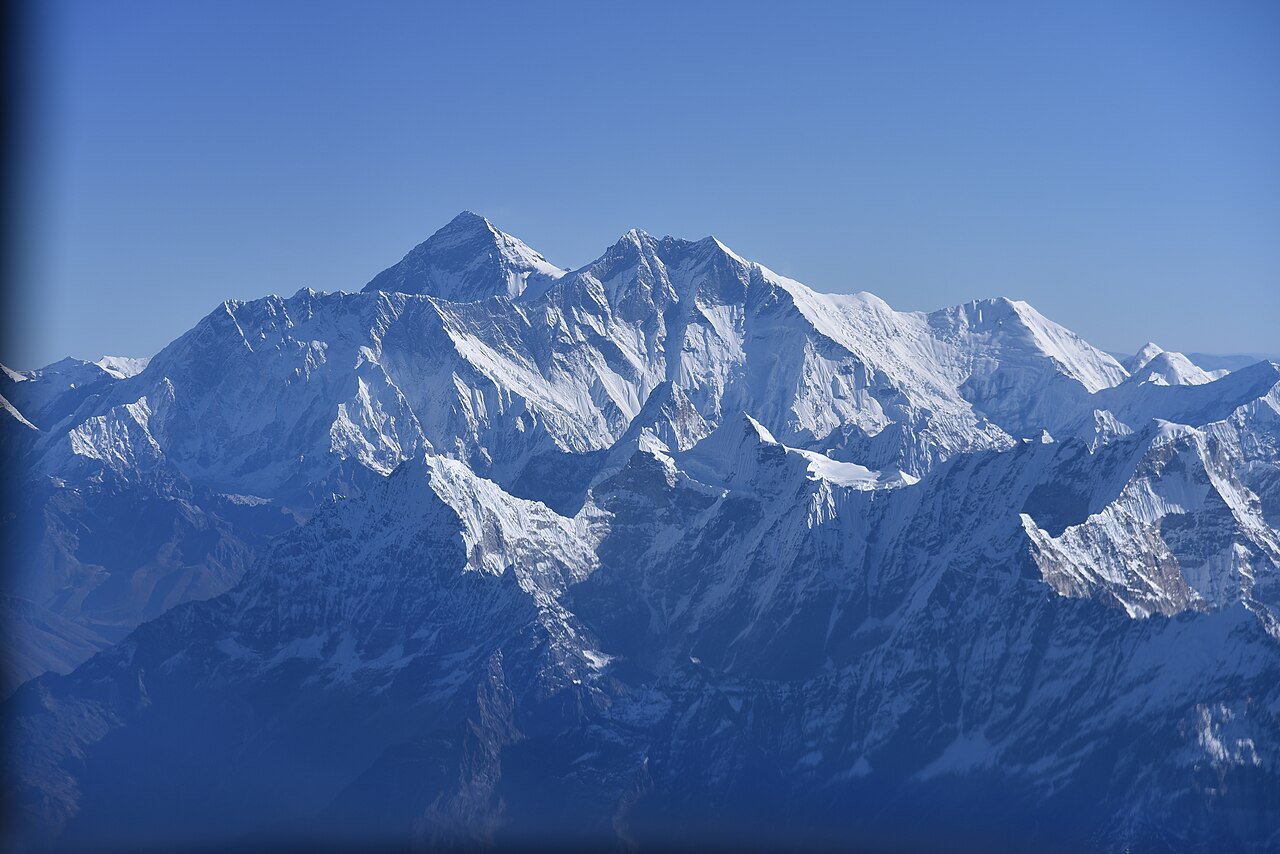
Dress modestly, speak softly and ask before photographing monks. Weather matters: the clearest mountain views come in the autumn and winter dry season, while the monsoon brings leeches on forest trails and slippery steps. The site is a living religious place, not a museum, so let the rhythm of the day decide how long you stay. A full day from Kathmandu is the most comfortable plan, leaving time for the hill, a meal and a stop in Panauti or Dhulikhel on the way back.
A few practical points make the day smoother. Roads in the hills can be slow after rain, so build in extra time, and confirm with your operator whether lunch is included. Cash is useful for monastery donations, simple snacks and tea, since cards are rarely accepted. If you plan to walk from Dhulikhel, ask your guide about shade and rest stops, and carry a hat and plenty of water. The reward is a hilltop that feels remote and spacious, with prayer flags snapping in the wind and monks' voices carrying across the slope.
What to expect
The experience
A full-day trip by road, sometimes combined with a trail walk from Dhulikhel, with time at the stupa, the monastery and a simple lunch.
Best time
Autumn and winter for clear air and mountain views; morning arrival for quiet courtyards.
How long
Plan a full day including the road, the hill and one extra stop in Panauti or Dhulikhel.
Tips
Dress modestly, carry water and sun protection, wear shoes that are easy to remove and ask before photographing monks.
Quick picks
- Best for
- Travelers who want a Buddhist pilgrimage place with space and views rather than city crowds.
- Families
- Older children can enjoy the walk and the monks; for little ones, choose the road route and skip the long trail.
- Couples
- Stay for the late-afternoon light on the prayer flags, or add a night on the hill for sunrise.
- Pair with
- Panauti and Dhulikhel on the same day, or Boudhanath for a contrast with city Buddhism.
- Time needed
- A full day from Kathmandu; two days if you walk part of the trail and stay on the hill.
Good questions
Why is Namo Buddha important?+
It is associated with the Jataka story of a prince who gave his body to a starving tigress and her cubs, and it is a major pilgrimage site for Buddhists in Nepal and beyond.
How far is Namo Buddha from Kathmandu?+
It is about forty kilometers southeast of the city, and the drive usually takes a couple of hours depending on traffic and road conditions.
Can I walk there?+
Yes. A popular day walk runs from Dhulikhel through villages and forest to the monastery, taking a few hours at a steady pace.
Can visitors enter the monastery?+
Visitors are generally welcome in courtyards and can often step into the main temple quietly. Follow the posted rules, remove shoes and avoid ceremonies unless invited.
Is it worth staying overnight?+
If you like quiet, yes. Simple rooms are available near the site, and sunrise and morning chanting are memorable, but expect basic comforts and cold nights in winter.