The Loire Valley has long been called the garden of France, and the food reflects it. The river brings fish, the fields bring vegetables and fruit, the hills carry vines and the farms produce some of the country's best goat cheeses. Tours and its surroundings are a good place to eat slowly, with a regional table that is unfussy, seasonal and well matched to the local wines. This guide sets out what to look for and how to fit it around your sightseeing.
The wines
Touraine is a region of two great grapes. Chenin Blanc is the white grape of Vouvray and Montlouis-sur-Loire, and it makes wines in every style, from dry and mineral to off-dry, sweet and sparkling, so ask your host to show you a range. Cabernet Franc is the red grape of Chinon, Bourgueil and Saint-Nicolas-de-Bourgueil, producing wines that are lighter than many reds and often fresh, with notes of red fruit and a peppery edge. Many cellars are carved into the soft tufa stone, which is the same pale stone used for the châteaux, and the cool caves are as pleasant to visit as the tastings. A half-day wine tour from Tours is the easiest way to do it, and a Vouvray tasting suits those who do not want to drive.
The cheeses
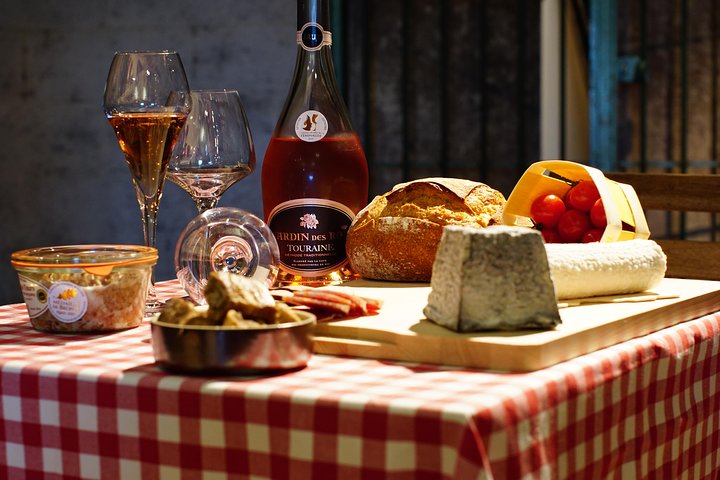
The area is rich in goat cheese. Sainte-Maure de Touraine is a log with a straw running through the centre, and it ages from a soft, fresh cheese to a firmer, tangier one. Selles-sur-Cher and Valençay, a little to the east and south, are other well-known goat cheeses, with an ash coating that gives them a grey-blue bloom. A plate of local cheeses with a glass of Vouvray or a white from the Cher valley is one of the simplest and best lunches in the region.
The dishes
Rillettes de Tours, a soft spread of slow-cooked pork, are a classic starter on bread, and rillons, the chunky cooked pork belly, appear alongside them. River fish such as pike-perch with a butter sauce is a traditional dish of the Loire. In autumn and winter look for game, mushrooms and chestnuts, and in spring look for asparagus and early vegetables. For something sweet, try the tarte Tatin, the upside-down caramelised apple tart born in the Sologne, at the eastern edge of the valley, and the pears and apples that grow in the orchards around Tours. Menus are usually written in French, and a lunchtime set menu is typically the best-value way to eat.
Markets and food shopping
Tours has a covered market, Les Halles, where you can buy cheese, charcuterie, bread and pastries for a picnic by the river or in a château park. Smaller towns such as Amboise and Blois have their own market mornings, and a stroll through a market is a good way to see local produce. Ask a cheesemonger to wrap a small piece of several cheeses, and buy a baguette and some fruit.
Where to eat in Tours
The old town around Place Plumereau is lively in the evening, with terraces, wine bars and crêperies, while the lanes behind the cathedral are quieter and good for a slower dinner. In Amboise, the streets below the château have a good choice of bistros, and in Blois the old town climbs from the river with restaurants along the way. For a special meal, the château-hotels in the countryside have restaurants with serious cooking, and some hold Michelin stars, so reserve well in advance and ask about weekly closing days. Restaurants in smaller towns often close on Sunday evening and Monday, so check before you set out.
How to eat well on a sightseeing day
Lunch is the main meal for many French diners, and kitchens usually close by about two in the afternoon, so plan your lunch on the early side and avoid being caught between services. Pack a small picnic for days when the château has no café nearby, and carry water. In low season some restaurants in villages near the châteaux close completely, so look up options in advance.
Etiquette
Say bonjour when you enter a shop or restaurant, and expect a more leisurely pace than in a city. The service charge is included in the bill, and a small extra tip is a courtesy rather than a requirement. If you want to take wine home, many producers sell by the bottle and can ship, but check your airline's limits if you are flying.