The Colossi of Memnon are two enormous seated statues that stand on the edge of the farmland on Luxor's West Bank, facing the river and the rising sun. Each figure shows the pharaoh Amenhotep III on a throne, hands on knees, carved from blocks of quartzite and standing about eighteen metres high with the base. They once guarded the entrance to his vast mortuary temple, which was one of the largest buildings in ancient Egypt but has almost entirely vanished, leaving the two statues as lone sentinels in the fields. The features are worn and the faces are damaged, yet the sheer size is still striking, and the carved thrones show scenes of the Nile gods binding the lands of Upper and Lower Egypt together. Greek and Roman travellers gave the northern statue its name and its legend: after an earthquake cracked it, the stone was said to sing at dawn, which they took to be the voice of the hero Memnon greeting his mother, the goddess of the morning. The visit itself is short, because you view the statues from a roadside platform, but it is a classic stop on any half-day tour of the West Bank, usually paired with the Valley of the Kings and the temple of Hatshepsut.
Why go
The Colossi are among the easiest and most photogenic ancient monuments in Luxor. They need no tickets queue and no long walk, yet they give an immediate sense of how grand the pharaohs' building projects were. Standing beside them you can picture the lost temple behind, which once covered a huge area and held hundreds of statues.
Archaeological work nearby continues to uncover pieces of that complex, and a small area is often open for a quick look at recovered statuary. For first-time visitors the Colossi are a gentle introduction to the West Bank before the more demanding tombs.
Planning the visit
The statues stand beside the main road, a few minutes from the ferry crossing and close to the ticket offices for the Valley of the Kings, so they fit naturally into a morning or sunset circuit. Most travellers include them in a guided half-day tour, which handles transport and gives the story behind the statues.
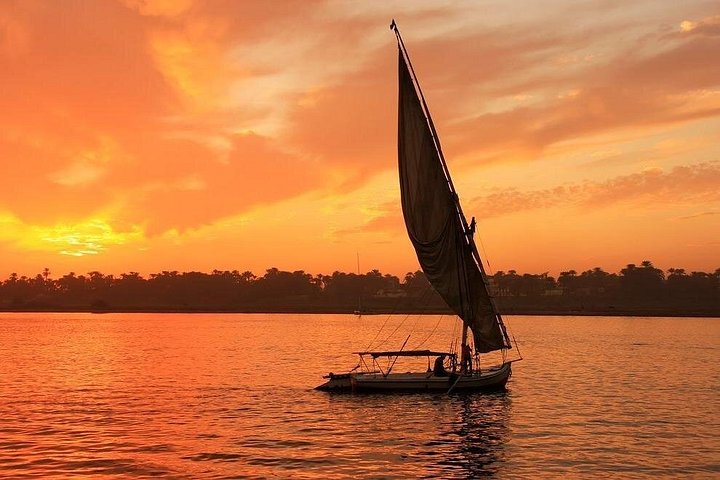
Stops are brief, usually fifteen to thirty minutes, so there is no need to carry much. Light is best in the early morning, when the stone glows and the crowds are thin, and again near sunset, when the sky behind turns gold. Midday heat can be fierce, and there is little shade, so bring a hat and water in the warmer months.
Making the most of it
Walk right up to the base of the statues and look at the carved thrones, where the relief scenes are easy to miss from the road. Take a wide shot with the farmland and the sky, which conveys the scale better than a close crop. Vendors sell souvenirs and drinks at the stop, and a polite refusal is usually enough.
Families will find this an easy stop for children, who often enjoy the sheer size and the story of the singing statue. Pair the visit with the Valley of the Kings and Hatshepsut's temple for a classic West Bank morning, then rest at your hotel through the heat of the day and return to the river in the evening.
What to expect
The experience
A short roadside stop with a viewing platform, usually as part of a guided half-day tour of the West Bank.
Best time
Early morning or just before sunset, when the light is soft and the stop is quiet.
How long
Fifteen to thirty minutes at the statues; longer if you look at the nearby excavation area.
Tips
Bring a hat and water, take photos with the fields behind for scale, and keep small notes for drinks or souvenirs.
Quick picks
- Best for
- A quick, memorable first stop on the West Bank.
- Families
- Easy for children, with no walking and a good story about the singing statue.
- Couples
- A soft sunrise or sunset backdrop with no effort involved.
- Pair with
- The Valley of the Kings and the temple of Hatshepsut in one morning.
- Time needed
- Under an hour at the site, or a half day as part of a tour.
Good questions
What are the Colossi of Memnon?+
Two seated statues of the pharaoh Amenhotep III, about eighteen metres tall, that once flanked the entrance to his mortuary temple on the West Bank.
Why are they called the Colossi of Memnon?+
Greek and Roman visitors linked the northern statue to the hero Memnon, because after earthquake damage it was said to sing at dawn.
Do I need a ticket to see them?+
They are viewed from the roadside, so most visitors simply stop on a West Bank tour. Check whether your tour includes the stop.
How long should I allow?+
Fifteen to thirty minutes is enough for most visitors, a little more if you want to see the nearby excavation area.
What is the best time to visit?+
Early morning or late afternoon, when the light is better and the heat is gentler.