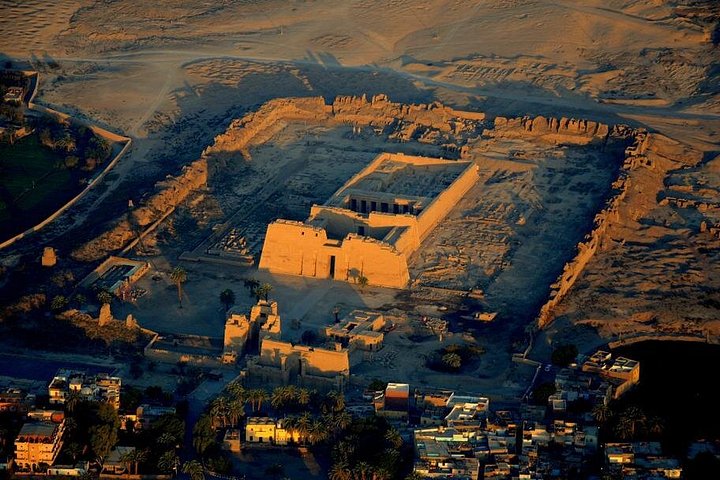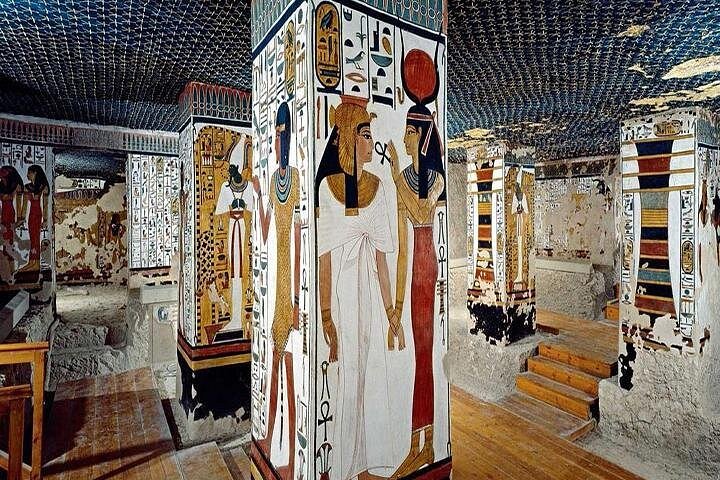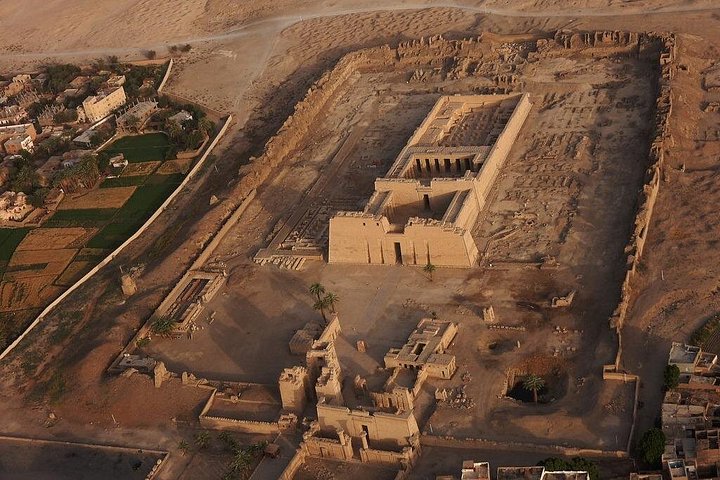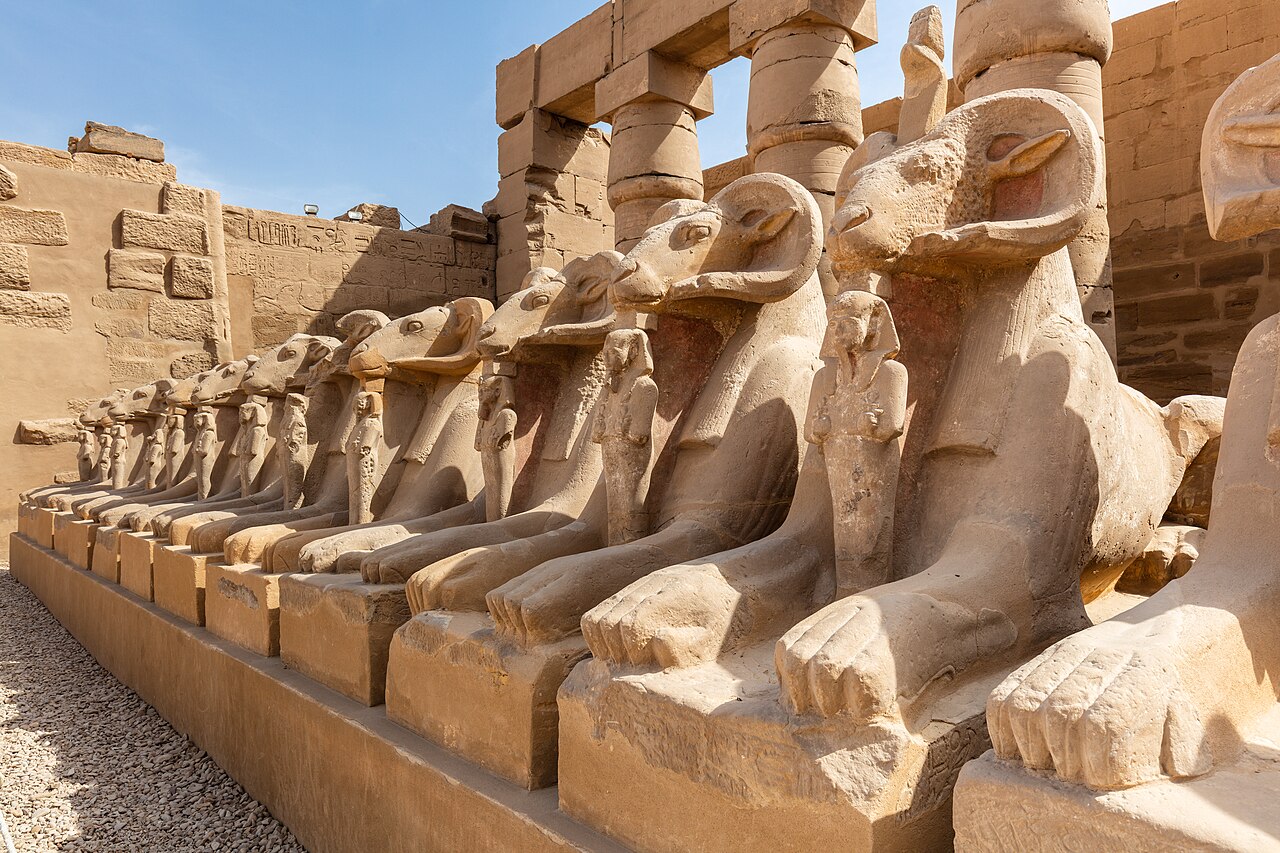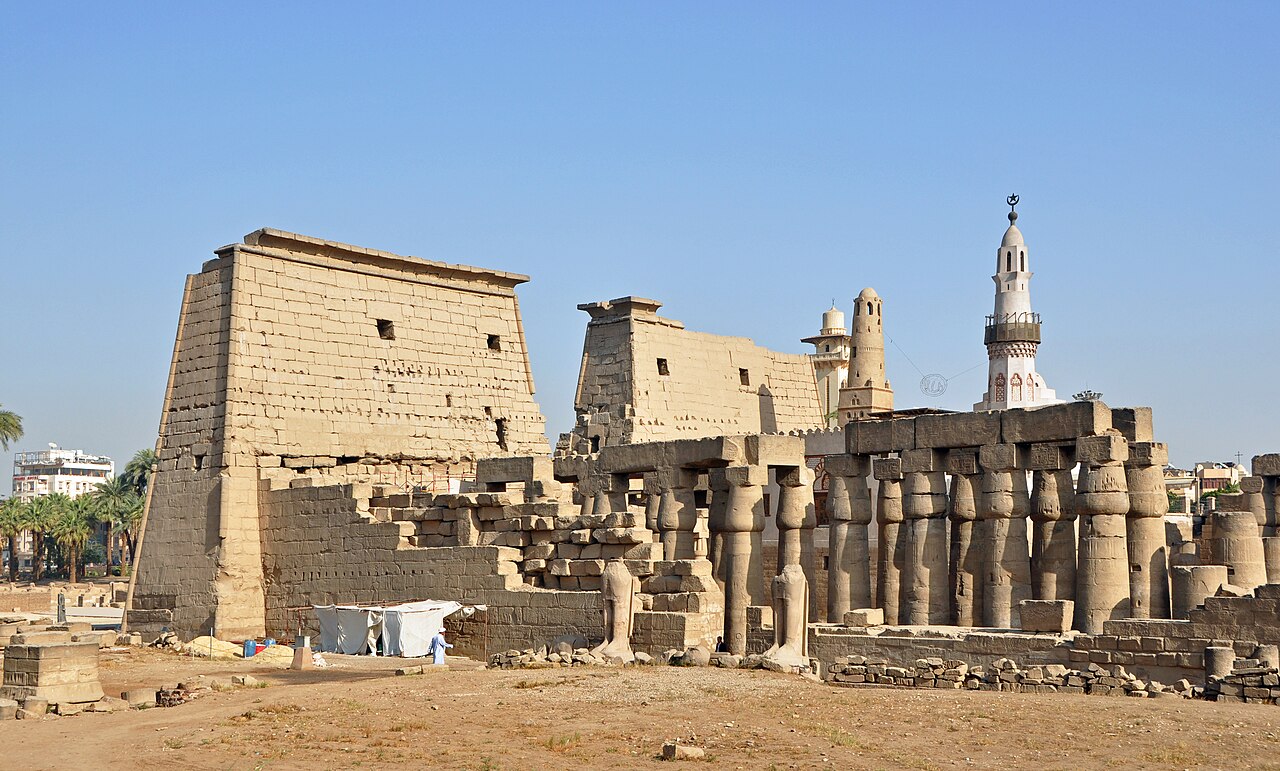
The Ramesseum is the mortuary temple of Ramesses II, the long-reigning pharaoh often called Ramesses the Great, and it stands on the West Bank between the Valley of the Queens and the Colossi of Memnon. It was built to honour the king and the god Amun after his death, and although parts have fallen, much remains: two massive pylons carved with scenes from the Battle of Kadesh, courtyards lined with statues, and a hypostyle hall whose tall columns still carry painted ceilings with stars and sacred barques. The most famous relic lies in the second courtyard, where the shattered remains of a giant seated statue of Ramesses show how big the original was. This broken colossus inspired the poet Shelley's Ozymandias, with its lines about a king of kings and the sand that covers his works. The site is calmer than the Valley of the Kings, and you can often wander the columns with only a few other visitors. The linked tour combines the temple with a visit to the house associated with Howard Carter, the archaeologist who found Tutankhamun's tomb, giving the half day a human story to go with the stone.
Why go
The Ramesseum is the place to feel the ambition of Ramesses II, a king who covered Egypt with monuments and carved his victories on every wall. Because it is less crowded than the headline tombs, the reliefs and fallen statuary are easy to study at your own pace.
The temple also gives context for what you see elsewhere on the West Bank, since mortuary temples were the settings for the cults of dead kings, separate from their hidden tombs in the valley. History lovers tend to rank it among the most rewarding West Bank stops.
Planning the visit
The temple lies a few minutes by road from the Valley of the Queens and Deir el-Medina, so it fits well into a day of southern West Bank sites, alongside Medinet Habu. Allow around an hour at the temple itself, and more if you have a guide who will read the battle scenes with you.
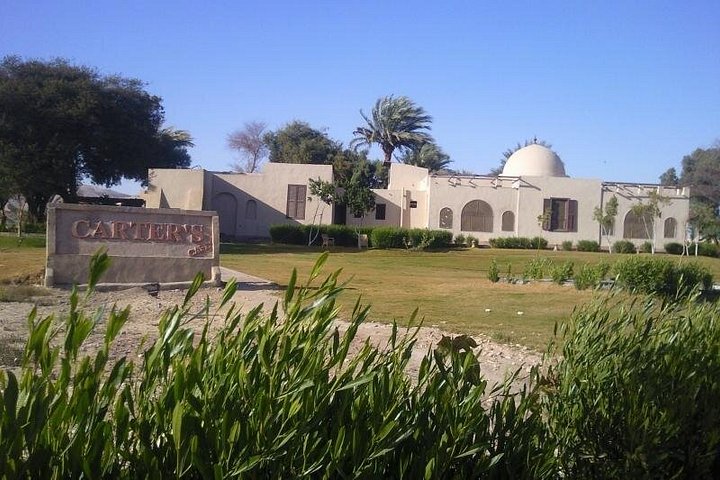
The tour that includes Howard Carter's former house adds time for a short, quiet visit, so it suits a relaxed morning rather than a rushed one. Tickets for state-run sites are bought on entry or arranged by your tour, and the rate for foreign visitors is set in Egyptian pounds and changes, so ask what is included before you pay.
Making the most of it
Start at the first pylon and look for the Kadesh reliefs, then walk through the courtyards to the colossus and the hypostyle hall, where you should look up at the painted ceiling. Bring a hat, water and sunglasses, because shade is limited outside the hall. Photographers will enjoy the late-morning light on the columns and the broken granite of the statue.
Couples will appreciate the quiet setting, and families with older children can turn the Ozymandias story into a game of imagining the statue at full height. Pair the Ramesseum with Medinet Habu for two very different mortuary temples in one outing, one worn and romantic, the other almost complete.
If you enjoy reading before you travel, look up the Battle of Kadesh and Shelley's poem Ozymandias, because both give extra meaning to the reliefs and the fallen colossus. Then, when you stand beneath the pylon, you can compare the carved claims of victory with the quiet ruins around you, which is half the pleasure of this site.
What to expect
The experience
A self-guided or guided walk through pylons, courtyards and the hypostyle hall, followed by a visit to the nearby Howard Carter house on the linked tour.
Best time
Morning, when the site is quiet and the light is clear.
How long
About an hour at the temple, plus the Carter house if your tour includes it.
Tips
Bring a hat and water, read the Kadesh reliefs at the first pylon and look up inside the hypostyle hall.
Quick picks
- Best for
- History lovers who want a quiet temple with strong stories.
- Families
- Older children will enjoy the giant fallen statue and the Ozymandias story.
- Couples
- Calm columns and a romantic ruin without the crowds of the main tombs.
- Pair with
- Medinet Habu and the Valley of the Queens.
- Time needed
- Half a day including the Carter house, or two hours for the temple alone.
Good questions
What is the Ramesseum?+
The mortuary temple of Ramesses II on the West Bank, built to honour the king and the god Amun and to serve his cult after death.
Why is it famous?+
For the fallen colossus of Ramesses II, which inspired Shelley's poem Ozymandias, and for its carved battle scenes and painted hypostyle hall.
Is it crowded?+
Usually much less than the Valley of the Kings, which makes it a good place to slow down and study the carvings.
How long should I allow?+
About an hour at the temple, or half a day if you combine it with Howard Carter's house and other West Bank stops.
What should I combine it with?+
Medinet Habu, the Valley of the Queens and Deir el-Medina are all close by and make a natural southern West Bank circuit.