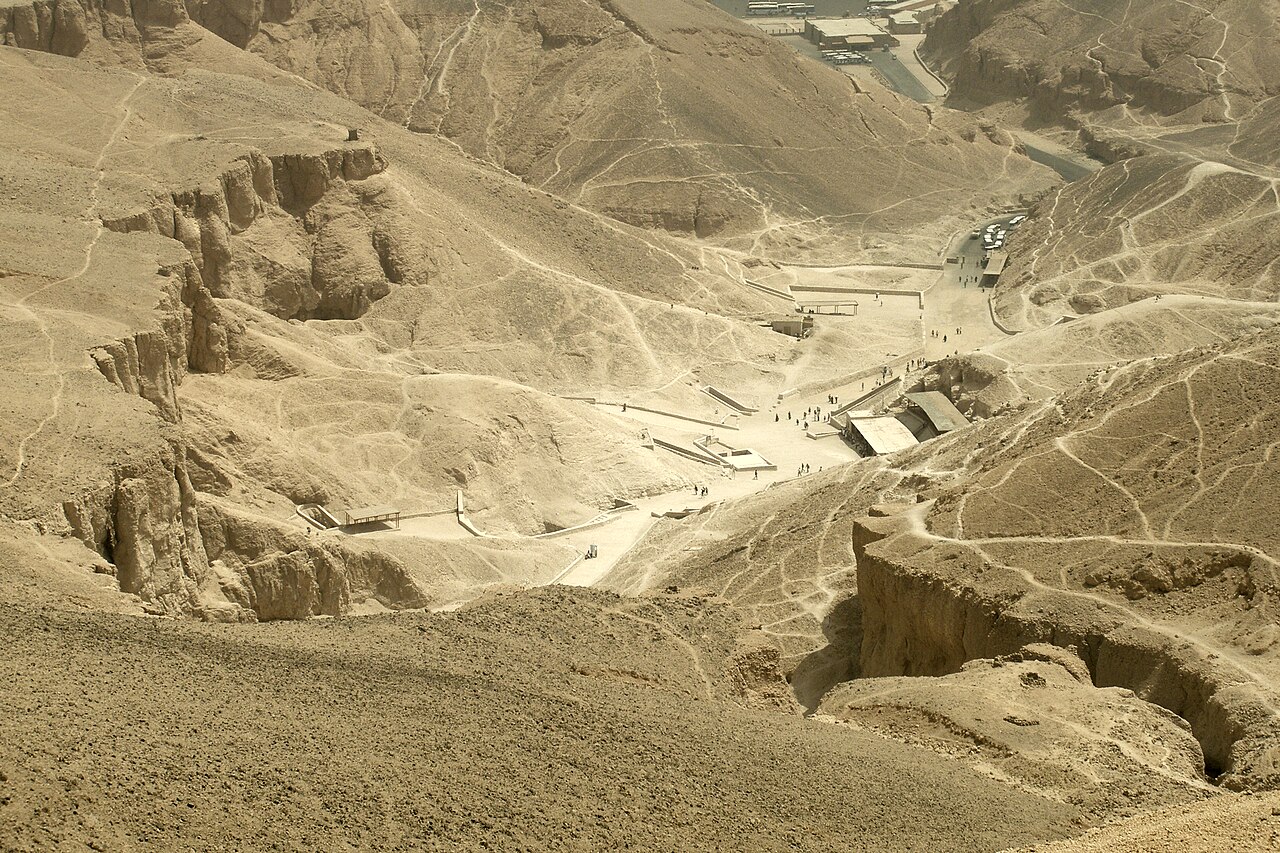
The Valley of the Queens lies in a dry side valley on the West Bank, south of the better-known Valley of the Kings. The ancient Egyptians called it the Place of Beauty, and it was used mainly during the Nineteenth and Twentieth Dynasties to bury royal wives, princes and princesses, along with a number of other elite family members. Around ninety tombs have been identified, though only a handful are normally open to visitors, and several of them are wonderfully decorated. The undoubted star is the tomb of Nefertari, the favourite wife of Ramesses II and the queen honoured at the small temple beside the great one at Abu Simbel. Its walls are covered in painted scenes of the queen making offerings and travelling through the afterlife, in colours so fresh that it is often described as one of the most beautiful tombs in Egypt. Because the paint is delicate, access to Nefertari's tomb is tightly controlled, with a separate ticket and limited time inside, and it can be closed at short notice. Other open tombs belong to young princes, including sons of Ramesses III, and show touching scenes of father and child before the gods. The valley is small, easy to walk and usually quiet, and it makes a satisfying contrast to the busier royal tombs nearby.
Why it matters
The Valley of the Queens shows a more personal side of the New Kingdom than the royal valley. The tombs of children and queens are decorated with portraits, family scenes and prayers that speak of loss as well as ceremony. The tomb of Nefertari, in particular, shows what Egyptian tomb painting could achieve at its peak, with delicate figures, deep blues and golds and a sense of movement along the corridors. Even if you cannot enter it, the other tombs here repay a visit.
Planning the visit
The site is on the West Bank and is usually combined with Medinet Habu, Deir el-Medina and the Colossi of Memnon in a half-day trip from Luxor. Entry to the valley is priced in Egyptian pounds with a premium for foreign visitors, and the tomb of Nefertari needs its own ticket, which is considerably more expensive and may be offered only in limited numbers.
Which tombs are open can change, so ask your guide or operator what is available on your day. Photography rules vary, and flash is never allowed on painted walls. Wear a hat, sunscreen and sturdy shoes, because the valley is exposed and the ground is dusty.
Making the most of it
Go early, when the valley is cool and quiet, and decide in advance whether the extra ticket for Nefertari is worth it for you. If it is, book a trip that allows time for it and expect only a short visit inside. Spend the rest of your time in the tombs of the princes, which are often empty and easy to appreciate. The valley works well as a calm stop between the heat of the royal tombs and a long lunch, and it is manageable for families with older children.
If you are deciding how to divide your West Bank time, treat the Valley of the Kings as the grand set piece and this valley as the quieter coda. The two together give a fuller picture of how the royal family was honoured in death, and the shorter walking distances here make it an easy stop even in warm weather.
What to expect
The experience
A short walk between a few open tombs in a quiet desert valley, with the option of a separate ticket for the tomb of Nefertari.
Best time
Early morning, when the valley is cool and quiet.
How long
About an hour to ninety minutes, plus travel from Luxor.
Tips
Decide beforehand whether to buy the extra Nefertari ticket, carry cash, wear a hat and respect the no-flash rule on painted walls.
Quick picks
- Best for
- Lovers of painted tombs and anyone who wants to see Nefertari's tomb.
- Families
- Short and quiet, though the heat and dusty ground tire small children quickly.
- Couples
- A calm, atmospheric morning away from the crowds, followed by lunch on the West Bank.
- Pair with
- Medinet Habu and Deir el-Medina on the same half-day trip.
- Time needed
- A half day including travel, with about an hour at the valley.
Good questions
Can I visit the tomb of Nefertari?+
Usually yes, but it needs a separate, more expensive ticket, visits are short and numbers are limited. It can also close without much notice, so ask on the day.
How is it different from the Valley of the Kings?+
It is smaller, quieter and focused on queens and princes. The tombs are shorter but often more colourful and personal in style.
How many tombs can you enter?+
Only a few are normally open at any time, and the selection changes. Your guide or operator can tell you which ones are available.
How long should I allow?+
About an hour at the valley, or longer if you queue for Nefertari. Most people combine it with Medinet Habu in a half-day trip.
Is photography allowed?+
Rules vary by tomb and can change, and flash is never allowed on painted surfaces. Ask before you take pictures.