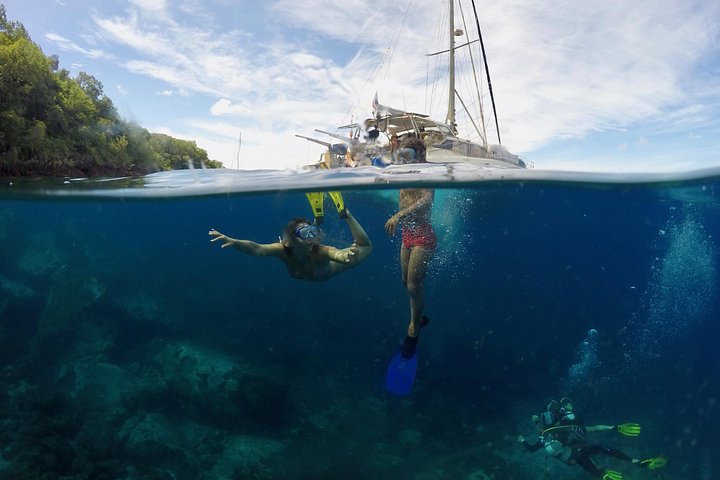
Martinique is an island, and some of its best experiences happen offshore. Two very different seas meet here: the calm, sheltered Caribbean side, where turtles graze in clear bays, and the breezy Atlantic side, where a protected reef creates shallow turquoise lagoons around small islets. Between them lies a full menu of outings, from a quiet evening swim to a deep-water fishing charter. This guide helps you choose the day that suits your group, your confidence in the water and the time you have.
Start with the coast
The Caribbean coast, running from Saint-Pierre in the north to Les Anses-d'Arlet and Le Diamant in the south, has the gentler water. Mornings are usually the calmest, visibility is good and many boats leave from small harbours near the beaches. The Atlantic coast around Le François and Le Robert is shaped by the trade winds and a barrier reef. The water inside the reef is shallow and spectacular, but the outer sea can be choppy, especially in the afternoon. If you are nervous on boats, begin on the Caribbean side. If you want the most photogenic scenery, the Atlantic bays are hard to beat.
The easy first outing
The dolphin outing on the Caribbean coast and the turtle snorkel are the simplest introductions to the sea. Both are short, both suit a wide range of ages and both focus on watching wildlife rather than demanding fitness. The animals are wild, so sightings are never guaranteed, but the scenery along the coast is rewarding even on a quiet day. Choose the turtle trip if you are happy to swim and the dolphin trip if you would rather stay on deck. Both leave time for a beach afternoon.
The full-day classics
For a longer day, the catamaran snorkel from Les Anses-d'Arlet and the sailing discovery day give you time to swim, snorkel and relax at anchor, usually with a meal on board. On the Atlantic side, the Baignoire de Joséphine boat day takes you to a shallow, sandy area in the middle of the bay where the water is waist deep and astonishingly clear. These trips suit couples, families with older children and groups of friends who want to spend most of the day on the water. Reserve ahead in the winter months, since the better-rated boats fill quickly.
The shorter, lighter options
If you do not want to commit a whole day, the excursion to the islets off Le François combines a swim with an aperitif and takes only a few hours. The rum and fishing outing is a playful alternative for adults, mixing line fishing with a taste of local rum. Both are easy to pair with other sights nearby, such as Habitation Clément, and both leave you free to explore in the afternoon.
After dark
The night snorkel off Les Anses-d'Arlet shows you a side of the reef that most visitors never see, with nocturnal creatures and, on dark nights, glowing plankton. Night fishing offers a quiet evening on the water with the stars overhead. Both are best around the new moon, when the sky is darkest. Because the roads are narrow and unlit, arrange transport in advance, and tell the operator about any medical conditions or fears so they can brief you properly.
For anglers
Deep-water fishing charters head out beyond the sheltered bays to look for large pelagic fish. They suit keen anglers, adventurous groups and teenagers who enjoy action. The crew handles the technical work, so experience is not required, but the open sea can be rough, so take motion sickness tablets before departure and ask the captain what is included. A fish caught that morning, cooked the same evening, is one of the best meals you can have on the island.
Seasons and weather
The dry season, roughly from December to May, offers the calmest seas, the clearest water and the most reliable trips. The wetter months, particularly during the hurricane season, bring more rain, swell and the possibility of cancellations. Operators will move or cancel an outing if the sea is unsafe, so keep some flexibility in your plans, and leave a spare day for a rescheduled trip if you can. The morning is almost always calmer than the afternoon.
What to bring
Reef-safe sunscreen, a hat, polarised sunglasses, a rash vest or long-sleeved swim top, a towel and a dry change of clothes are the basics. Water shoes help on sandy bottoms and rocky ramps. Bring a waterproof pouch for your phone, some cash in euros for tips and refreshments, and a light layer for spray and the ride home. If you are prone to seasickness, take tablets before you board and look at the horizon, not the deck.
Respect the sea
Do not touch or feed turtles, do not stand on coral and do not collect shells or living creatures. Follow the guide's instructions on distance and on where to swim. If you are a weak swimmer, say so and ask for a flotation device. Listening to the crew is the single best way to stay safe and to see more wildlife.
Cruise passengers and tight schedules
If you are visiting on a ship, give the operator your ship name, docking time and all-aboard time, and keep a generous buffer. The Atlantic coast is a long way from the capital, so choose a Caribbean-side outing if time is short. A morning dolphin or turtle trip leaves plenty of time to return, while a full-day sailing trip is best for visitors who are staying on the island.