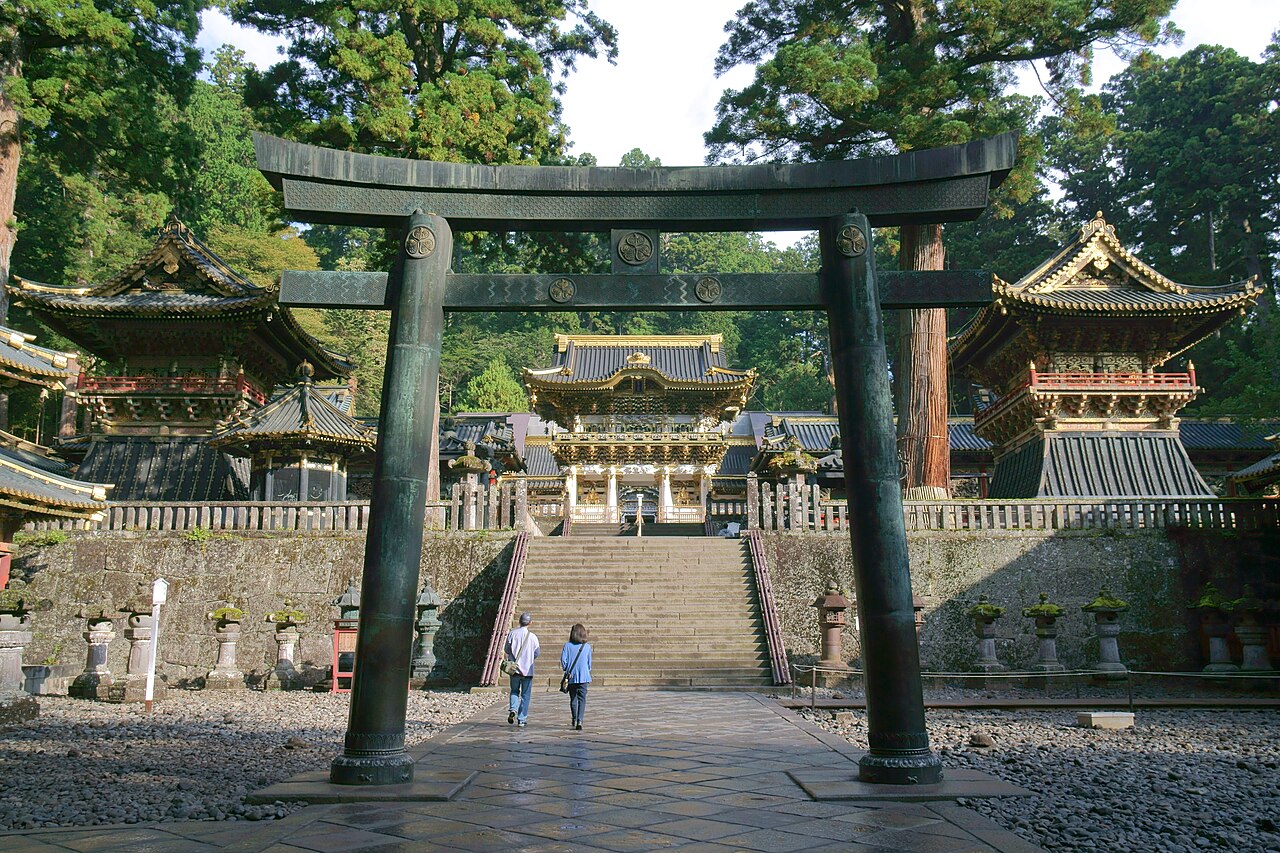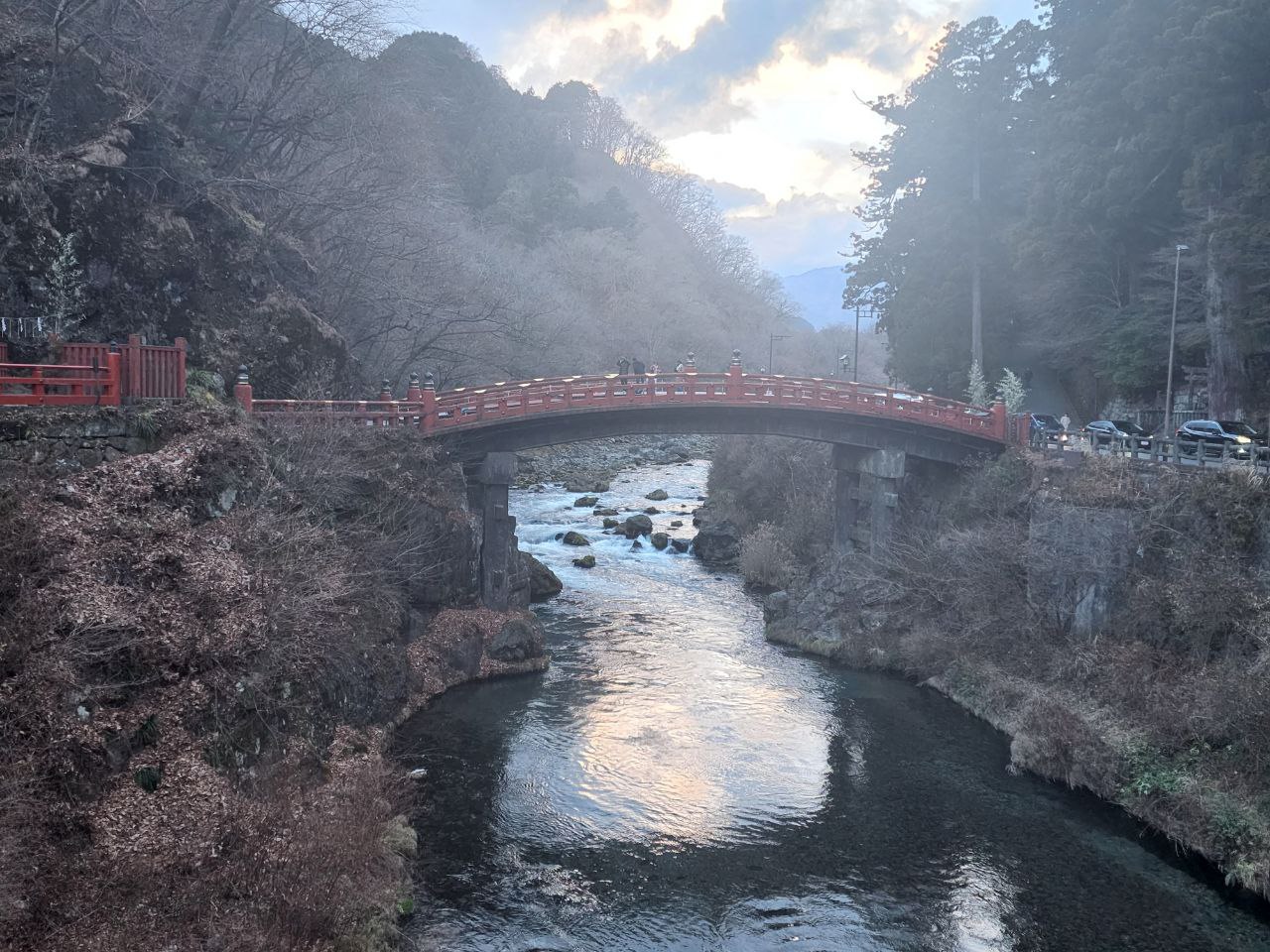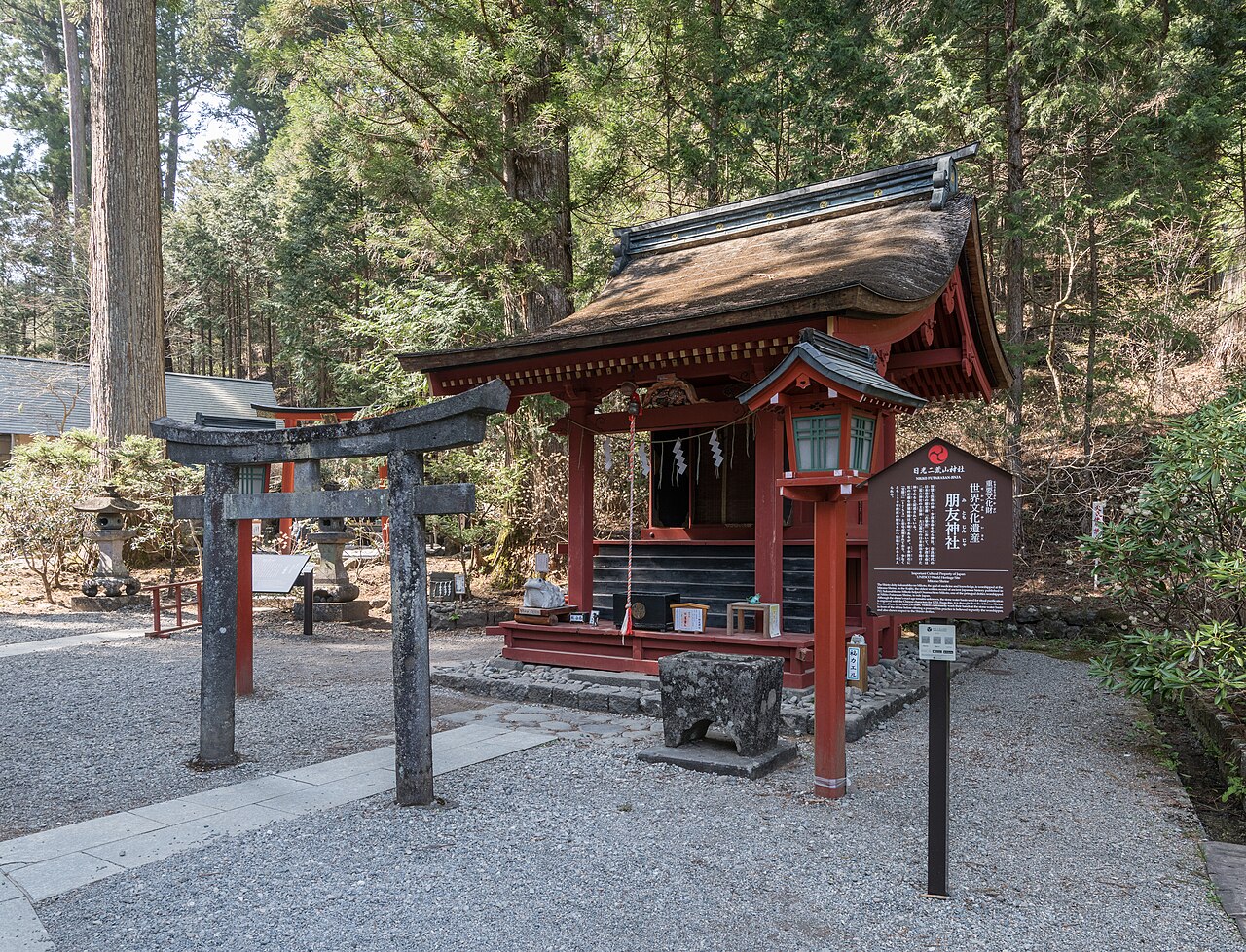
Futarasan Shrine is the quiet third member of the Nikko World Heritage trio. Where Toshogu celebrates a shogun and Rinnoji a Buddhist tradition, Futarasan honours the mountain gods of Nikko, chiefly Mount Nantai, the great volcano above Lake Chuzenji. It was founded in the eighth century, according to tradition by the monk Shodo, and the main shrine stands beside Toshogu at the foot of the hills, while two further sites, one on the summit of Nantai and one on the shore of Lake Chuzenji, make up the full set. The shrine's grounds are largely free to enter, and its avenue of stone lanterns and red-lacquered buildings is a calm contrast to the crowds next door. A small paid area to the left of the offering hall holds a forested garden with a spring, old sacred trees and a close view of the main hall. Shinkyo Bridge also belongs to the shrine.
The shrine matters for what it reveals about Nikko before the shoguns. Mountain worship came first, and the buildings here are older in spirit than the lavish mausoleums that followed. The main structures are decorated more simply than Toshogu, which is part of the appeal: you can walk the lantern-lined approach, hear the gravel underfoot and have the place close to yourself on a weekday morning. The paid garden is small but atmospheric, and the trees in it are among the oldest in town.
A visit takes about thirty to forty-five minutes, which makes Futarasan an easy add-on to a Toshogu day. Walk over from Rinnoji, or end your circuit here before heading down toward Shinkyo Bridge, which is about a kilometre away. The shrine is also the starting point for those who want to understand the other two Futarasan sites, the one by Lake Chuzenji and the climbing trail up Mount Nantai, though the climb is a serious mountain walk and is not open in snow.
Hours follow the pattern of the other Nikko sights: a little later opening and a 4 pm close from November, with admission to the garden ending half an hour earlier. The shrine is open daily. If you want the best photographs, come in the first half of November when the maples around the garden are at peak colour, and bring a warm layer, since the valley shade is cold by mid-afternoon.
What to expect
The experience
A short stroll along a lantern-lined approach to the main shrine, with an optional small paid garden behind the offering hall.
Best time
Weekday mornings for near-solitude, or the first half of November for colour.
How long
Thirty to forty-five minutes.
Tips
The garden is the only paid part, so budget a little extra cash. Layer up, because the shaded grounds are cold in late afternoon.
Quick picks
- Best for
- Travellers who want a quieter shrine and a feel for Nikko's mountain-worship roots.
- Families
- Easy and flat, with plenty of space, though younger children may find it less exciting than the carvings next door.
- Couples
- Pair the lantern-lined path with the small garden for a peaceful half hour away from the crowds.
- Pair with
- Toshogu Shrine, Rinnoji Temple and Shinkyo Bridge.
- Time needed
- About forty minutes.
Good questions
Is Futarasan Shrine free?+
Most of the grounds are free to enter. Only the small garden area beside the offering hall charges a modest fee.
How is it different from Toshogu?+
Futarasan is older and far simpler, dedicated to the mountain gods rather than a shogun. It is quieter, with less ornament and fewer crowds.
What are its hours in winter?+
From November the shrine opens a little later and closes at 4 pm, with garden admission ending about thirty minutes earlier. It is open every day.
Does it have anything to do with Shinkyo Bridge?+
Yes, the red bridge belongs to the shrine and was closed to ordinary visitors until 1973. It is about a kilometre from the main shrine.
Can I climb Mount Nantai from here?+
The Nantai trail starts at the shrine on the shore of Lake Chuzenji, not at this one. It is a demanding mountain climb and should not be attempted in snow or ice.