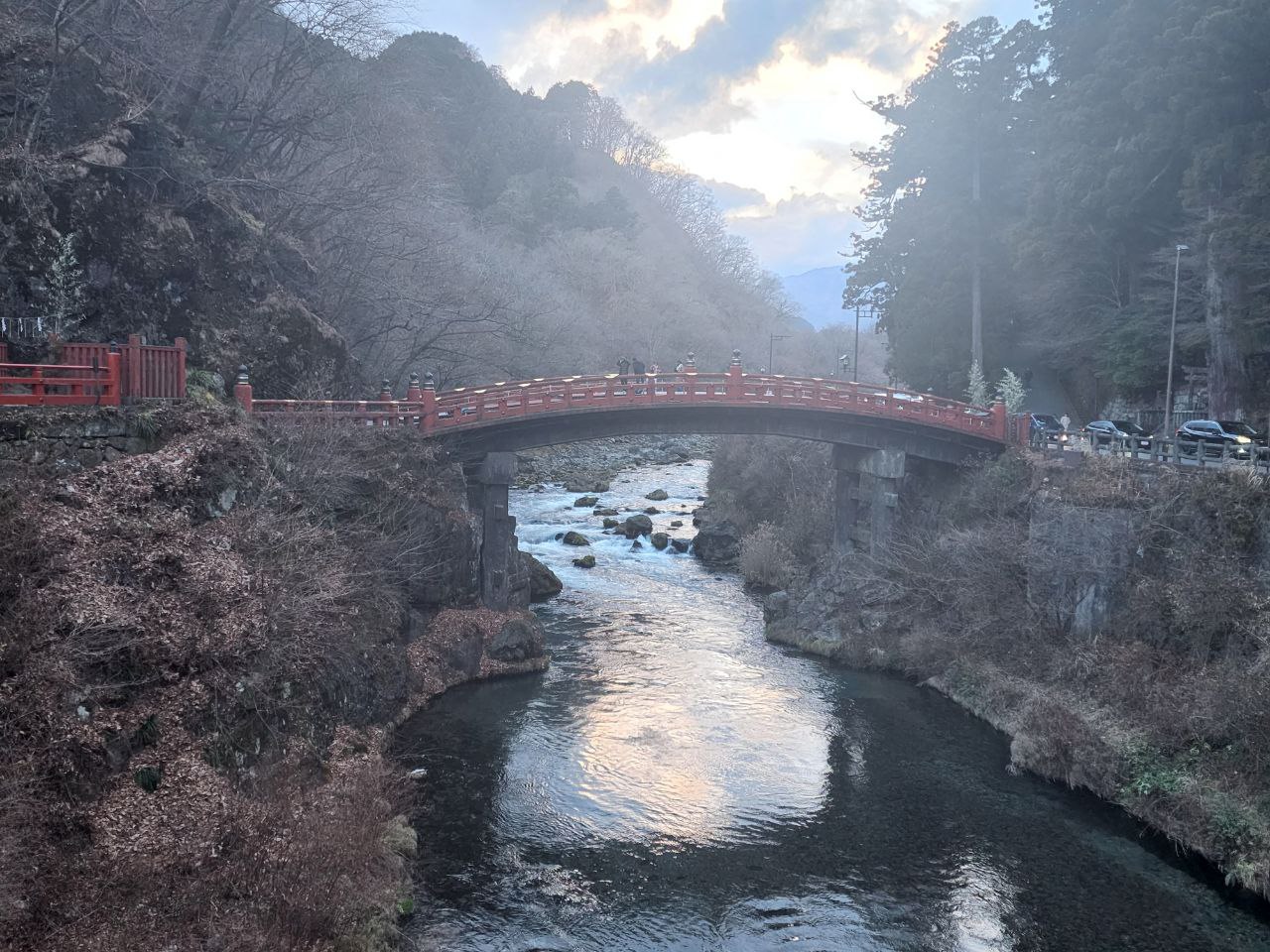
Shinkyo, the Sacred Bridge, spans the Daiya River at the entrance to Nikko's shrine and temple district and is the first thing most visitors want to photograph. The current vermilion-lacquered wooden arch dates from 1636, though a bridge of some kind had stood on the spot far longer, and it is counted among Japan's three finest bridges. It belongs to Futarasan Shrine and was closed to ordinary visitors until 1973; today you can pay a small fee to walk across and back, while the free road bridge beside it gives the classic view of the red arch against the green gorge and the cedar-covered hills. Major restoration took place around the turn of the millennium, and the bridge looks crisp. The bridge lies on the road between the stations and Toshogu, about twenty to thirty minutes on foot from the stations, so it is easy to fit in on the way up or down. It is open daily, with shorter hours in winter.
The bridge's legend adds colour. Tradition says the monk Shodo crossed the river here on the backs of two serpents that appeared at his prayer, and the arch has been maintained as a sacred crossing ever since. For centuries it was reserved for the shogun's envoys and imperial messengers, a status that explains why it sits apart from the everyday road bridge. The story helps you read the setting: the river runs fast and clear through a narrow gorge, and the bridge crosses it in a single graceful span.
Choosing how to see it
The paid crossing is short and fairly quick, and for many visitors the best value is simply standing on the free bridge next to it and photographing the red arch from there, then paying only if you want to step onto the span. The bridge faces the river's autumn colour in early November, when the maples on the banks turn, and early morning is usually the quietest time. Winter hours are shorter, with a 4 pm close from November.
Shinkyo makes a natural transition between town and shrines. Many visitors take the bus up to Toshogu, then walk back down the long hill, ending at the bridge. If you plan an e-bike tour of the World Heritage area, Shinkyo is usually the first stop. Combine it with the walk upstream to Kanmangafuchi Abyss for a pleasant, mostly flat afternoon along the river.
What to expect
The experience
A short stop at the sacred bridge, where you can photograph from the free road bridge or pay a small fee to walk the arch.
Best time
Early morning for quiet, or the first half of November for autumn colour on the riverbanks.
How long
Twenty to thirty minutes.
Tips
The best photo angle is from the free road bridge. Winter hours end at 4 pm, and the walk from the stations takes twenty to thirty minutes.
Quick picks
- Best for
- First-time visitors who want the classic Nikko photograph.
- Families
- An easy, flat stop that suits all ages and can break up the walk up to the shrines.
- Couples
- A photogenic stop at the start or end of a day among the shrines.
- Pair with
- Toshogu Shrine, Futarasan Shrine and a riverside walk to Kanmangafuchi Abyss.
- Time needed
- About half an hour.
Good questions
Can you walk across Shinkyo Bridge?+
Yes, for a small fee you can walk across and back. The free road bridge beside it offers the classic view of the arch.
Is it worth paying to cross?+
Many visitors skip the fee and photograph the bridge from the road bridge. The crossing is short, so pay only if you want to stand on the sacred span.
How old is Shinkyo Bridge?+
The present bridge dates from 1636, and a bridge has stood here for much longer. It was heavily restored around the turn of the millennium.
Is it open in winter?+
Yes, every day, but the hours are shorter from November, with a 4 pm close. Check before late-afternoon visits.
How far is it from the train stations?+
It is a twenty to thirty minute walk, or a short bus ride to the Shinkyo stop. It lies on the road between the stations and Toshogu.