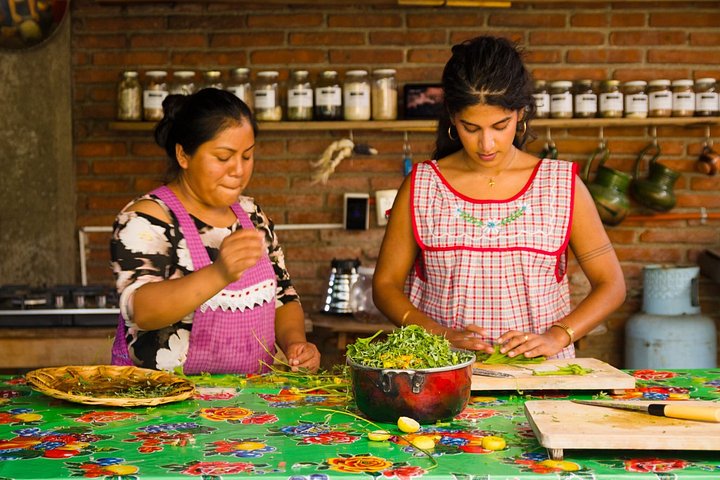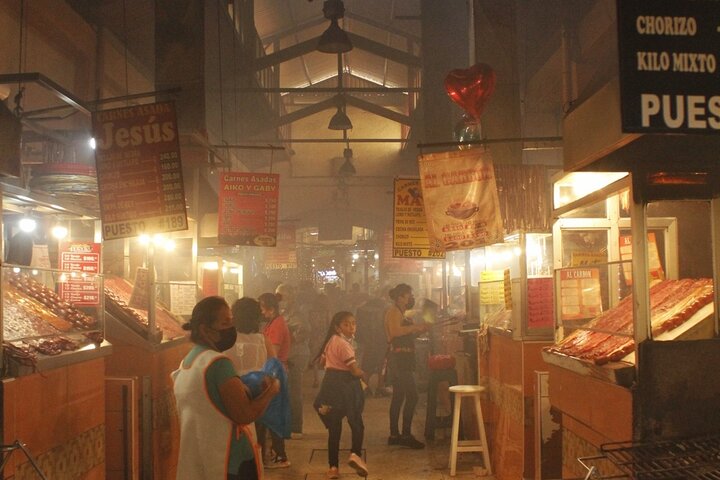
Chocolate and mole are the twin pillars of Oaxacan cooking, and a short class is the quickest way to understand both. The city has been grinding cacao for centuries, and the streets around the markets still smell of roasted beans, cinnamon and sugar from the chocolate mills. Oaxacan chocolate is traditionally stone-ground with sugar, cinnamon and often almonds, then shaped into discs that are dissolved in hot water or milk and whisked to a froth with a wooden stick called a molinillo. Mole is the sauce that Oaxaca is most proud of, a slow-cooked blend of dried chiles, nuts, seeds, spices and sometimes chocolate or fruit. There are said to be seven classic moles, from the black mole made with charred chiles and chocolate to the bright green and the yellow, each with its own character. In a class of about an hour, you will learn the ingredients, grind cacao or spices on a stone metate, taste mole in the making and enjoy drinks, so you leave knowing what to order and what to buy. It is a good fit for visitors with limited time or those who prefer a short activity to a full cooking class.
The chocolate story
Cacao has been used in Oaxaca since before the Spanish arrived, originally as a bitter, spiced drink for ceremonies and the elite. The modern version adds sugar and cinnamon, and the city is still full of small mills where you can watch beans roasted, ground on a hot stone and mixed to order.
Chocolate is not only a drink here, because it also thickens and deepens many sauces, including the famous black mole, and it appears in pastries, ice creams and atole. Tejate, a cold, foamy maize and cacao drink, is the older cousin you will find in the markets.
The mole story
A mole may contain twenty or thirty ingredients, and a good one can take a day to make. The class gives you the principles, such as toasting and soaking chiles, grinding nuts and seeds, frying the paste and simmering it until the flavours marry.
The seven classic moles are usually named as negro, coloradito, amarillo, verde, rojo, chichilo and manchamanteles, and trying more than one side by side shows how different they can be. Most classes finish with a tasting and a drink, and many include a small box of chocolate to take home.
Planning
Short classes like this fit between a morning of sightseeing and an afternoon in the markets, and they work well for groups with mixed interests because the format is relaxed. Tell the organiser about dietary needs, since some moles contain nuts, seeds and in some versions meat stock. If you want a full meal with a market visit, a longer cooking class is the better choice, and if you want to go deeper into drinks, a mezcal tasting makes a natural companion.
Buy chocolate and dried chiles from the market afterwards, because they travel well and make excellent gifts. Good to know: the class is short and informal, so no cooking experience is needed, and it works for visitors who do not eat meat because the focus is on sauces, spices and cacao. Arrive hungry for the tasting, and plan something light afterwards, because the chocolate drinks are rich. Many people find the class a useful first stop before they shop in the market.
What to expect
The experience
A short hands-on class that covers stone-ground chocolate and mole making, with drinks and tastings.
Best time
Any time of day, and especially a late morning or afternoon between other plans.
How long
About one hour.
Tips
Mention allergies in advance, bring a small bag for chocolate and buy extra chiles and discs in the market afterwards.
Quick picks
- Best for
- Visitors who want a quick, tasty introduction to Oaxacan cooking.
- Families
- Children enjoy grinding cacao and drinking hot chocolate, which makes it an easy family activity.
- Couples
- A sweet and savoury hour that works well before dinner.
- Pair with
- The markets, a mezcal tasting or a full cooking class on another day.
- Time needed
- One to two hours.
Good questions
What is mole?+
Mole is a rich sauce made from dried chiles, nuts, seeds and spices. Oaxaca is famous for seven classic versions, from black to green.
How is Oaxacan chocolate different?+
It is traditionally stone-ground with sugar and cinnamon, and sometimes almonds, and is dissolved in hot water or milk rather than eaten as a bar.
Is it a full meal?+
No, it is a short class with tastings and drinks. A longer cooking class with a market visit is the better choice if you want a full lunch.
Is it suitable for children?+
Yes, the chocolate-making part is popular with children. Mention any food allergies in advance.
Can I take chocolate home?+
Often yes, and the markets and chocolate shops sell discs and chiles that travel well.