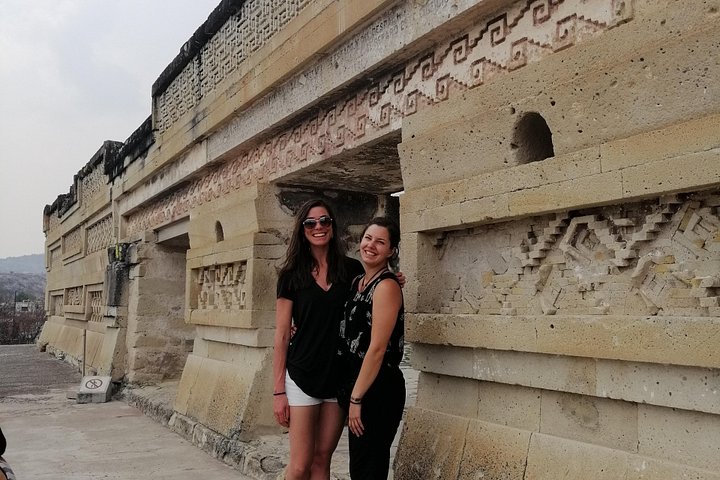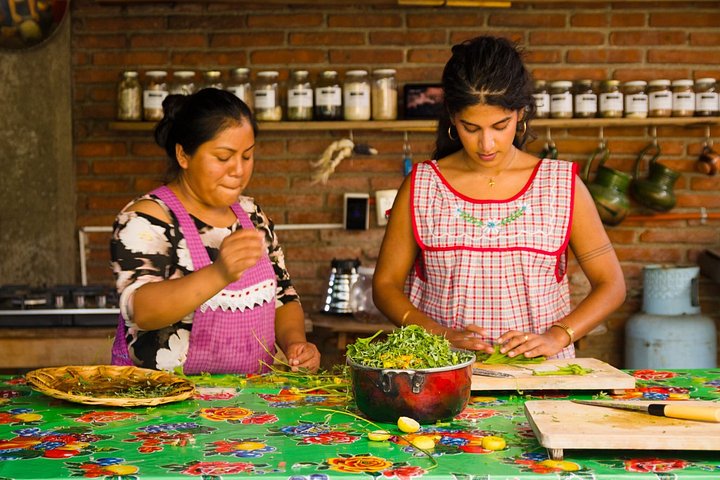
Teotitlán del Valle is a Zapotec weaving village about twenty-five kilometres east of Oaxaca, known across Mexico for hand-woven wool rugs and tapestries. Families here have woven for generations, and the craft is on show everywhere: looms clack behind open courtyard doors, skeins of dyed wool hang drying in the sun and small showrooms line the main streets. A visit works best as a lesson in how a rug is made rather than a shopping stop. Wool is washed, carded and spun by hand, dyed with natural materials such as cochineal insects for reds, indigo for blues and plants like marigold, pomegranate rind and pecan hulls for golds, browns and greens, and then woven on a wooden treadle loom. Many weavers demonstrate how a squeeze of lime turns the same cochineal from crimson toward orange, a small piece of kitchen chemistry that visitors remember long after they have forgotten the village's name. Patterns range from geometric designs inspired by the stone mosaics at Mitla to bold modern pieces and copies of paintings. Zapotec is still spoken in the village, and the pace of the visit is slow and friendly. A guided weaving and chocolate half-day gives you the context and the introductions that make buying, or simply browsing, far more rewarding.
What you will see
A typical workshop visit starts in the family courtyard, where a weaver explains each step from raw fleece to finished rug. You will usually see wool being carded and spun, dye pots and the dried insects and plants used for colour, and a loom in use. Ask to see the same design woven in natural and synthetic dyes, because the difference in depth and fading is easy to spot and helps you judge price.
The village church, built on an older sacred site, and a small community museum are worth a short stop, and the main square has a handful of simple food stalls and restaurants where local cooking is served.
Buying well
Rugs are priced by size, fineness of the weave and the dyes used, and there is a very wide range between a small mat and a large natural-dye tapestry that took weeks to make. Take your time, ask how long a piece took and whether the dyes are natural, and expect gentle bargaining rather than hard haggling.
Buying directly from the weaving family means the money goes to the people who made the piece. Smaller items such as table runners, bags and coasters are easier to pack, and many families will roll a rug tightly so it fits in a suitcase. Cash in pesos is the safest way to pay, although some workshops accept cards.
Getting there and combining it
The village is a short drive from the city on the road toward Tlacolula and Mitla, so it fits neatly into the classic eastern valley day with the Tule Tree, a mezcal distillery and Mitla. A shorter half-day tour concentrates on weaving and chocolate and returns by early afternoon, leaving the rest of the day free.
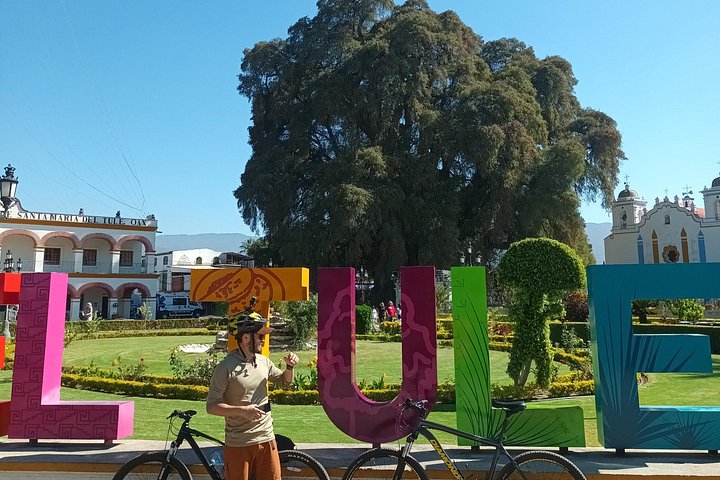
Cyclists can also reach the village on guided rides from the Tule Tree. Go in the morning, when workshops are active and the light is good, and wear sun protection because the courtyards and streets have little shade. Opening hours are informal, so a guided visit with pre-arranged stops saves you from knocking on doors.
What to expect
The experience
A guided visit to a family weaving workshop with demonstrations of spinning, natural dyeing and loom work, plus a taste of local hot chocolate.
Best time
Morning, when workshops are busy and the light is soft, and any day of the dry season from roughly November to April.
How long
Two to three hours in the village, three to four with transfers.
Tips
Bring pesos, ask whether a rug is made with natural dyes, and measure your luggage space before you fall in love with a large piece.
Quick picks
- Best for
- Travellers who like crafts, textiles and meeting the people who make what they buy.
- Families
- Children enjoy the dye demonstrations and the animals in the courtyards, though the shopping can drag for little ones.
- Couples
- A slow morning of colour, craft and chocolate, followed by a long lunch in the valley.
- Pair with
- The Tule Tree, Mitla and a mezcal distillery on a full eastern valley day.
- Time needed
- Half a day, or a full day with other valley stops.
Good questions
How far is Teotitlán del Valle from Oaxaca?+
It is about twenty-five kilometres east of the city, a drive of roughly thirty to forty minutes. It sits just off the road toward Tlacolula and Mitla.
Are the dyes really natural?+
Many family workshops use natural dyes such as cochineal, indigo and plant materials, but some use synthetic dyes too. Ask the weaver to show you the difference.
Do I need a guide?+
You can visit independently, but a guide arranges the workshop stop, explains the process and helps you shop with confidence. A guided half day is an easy option.
Can I bring a rug home easily?+
Yes. Small and medium rugs roll tightly, and many families will wrap them for travel. Check airline baggage allowances for larger pieces.
Is it suitable with children?+
Yes, children often enjoy the dye demonstrations and the chocolate, but the visit involves browsing showrooms, so keep it short.